4.17.2013

Currently Reading: Mariette in Ecstasy

Mariette in EcstasyMass of St. Hyacinth, Confessor

Work. Mariette kneels on ginger-brown earth as she plants winter seeds in a hot-weather garden that Sister Saint-Luc has harrowed and Sister Saint-Pierre has grooved with a stick. Brussels sprouts, kale, and savory cabbage. Sister Hermance is just behind her with a tin watering can. Sister Saint-Luc sings the hymn "Immaculate Mary" and the sisters join her.

Hot breezes slide through the bluejoint grass. Sister Sabine is walking behind a horse-pulled thresher in the barley field. When Sister Hermance pours, she sees the water puddle like hot cocoa, but soon it just a faint stain in the earth. Killdeer kite down and dally above Mariette, as if suddenly interested. Turtledoves watch from the telephone wire. And Sister Hermance thinks, We will have a bounty. Everything she touches will grow. Dirt puts itself in her hands.

Author: Ron Hansen

Mini-synopsis: A cloistered convent is thrown into social and spiritual disarray when a beautiful, charismatic young postulant begins having ecstatic visions and develops the stigmata.

Notes: It is sometimes said that good novels should make the reader uncomfortable. For various reasons I've never quite bought into that statement, particularly because there are a lot of less-than-profitable means of making people uncomfortable—some of them silly and vain, and some of them outright dangerous. This short, easy read is not silly or vain, but it is potentially dangerous. Whether that comment is praise or censure may be left to the reader to determine.

I would not recommend the book to Protestants unless they're familiar and very comfortable with the weirder tales of the saints. This story is much more likely to exacerbate confusion than clear it up.

The primary danger of the story—the subjective and, to my thought, inaccurate twist on the experience—is the author's startling sexualization of Mariette and, to some extent, the nuns around her. There's nothing modern high literature loves more than a little Freudian eroticism, but I've got practical womanhood enough to look at all of that and think, like sixty-year-old maiden Marilla Cuthbert, "Stuff and nonsense." (Quote taken entirely out of context, but still.) There's certainly some tradition of romantic imagery in Judeo-Christian symbolism; many an interpretation of the Song of Solomon goes that direction, but when it contains flat references to breasts and thighs and mussy hair, when the girl on the receiving end of the ecstasies is forcibly depicted as fresh and nubile, it all gets very awkward very quickly. Though Hansen obviously made a deliberate artistic choice, it was hard for at least this practical woman not to huff, throw the book aside, and say, "Only men and the really extreme feminists would write about a woman this way."

Mariette herself is secretive and preternaturally humble, which allows her to remain a mystery to the reader—and remain so right through the ending, as the central facts of her case are never laid open. For myself, I leaned toward the belief that her story worked as a portrayal of acute innocence surrounded by misinterpretation and folly, inspiring intense love and hatred. It could also work, however, as the tale of a fraud so consistent and so powerful that she convinces herself. Hansen succeeds at the mystery and even succeeds at spinning hope out of the odd and uncomfortable ending.

As for the writing itself, I do very well with stylized prose right up to the point where it starts messing with sentence structure. Hansen's work is just over that line. Those who like their literary prose with a strong poetic flair will probably enjoy the artistry. I found it a touch distracting, especially since the sentences that did contain subject and verb and object often combined verbs and nouns with a lot of originality at the expense of natural feel.

I shouldn't make it sound like I disliked the book, though. Outside of the hypersexualization, which is one of my pet peeves, the story called up some sincere love. It carried a meditative quietness that I thoroughly appreciated, and I liked the paragraph-length scenes of different sisters doing different tasks, emphasizing the rhythmic work and prayer of the monastery. Much of Mariette's thought—whether sincere or not—was beautiful, believable, and striking in its reverent humility.

In the end, it's a thoughtful and fascinating tale, recommended for those with a taste for literary exploration of an idea and an interest in prayer, but not recommended for those already predisposed to think of the Church as driven by sex and/or the devil. Those predispositions are both made of balderdash, and as long as they're this rampant in American society, I stand firmly against feeding them.

Just because art reveals truth does not mean that every narrative underscoring any story is true. With that in mind, however, some of you may yet find Mariette's tale worth the read.

4.16.2013

Top Ten Tuesday: The End

A little bit of searching, and I've discovered that my first Top Ten Tuesday post was over two years ago, in January of 2011. And after a hundred or so lists, I've done about all I can do with the concept. The Broke and the Bookish can afford to recycle old topics, having a whole group of contributors, but me... not so much. With many thanks to the B. & the B. for two years of spectacularly awesome meme, then, I'm bowing out.

From henceforth, for now, I'm going to step back to being a Monday-Wednesday-Friday blogger. Despite all the things I'd like to try on Tuesdays, I have a bigger need to finish revising some novels. But today you get one more list, though I'm not going to mess with numbers.

For my last Top Ten Tuesday, then, it seemed appropriate to pick my favorite story endings.

Top Ten Tuesday is hosted by The Broke and the Bookish! Do come join the fun...

It's hard to say why they're my favorites without giving spoilers, so pardon the vagueness. They range from the tender to the sublime, from bittersweet at best to shamelessly happy, and from the simply written to high poetry and prose. But all of them did for me what Tolkien famously believed to be a key function of the fairy tale—and I believe the same just as ardently, though not as famously—they gave me "a fleeting glimpse of Joy, Joy beyond the walls of the world, poignant as grief." I will forgive a book a multitude of wrongs if it pulls that off.

The list, then:

Dante's Paradiso

J.K. Rowling's Harry Potter and the Deathly Hallows

Evelyn Waugh's Brideshead Revisited

Charlotte Bronte's Jane Eyre

Jane Austen's Pride and Prejudice and Emma and Persuasion

Elizabeth Goudge's The Little White Horse

Stephenie Meyer's The Host

L.M. Montgomery's Anne of the Island, Rilla of Ingleside, The Blue Castle, and Mistress Pat

Orson Scott Card's Speaker for the Dead and Ender's Shadow

George MacDonald's Lilith

Shannon Hale's Princess Academy

C.S. Lewis' The Horse and His Boy and That Hideous Strength and Till We Have Faces

John Green's Looking for Alaska

Frances Hodgson Burnett's A Little Princess

Charles Dickens' The Christmas Carol

Harper Lee's To Kill a Mockingbird

Erin Morgenstern's The Night Circus

John Grisham's The Testament

Louisa May Alcott's Little Women

Gene Stratton Porter's A Girl of the Limberlost

Catherine Marshall's Christy

Kate Dicamillo's Because of Winn-Dixie

So many beautiful last pages. The memories keep putting massive lumps in my throat.

What are your favorite story endings?

4.15.2013

Spontaneous Introvert Holidays

The ambient light ever-present in town prevents us from getting as much as I'd like from the night sky, but sometimes the stars outdo themselves. Lou and I stood on the front steps for several minutes last night, just watching one of the loveliest panoramas I've ever seen. Sirius. Orion. The narrow crescent moon and Jupiter close to Aldebaran. The Pleiades.

That quiet little interlude came after cocktails and barbecued pork by candlelight, after an afternoon divided between finishing book club book and re-potting baby tomatoes and cucumbers, after Mass and some good bonding time with our little choir.

Which came after Saturday, but Saturday I'll explain shortly. Saturday came after a week in which even coffee and mellow piano music on headphones couldn't give me the gift of concentration. In which attempting to write was so difficult that it was a relief to pretend my computer didn't exist and hand-copy a stack of recipes for a friend; any other week, I'd have printed them. In which I was sometimes too unsettled even to read.

Saturday, Lou went to Seattle with a group of guys to watch the Mariners lose to the Rangers, and I had the house to myself. And honestly, as I fumbled through some computer work in the early afternoon, before he left, and realized that I'd spent a perfectly good, homey morning feeling stressed and sad, it struck me that my problem might have been nothing more than the absurd length of time since I'd willingly given myself a day off from writing.

I have written about rest before, but I always seem to forget my own words.

So yeah, Saturday got to be a holiday. Spontaneous introvert holidays are probably as individual as the person; for mine, I spent an hour rooting massive buttercups out of the chives and oregano and wandering about the yard snapping pictures. Then I gave myself a luxurious two hours with the piano and guitar—and Rich Mullins' "If I Stand" came together for me, hands and voice, like it never has before, and my fingertips survived a half hour of guitar chords instead of three songs (and my voice survived everything, which is practically miraculous). And after leftovers for dinner, I made myself a mug of microwave chocolate cake and watched my first-ever episode of Doctor Who.

It was all so much fun that I let Sunday go ahead and be a day of rest, too.

All of which means that I'm writing this blog-post last minute, with book club tonight and dinner yet to be made beforehand. It's sloppy. I'm sorry. But a packed Monday with the probability of a sloppy blog post seemed acceptable as a side effect to the restoration of sanity.

It didn't fix all the emotional exhaustion, but it helped. I can think again.

Rest is good. I recommend it. It probably won't take me long to forget that again. In the meantime, I recommend sunshine and gardens and music and chocolate cake and Doctor Who. Also, the stars.

4.12.2013

Lonely Guitars and other stories


* * *

It's raining, and I haven't got a lot of words today. Just a number of random thoughts.

1. After three years without faithful playing, I was so lonely for my guitar this week that I finally prioritized setting it up on a stand in a closet, where Maia can't get her naughty little claws and teeth into it. Turns out, it seems to have missed me, too. We had a good time with my Nynaeve song and a little Sophie B. Hawkins and Garth Brooks before my no-longer-callused fingers started screeching at me.

2. Nothing has gone particularly wrong this week, yet somehow I've been disproportionately anxious about everything. And distracted, and nervous, and unfocused. I'm drinking chamomile tea instead of coffee today, hoping that helps.

3. I discovered this week that all three of my supposed red currant bushes are actually jostaberries. I tried a jostaberry last year and was most definitely not impressed, but maybe there'll be something I can do with the fruit. It would hurt to pull out such happy, flourishing bushes. But Mom plans to give me some red currants, which I am glad about, because they have loads of pectin and make lovely jelly and jam.

4. Meanwhile, Mom and I went start shopping the other day, and I came home with leeks, artichokes, chamomile, snap peas, and a columbine. On top of the fern and flax and parsnips and tomatoes she gave me. It is unfortunately too wet to take pictures outdoors, but ahh, baby plants. I love them so much.

* * *

Music of the week: in honor of Madeleine L'Engle's The Young Unicorns, which I reviewed this week and which contained a scene where the protagonist played this piece, here's the English horn solo from the prelude to the third act of Wagner's Tristan and Isolde. It's beautifully played here by Jose Antonio Masmano.


* * *

Happy weekend!

4.10.2013

Currently Reading: The Young Unicorns

The Young Unicorns"Mr. Theo," Dave said, holding himself in control, "there is a difference between mollycoddling her and—"

"Sit down!" Mr. Theo bellowed. "You are talking about a twelve-year-old girl, and I am talking about an artist. I will not let her do anything that will hurt her music. Now sit still and listen—if you have ears to hear."

Shrugging, Dave stalked over to his favorite black leather chair by the marble fireplace.

Out in the hall by the coatrack, Emily managed to get her coat to stay on its hook; then, walking carefully but with the assurance of familiarity, she came back and sat down at one of the pianos. "Then why don't you let me give a concert if you think I'm a musician?"

Mr. Theotocopoulos took her hands in his. "Why could you not come straight home from school? Cannot that so-called orchestra get along without you? And your hands are too cold to be of any use for music at all." He began to massage her fingers. "You are too young for a concert. You would be not only a prodigy, you would be a blind child prodigy, and people would say, 'Isn't she marvelous, poor little thing?' and nobody would have heard you play at all. Is that what you want?"

Author: Madeleine L'Engle

Synopsis: Josiah "Dave" Davidson's ex-gang wants him back, but he's not interested in anything that will endanger his beloved young friend Emily. Nor is he interested in opening himself up to the Austins, the domestic, innocent family that cares for Emily and trusts Dave himself with their children. When the Alphabats' persistence proves to be part of a complex plot to take over New York, however, Dave finds that in order to protect Emily and the Austins, he must face and fight a number of shadowed, secretive enemies—including his own inability to trust.

Notes: The key to a good epigraph is finding something that sparks interest in the reader at the beginning but knocks him flat with its emotional voltage if he happens to re-read it afterward. L'Engle proved her epigraph-choosing mettle with the use of a sentence and a half referencing the untameability of the unicorn. It's a perfect fit for the story.

At least, it is to the reader like me who fires up with love for the young protagonist. Josiah—no, boy, I'm not just calling you Dave, not when there's so much beauty and dignity in your real name—is the sort to stir motherly impulses as well as sympathetic ones: a surly young introvert, too bitter to ask for help escaping the long-reaching tentacles of a dangerous past, but possessing a gentle heart and a nascent trustworthiness under the resentment and off-putting coldness. The story is of the crux moment of his life, the balance point where he either surrenders backward into the quicksand or accepts the outstretched hand above him and pulls free.

The third person omniscient narrative doesn't separate him from the reader, and I spent the book wanting to plead with him and fight for him and hug him by turns. None of which he'd have been likely to appreciate, but it's the reader's prerogative to feel.

L'Engle's naming choices often carry some symbolic value, and the connection of Josiah Davidson to the Davidic king of Israel is openly remarked on in the book and reinforced by his father's name. Nor is it the only name of interest, as exemplified by Canon Tallis—the surname references the Jewish prayer shawl—and Mr. Theotocopoulos, the latter of which suggests the Theotokos (the ancient Marian name 'God-bearer', usually brought into English as "mother of God"). Whether the common names are hand-picked for meaning is less clear, but there are some curious parallels—notably Emily Gregory, whose name loosely means "watchful rival"; she's the blinded but perceptive angel against the darkness in Josiah/Dave's past. And even the nickname Dave comes from the Hebrew for beloved.

As with most of L'Engle's work, the characters carry the book—which is really why I love her. There's so much back story to the main few that I felt like I'd missed a previous installment. Which, in the Austins' case, I suppose I had, but that feeling came more from Emily and Dave than the others. It's an interesting example of kicking off narrative in the middle of a story, anyway.

The novel attempts to work on several fronts and succeeds better on some than on others. As futuristic tale, it feels rather outdated; lasers were new technology in the sixties when the book was written, but now they're commonly used in surgeries without having gained any notable popularity as an alternative means of getting high. As mystery, the book is startlingly successful; all the clues were present, yet the plot twist still came as a stunner. As character study of an innocent family's brush with deadly evil, it's light but beautiful. As old-school young adult novel, it's saved from being annoyingly preachy only by its moments of unique wisdom. And as a story of redemption, it's sweet and, in its own simple way, astounding.

L'Engle's novels, while nearly always likable, are often a little uneven, especially when submitted to the test of time. This book isn't perfect, but the story caught me very personally and got into my affections. Where that wasn't owing to Josiah Davidson or Emily or the bright-eyed, bright-hearted little Rob, whom I also loved, it was owing to music.

Music got to play its own role in the book, and L'Engle knows her stuff. She makes numerous thoughtful references to great composers and works, such as the moment where Dave picks up his English horn and plays the solo from the prelude to the third act of Tristan and Isolde. And her scenes of Mr. Theo playing the cathedral organ are almost enough to make the reader feel the blast of sound coming from the pipes. The skill behind the art is also treated attentively; Emily's blindness combines with her musical prowess to give her an exceptional ability to listen as well as a powerful kinesthetic sense and memory. For such a short book, it's all spectacularly done.

The ending, if I'm being honest, is a little too much in the lessons-learned order. The groundwork is present, so the resolution itself is believable, but some of the dialogue toward the end is not, really. The final scene or two could certainly have been better handled.

That little flaw bothered me a bit, but love covers over a multitude of wrongs. I loved the story and the characters far too much to fail to forgive.

4.09.2013

Top Ten Tuesday: Fictional Pets

Technically, today's topic is "Favorite books I read before I was a blogger." For that, however, all I have to do is refer you to this list. I'd not read all fifty of those books before ever becoming a blogger, but you can find the top ten in the top thirteen or so.

On account of which, I'm choosing my own topic today. This one is dedicated to my sister Beth, who has been asking for it for probably a year.

Top Ten Tuesday is hosted by The Broke and the Bookish! Do come join the fun...

There are two difficulties with this topic: first, that some of the best animals in fiction are not pets. The horses Bree and Hwin would be so offended at being called pets that I almost feel like I should include Shasta and Aravis on the list. There's a reason that book is called The Horse and His Boy.

Second, that I'm almost guaranteed to forget some and later have to smack my forehead in the comments box.

1. Dog Monday from L.M. Montgomery's Rilla of Ingleside. For waiting out World War I at the station, watching every incoming train for his beloved soldier. Less honorable but still enjoyable mention goes to the cat Dr. Jekyll-and-Mr. Hyde.

2. Crookshanks from J.K. Rowling's Harry Potter stories. With honorable mentions to Hedwig and Pigwidgeon, both of whom I loved—but the part-cat part-kneazle Crookshanks was exceptionally smart and helpful, especially when it came to figuring out whether dogs and rats were really what they seemed to be.

3. Rowdy from Wilson Rawls' Summer of the Monkeys. The quintessential good dog—a patient floppy-eared hound, prone to hiding under the porch when frightened but always up for an adventure with Jay Berry Lee.

4. Rusty and Joseph and the Sarah-cat from L.M. Montgomery's Anne of the Island. Two scrappy misfits and a queenly creature, all feline, all learning to keep house together.

5. The dog Wrolf from Elizabeth Goudge's The Little White Horse... though I suspect Wrolf would not appreciate being called a pet, either, and I probably ought to stick with Zachariah the cat or Serena the hare.

6. McGinty from L.M. Montgomery's Pat books. Montgomery apparently had a soft spot for loyal-hearted little dogs. As do I.

7. The merrel from Robin McKinley's Spindle's End. For being a good conversationalist and ultimately protecting Rosie in a crucial way. There are a lot of good pets in that book, too—horses and dogs and cats and mice and even, weirdly enough, a spider.

8. Old Dan and Little Ann from Wilson Rawls' Where the Red Fern Grows. I barely remember this book, which is surprising when I consider how many times I read it in sixth grade, but I do remember there being a great deal of eternal love and loyalty between these two hound-dogs.

9. Jack the bulldog from Laura Ingalls Wilder's Little House books. Another quintessential good dog, and possibly not entirely fictional.

10. Pongo and Missis from Dodie Smith's 101 Dalmatians. Technically, they wouldn't want to be called pets either, but they can argue that with the Dearlys on their own time. Also worthy of mention are Perdita, several of the animal helpers who aided Pongo and Missis on the search for the puppies, and some of the puppies themselves.

Honorable mentions to Pilot from Jane Eyre, Jok the gander from The Goose Girl, the milk carton from China Mieville's Un Lun Dun, annoying little Gwin the marten from Inkheart and sequels, and the three-legged horse from The Hero and the Crown.

Maia insists upon being mentioned as well, having refused to listen to my explanation about this being a matter of reality versus fiction. I don't think she believes there's a difference.


Back to the post... apparently Montgomery writes more about pets than most authors, though McKinley does well, too. Lewis gave major story roles to a lot of animals who were not pets, including making one of them Narnia's God. For myself, well—no spoilers allowed for not-yet-published works, so I'll just say this: I guarantee that if I had written the Divine Comedy, there would have been some goodly birds and beasts in Paradise.

All right, what pets have I overlooked?

4.08.2013

Organic Knowledge and the Fantasy Novelist

Me wearing a blanket roll and a couple of packs.
I ought to try it with a wool blanket, but the choir
books certainly made an effective burden.
I do not, however, know why I didn't think to try
hanging the packs from the opposite shoulder.
Duh. Guess I'll try that next.
Blanket roll instructions courtesy of David.
Thanks, David!
As I write this, I've had a government document open on military dermatology for a week. Also this week, I've spilled hot wax all over my thumb while figuring out how much light is cast by a small flame, gotten lost in a blog-hop on the subject of codes and ciphers, and tried my first blanket roll on for size.

Technically, I ought to be wearing a sarong dress in this picture.

I mention this because Lars Walker's article on the problems with fantasy, especially Christian fantasy, is... well, fantastic:
Look at the masters. Tolkien and Lewis weren’t only fanboys (though they certainly were that by the standards of their time). They were scholars, and scholars at the top level. Tolkien’s work was the fruit of decades, not only of storytelling, but of mastering his source material. All those rich passages in The Lord of the Rings, and in the collateral works, spring from his profound knowledge of European languages, a subject he may have known better than anyone who ever lived.... Trying to write “like Tolkien” without some degree of his scholarship is a project doomed to fail.
(Link courtesy of George. Thanks, George!) And later, more immediately germane to the thoughts I started this piece with:
The second thing missing in most fantasy today is . . . what will I call it? Organic knowledge. My field is mostly historical fantasy, concentrating on the Viking Age. I’ve been researching that period for more than fifty years. More recently I’ve become a reenactor, which gives me the opportunity to get more hands-on experience. I’ve drunk mead in a Viking hall, slept in a Viking tent, and helped row a Viking boat. I know how the clothes feel and what Vikings smelled like (smoke—the houses were full of it).
So yeah, when I say I think it would be fun to join the Society for Creative Anachronism, no, I'm not joking. Though my fantasy tends not to be historically based, which makes the SCA's character studies less obviously relevant.

Walker's emphasis on the importance of knowledge is both frightening and exciting. Frightening, because I don't have a doctorate in anything, and I'm not going to get one. Exciting, because organic knowledge has never been easier to lay hands on. What you can't come up with in life experience—and I consider myself lucky to have some homesteading background, outdoor adventure training, and horse care and management experience, all of which have proven helpful in fantasy-writing—you can often find described by a blogger with a knack for sensory detail, or aptly depicted in a few jpegs or a YouTube video.

I agree wholeheartedly with Walker's point that making crap up does not amount to art, even in fantasy—that there's a standard out there, raised like the Great Wall of China between the individual writer and successful artistry. My own interaction with that standard is one of mingled awe and reckoning. Lips pursed, arms crossed, eyes focused on potential footholds, the lot. Resting on the easy side of the wall is not an option.

Walker didn't mention it, but there's one point of organic knowledge that I consider imperative above all others. More than anything else, frequent failures in this regard are the reason I almost never read Christian fiction and am picky about fantasy despite its being my favorite genre. The one knowledge an author cannot do without is thorough understanding of differing human minds and hearts, or empathy.

I'm not relying on my own ideas for estimation of its importance. Here's movie critic Steve Greydanus talking about the late Roger Ebert's value for this virtue:
There is a generosity and empathy to many of [Ebert's] reviews, and in many of the films he appreciated. One of the qualities he most celebrated in a film was its ability to “take us outside our personal box of time and space and invite us to empathize with those of other times, places, races, creeds, classes and prospects. I believe empathy is the most essential quality of civilization.” (If his celebration of empathy sounds over the top, consider that St. Teresa Benedicta of the Cross (Edith Stein) arguably goes further: Empathy, she maintained in On the Problem of Empathy and other writings, is foundational to personhood and community, to knowledge even of the self, as well as others.)—Steven D. Greydanus, "How I Believe in Roger Ebert"
This is what makes Orson Scott Card a great writer (though he's a pretty impressive linguist and tactician, too, as best as I can tell) and my literary hero, and it's a more serious aspiration to me even than achieving authenticity in my worldbuilding details. Artistic portrayal of character can be done in myriad styles, from Rowling's caricatures to Waugh's methodical detailing, but the choices made by fictional people must be soundly human and believable, and authors should show generosity toward their characters' motivations. Without that generosity, they risk making their tales into bad sermons. (Good sermons are an art form. Bad novels are disqualified from the outset, on charges of submitting to the wrong category.)

Knowledge of universal human dignity and complexity is harder to come by than knowledge of the unmistakable scent of a tack shed or the feel of a raft's ferrying motion across the laminar currents in a river. Not because it's less available, but because the study of it works against our self-interest. To write with true empathy, we have to be able to see the merit in feelings antagonistic to the ideals we hold dear, even to those we hold sacred.

There's no shortcut to this. Read rants by someone you disagree with politically or religiously, and look for underlying truth beneath faulty logic. There nearly always is some; there are keen truths carrying both sides of even moral debates presented as black-and-white, like those over abortion and gay marriage. Forgive someone who hurt you in ways that can never be mended or repaid—understand their brokenness, search out their goodness, and forgive. Read Thérèse of Lisieux and try to live her Little Way. If it's not one of the hardest things you've ever done, you're either a more fundamentally decent soul than I am, or you're doing it wrong.

This is the standard I hold myself to, and I make no claims about how much I've achieved or will achieve. In the end, that's probably for others to say anyway, not me. I can only—I was going to say try, but trying's not good enough for Yoda. I can only fight my own human imperfections and self-blindness and, as best I can by the light I possess, do.

4.05.2013

Active Dreaming and other stories

The rain has returned, and with it some sense of rhythm and routine and to-do lists and other everyday things. I feel like I've awakened, still a little groggy, out of a night of very active dreaming.

But before I get into that—let it be written that Bellingham, Washington had a week of sunshine in March and over Easter. I do not think that combination has ever occurred in the history of mankind, and I doubt it ever will again, so may the memory of its glory be preserved.


* * *

Easter was like a giant wall on my calendar—I hadn't looked beyond it during Lent. Here in the afterwards, I'm thus far still recovering from Holy Week. The celebrations included late nights, extra practice, expected stress, some very unexpected stress, and a bigger than usual mixed bag of distractions and emotions. But then, the Triduum is centered around joy and suffering blended together in the death and resurrection of Christ, and my own experiences of it have often echoed that, especially in the year of my confirmation. This year was certainly that way.

There was often joy in the music. The quintet I sing with got asked to handle Good Friday, and that little group has something that feels—to me—quietly momentous. Journal excerpt:
The intimate way we all crowded around the area microphone—RD just behind me, C close at my side, Lou and RL flanking them, everyone distanced for balance's sake with my unassuming voice just inches from the mic, all of us pressed together so that we could hardly help but breathe together and sing as "though many, seeming one". Polyphony—Palestrina's "O Bone Jesu" and Lotti's "Miserere"—all of us listening closely to each other, breathing carefully, tuning carefully, blending carefully. Hymnals all below and behind and around mine. Four parts on "O Sacred Head Surrounded" and "Were You There". D supporting us, coaching us and playing organ and piano. 
Someone said afterward that that was the best music we'd ever had.
The night of Easter vigil was clear and warm and only just dark as we stood round the bonfire, and for once I managed to process inside without my candle ever blowing out. And indoors at the ambo, above the forest of candlelit faces, Lou stood and sang the Exsultet—it's something like ten minutes of chanting, unaccompanied, amid a reverential hush—and for a few moments I forgot about distracting dramas and just listened to that strong, warm baritone sing the words:
Exult, let them exult, the hosts of heaven, exult, let angel ministers of God exult, let the trumpet of salvation sound aloud our mighty King’s triumph! 
Be glad, let earth be glad, as glory floods her, ablaze with light from her eternal King, let all corners of the earth be glad, knowing an end to gloom and darkness. 
Rejoice, let Mother Church also rejoice, arrayed with the lightning of his glory, let this holy building shake with joy, filled with the mighty voices of the peoples...
This is the night, when Christ broke the prison-bars of death and rose victorious from the underworld.... 
This is the night of which it is written: The night shall be as bright as day...
* * *

Music of the week: The Exsultet sung in Latin, at St. Peter's.


* * *

The house needs cleaning now, and my books need writing, so off I go. But first, your cat picture. As you see, Maia insists upon sitting on my lap when I'm playing the piano—which is fine, when she doesn't also insist on chasing her tail.


Happy remainder of the Easter octave!

4.04.2013

Currently Reading: Shadow Puppets

Shadow Puppets (Shadow, #3)"But I'm not mocking you!" cried Anton. "I celebrate you! Because you are, in a way, a small way, my son. Or at least my nephew. And look at you! Living a life entirely for others!"

"I'm completely selfish!" cried Bean in protest.

"Then sleep with this girl, you know she'll let you! Or marry her and then sleep with anyone else, father children or not, why should you care? Nothing that happens outside your body matters. Your children don't matter to you! You're completely selfish!"

Bean was left with nothing to say.

"Self-delusion dies hard," said Petra softly, slipping her hand into his.

"I don't love anybody," said Bean.

"You keep breaking your heart with the people you love," said Petra. "You just can't ever admit it until they're dead."

Author: Orson Scott Card

Synopsis: While Peter risks bringing serial killer Achilles into the Hegemony, Petra attempts to convince Bean to marry her and let her have children with him. Both Peter's decision and Bean's wind up having global consequences, as Peter and his parents are forced to flee the Hegemon's complex just when the world erupts into war, and Achilles and the underground take an interest in Bean's progeny. Meanwhile, others from Ender's jeesh get actively involved in the war, and both Hegemon and Battle School graduates have all they can do to restore peace and liberty to Earth—especially with Achilles planning to kill Peter and work his final vengeance against Bean and Petra.

Notes: One of Card's strengths as a writer is the ability to portray people with consistent philosophies that take in both thought and emotion. I've never spotted anyone better at this; he does a spectacular job, even when the characters' philosophies don't necessarily line up with his own.

Perhaps especially then. In Speaker for the Dead, the humanist Ender and the Catholics of Lusitania come to some beautiful understandings—not understandings that contradict the LDS faith, but that support a mostly symbolic expression of it. In Shadow Puppets, the ideals of marriage and family emphatically put forward by Theresa Wiggin in Shadow of the Hegemon reappear, this time championed by the gay scientist Anton. And while Card is too deft at character thought process for me to be sure that the professor's thoughts are a direct echo of the author's, Theresa Wiggin's Mormonism suggests some parity. Either way, the end result comes off a shade more heavy-handed than I'm used to reading from Card.

If Anton's panegyric on marriage and the making of children contributes to the general conviction that Card is a homophobe, however, then the general conviction could stand to take a great big deep breath. Which needs to happen anyway. Card, by all accounts, is an honorable man, not to mention a superior artist whose work would be worth reading regardless, and he certainly does not hate or fear homosexuals. The force of Anton's argument is simply that even the homosexual person does not escape the hardwired-in longing "to be an inextricable part of the human race"—a profoundly humanizing theme.

Ideals formed the basis for some of the major internal struggles in this novel, and, obviousness aside, were responsible for some truly beautiful moments. I part company with Anton on the concept of marriage and children as the meaning of life—I see the human family as ultimately symbolic of higher unions and integrations, and therefore his ideal seems oddly earthbound to me—but his words about the aforementioned human longing, despite our differences in definition, struck me as solid truth. And Bean had moments of realized emotion toward the idea of his own children that were just lovely.

The external struggles of the novel focused on Peter Wiggin's attempt to achieve hegemony, Achilles' plotting, and the movements of future China, India, and the Muslim world in battle. Peter, described in Ender's Game as having "the soul of a jackal", is softened but still recognizable through his arrogance, genius, and depression; there's also something very moving about watching John Paul and Theresa throw themselves into the work and protection of their one remaining child. As for Achilles, the cracks in the icy-blooded villain begin to show through in this novel. And while we're talking characters, Virlomi, Alai, Suriyawong, and to some extent Hot Soup all have intriguing and fitting roles to play in the story.

With its sometimes ordinary phrasing, emphatic ideals, and what struck me as a possibly cliched image of Chinese expansionist communism—maybe just because I'm so tired of politics—Shadow Puppets lacks some of the breathtaking subtlety and strength of Card's best novels. It certainly can't match the first two Ender books or Ender's Shadow. But a second-tier Card novel is still good work. I'm glad to have the sequel, Shadow of the Giant, at hand.

Fangirl postscript: Bean and Petra forever. That is all.

4.02.2013

Top Ten Tuesday: Fictional Ice Cream Boys

Not long before Lou and I had our first chat over coffee, one of my girlfriends spoke of having a mental list of what she called "ice cream boys"—that is, the boys to whom she'd say yes if any of them asked her out to ice cream. I later journaled something like, "Lou is on my list of ice cream boys—Lou just about is my list of ice cream boys." Luckily for me, he asked me out.

That explains the post title. Technically, the topic is "characters I would crush on if I were also a fictional character," which made me feel rather silly since I'm much too married to be admitting to bursts of romantic feeling toward other boys. I know these are imaginary boys, but still.

Top Ten Tuesday is hosted by The Broke and the Bookish! Do come join the fun...

But when it comes to the imaginary boys an imaginary single Jenna would go on an ice cream date with, all of them have some great qualities, and some resemble my own dear man in important ways... so, very well. We'll pretend I'm an unattached fictional character for the purposes of one blog post. I suppose we'll have to pretend all these men are unattached, too.

Here's my self-imposed rule: one ice cream boy per author, else this might be an Austenfest. And I'm ruling out Rand al'Thor. I loved him, but I would not share him.

#10: Hilary 'Jingle' Gordon (Pat of Silver Bush, L.M. Montgomery)
Why: Sensitive, lightly built, sweet, hardworking dreamer
He loves me/he loves me not: Quite possibly. He likes domestic girls, especially brunette ones who like dogs.
Choice of ice cream: Old-fashioned homemade vanilla with wild strawberries.

#9: Ian O'Shea (The Host, Stephenie Meyer)
Why: Protective, thoughtful, good, able to see beyond appearances
He loves me/he loves me not: He likes the sweet ones, so I might have a chance.
Choice of ice cream: Big bowl of chocolate, please.

#8: Prince Char (Ella Enchanted, Gail Carson Levine)
Why: Softhearted, has a good sense of humor, does the right thing
He loves me/he loves me not: Doesn't know I exist. He likes eye-catching and playful.
Choice of ice cream: Mint chocolate chip. It's fun.

#7: Charles Bingley (Pride & Prejudice, Jane Austen)
Why: Generous, good-natured, unassuming and disarming
He loves me/he loves me not: I'm one of the girls he likes enough to dance with a few times.
Choice of ice cream: Goo goo cluster. The name is so funny that he's got to know what it tastes like.

#6: Alexei Karamazov (The Brothers Karamazov, Fyodor Dostoevsky)
Why: Gentle, thoughtful, loyal, pure of heart
He loves me/he loves me not: Yes, but he still thinks he might need to be a monk.
Choice of ice cream: He's not picky—he'll have whatever I'm having.

#5: Harry Potter (The Harry Potter books, J.K. Rowling)
Why: Steady, introspective, emotional, brave, self-sacrificial, honestly just plain likable
He loves me/he loves me not: "The really tall, shy girl with the yellow buck teeth? I thought she liked Ron."
Choice of ice cream: Do they have treacle tarts? He'll have one of those.

#4: Calvin O'Keefe (The Time quintet, Madeleine L'Engle)
Why: Tall, outwardly casual but inwardly noble, exceptionally smart, perceptive and sincere
He loves me/he loves me not: He might be one of the few guys who could've liked me in my awkward teenage phase.
Choice of ice cream: Whatever's in the freezer. If you've got multiple kinds, he'll try some of everything.

#3: Edmund Pevensie (The Chronicles of Narnia, C.S. Lewis)
Why: Knows himself and his own weakness, humble, wise, quietly brave and noble
He loves me/he loves me not: If we made it as far as ice cream, there's a very good chance we'd hit it off.
Choice of ice cream: Chocolate swirl. He used to like super-sweet, fruity stuff, but some sort of past experience soured him on that kind of thing.

#2: Mortimer Folchart (The Inkworld trilogy, Cornelia Funke)
Why: Bookish, quiet, steady, protective, good dad material, has gentle working hands
He loves me/he loves me not: I might have a chance at a date if I bumped into him in the library carrying a dozen books.
Choice of ice cream: Great big hot fudge sundae with lots of toppings.

#1: Ender Wiggin (The Ender books, Orson Scott Card)
Why: Empathetic, strong, humble, does what needs doing, perceptive, pure of heart
He loves me/he loves me not: He's kind and attentive, but no, he wouldn't fall for me.
Choice of ice cream: Not important. He'll order the first thing off the menu.

All right, don't make me embarrass myself by myself. What fictional characters would be on your list of ice cream boys or girls?

4.01.2013

The Picture-Perfect Blogger... and Me

Easter nail polish!
It's a sunny Holy Saturday as I write, shaping up to be the warmest and prettiest Easter I've experienced in the Pacific Northwest, and I spent most of the day away from my computer. It felt like a good day to pot some of my little seedlings and a pair of avocado trees, paint my fingernails—which happens just twice a year for this gardener/guitarist: on Christmas and Easter—and pound out a Chopin prelude on the piano with intense expression and, unfortunately, coffee jitters.

Lou and I plan to spend the evening at his parents', eat the traditional oyster stew, and then head over to church for Easter Vigil—the most beautiful night of the liturgical year. By the time this post goes live, the Triduum will be over and Easter will have begun. I love the whole Easter season. But there's nothing else in all of life for me like Holy Saturday.

This week, Masha and Christie and I have a three-way blogalectic topic: whether we three artsy Catholic bloggers ought to try in any way to resemble the suddenly popular Mormon mommy bloggers, who were recently examined and praised by a self-described feminist atheist over at Salon.

And as I've sat down to write, I've realized that it's an almost irrelevant question for me. I have all kinds of respect and affection for the LDS church and its members, thanks to my being an Orson Scott Card/Shannon Hale/Stephenie Meyer fangirl and having had a few lovely Mormon friends and acquaintances. But I'm not a Mormon. I'm also not a mommy.

Holy Saturday sunshine and transplanting.
What I am, what I do have in common with these young women, is that I'm a personal blogger with an artistic bent—though I'm bookish and not at all craftsy—and that I belong to a faith tradition that affects every area of my life. The question for me, then, is simply: how open should I be about faith and/or life hardships on my blog? Since both can turn away readers?

The twenty-something LDS mommies are mostly pretty subtle about their religion; it shows up in a link to mormon.org in the sidebar, in references to Utah and the temple. If they talk about faith, it tends to be unspecific but generically Christian in mood and wording. Some of them—again, not all—keep the blogs pretty positive and clean-scrubbed as far as life goes, so that after paging down through a few of them, my own first reaction was sort of like what happens when you watch a commercial and half-believe that drinking Coke will make you sexy. If I were Mormon, says that little niggle, would I be be a pretty 26-year-old wife with a couple of cute toddlers instead of a 35-year-old who had to wait till 30 to get married and still hasn't managed to have a kid, but does have gray hairs coming in? Nope. But I envy those girls their youth, their fashion sense, and their children.

Masha talked about over-share on Catholic mom blogs (gory clinical details of childbirth, anyone?) and finding a balance between posting all happy thoughts and spending too much time working out deep dark issues in public. Christie spoke of feeling never good enough in the presence of the picture-perfect young moms, and of treating a blog as a way to encourage others.

I... could go a million directions, but it seems best to just answer the question.

When the subject of faith wants to come up on my blog—in a book review, in a Friday post's interaction with the liturgical calendar, etc.—I don't hide it, but I do try to keep my readers in mind to some extent. Most of you that I know by name are not Catholic, and some of you aren't Christian at all. The golden rule seems appropriate here; for myself, I'm not generally troubled by people talking about their beliefs as long as there's no apparent attack on my own, so I do my best to make the references organic and honest but non-confrontational.

If this weren't a personal blog—if I were out to meet some public niche interest—I'd just keep faith offscreen, as I nowadays do for politics. But it is a personal blog.


All dressed up for Easter Vigil.
And because it's personal, the matter of how open to be about my imperfect life is a personal decision. For myself, I've learned that on an ordinary day, I'm happier just not thinking about what I don't have or can't do. So I don't talk about childlessness or chronic depression or adrenal exhaustion much. I focus on what I do have and what I can do, and that's what comes out on the blog. And blogging optimistically, in its turn, helps me live a more cheerful daily life.

As for what I have to offer: I try and do for guests at my blog just what I do for guests at my home. If you come here, I hope you find friendly conversation and a place to rest surrounded by books and beauty.

Easter Monday postscript: I feel more like a mommy blogger than usual today, having spent most of the day with my two- and five-year-old nieces. It was a heck of a lot of fun, but I don't know when I'd blog if I had kids that age. Since they went home, I have got the furniture mostly put to rights and the egg off the kitchen floor—the five-year-old helped me make her favorite "doubled eggs" for lunch—but I haven't gotten around to scrubbing the apple juice off the table yet. I'm exhausted. :P

Happy Easter!

3.22.2013

Anxious Seedling-Mama and other stories

Next week being Holy Week, I'm going to take it as a break from blogging.

I need a little time to get caught up on reading, to get some gardening done, to prepare music for the Triduum, to write. And to pray. Much as I love blogging, there is a time for silence. When it comes to the internet, I talk a lot for such a quiet person. It will be good to be silent.

* * *

So, after last year's repeated mini-tragedies with seedlings, look!!

Sweet peas! Reaching for the sun, of course...

Black cherry tomatoes!

And behind the tomatoes... some kind of squash! I don't remember
what I planted in which part of that tray...
Mom gave me the pumpkins and Hubbard squash, so I didn't actually start these, but still:


The trick, I've discovered, is heat and careful watering... very careful watering. The shelves are hung above a baseboard heater, which I've kept on during daylight hours, and the warmth is apparently very good for germination. (Mom starts hers under her woodstove.) As for watering, I've gone all anxious mommy on the seedlings, making sure they never do more than just dry out, but never drown, either.

Anxious mama.
My only trouble is that I threw extra tomato seeds in, suspecting they wouldn't all sprout—I saved them from one of last year's tomatoes—which means pinching off one whenever two come up together. It hurts to kill baby plants. They're so beautiful.

Also, the daffodils are blooming!


* * *

There's nothing a cat loves more than a cushy small space... like the spare towel shelf.


* * *

Music of the week: Antonio Lotti's Miserere, which the mixed schola I'm part of is working on for Good Friday. The text is from Psalm 51, which, in the breviary version, reads—I'm not going to try and translate the Latin myself—"Have mercy on me, God, in your kindness. In your compassion blot out my offense."


* * *

Have a blessed Holy Week and happy Easter! This blog returns a week from Monday.

3.20.2013

Currently Re-reading: Out of the Silent Planet

Out of the Silent Planet (Space Trilogy, #1)He was quite unable to point Earth out to them in the night sky. They seemed surprised at his inability, and repeatedly pointed out to him a bright planet low on the western horizon—a little south of where the sun had gone down. He was surprised that they selected a planet instead of a mere star and stuck to their choice; could it be possible that they understood astronomy? Unfortunately he still knew too little of the language to explore their knowledge. He turned the conversation by asking them the name of the bright southern planet and was told that it was Thulcandra—the silent world or planet.

"Why do you call it Thulc?" he asked. "Why silent?" No one knew.

"The séroni know," said Hnohra. "That is the sort of thing they know."

Author: C.S. Lewis

Synopsis: While on a walking tour of the country, philologist Dr. Elwin Ransom is kidnapped by fellow professors, drugged, and taken into space with them as a human sacrifice to an alien race on Mars. Before he can be handed over to the sorns, he manages to escape, befriend a community of natives, and learn their language well enough that when he meets his fellows again—before the Malacandran judge and ruler, Oyarsa—he stands some chance of learning what the expedition was all about and finding a way safely home.

Notes: In the decade or so since I first read Lewis' Space Trilogy, I've re-read Perelandra once and That Hideous Strength many times, but never—till now—returned to the the first in the series.

It's a short read, and might be called light if not for the fact that as with most of Lewis' fiction, the more you understand of what Lewis knew and studied and believed, the more you'll get out of the tale. I'm not referring just to Christianity. This book made me wish I understood astronomy much more than I do. Lewis, as Michael Ward has pointed out, followed the night sky carefully and understood medieval star symbolism; his imagined landscape for Mars is fanciful, but his concept of the physical relation of the planets is almost certainly scientific (based on the science of 1938), and his astronomical imagery probably has imports that my rudimentary understanding can't make out.

For those of us accustomed to Star Wars and Star Trek, Ransom's space travel seems quaint and more native to fantasy than science fiction. The Mars Rovers have also made it clear that our neighboring planet looks more like Tatooine than Lewis' watered handramits (lowlands) and spiky harandra (mountain ranges). And the Rovers have given us no more sign of hrossa and pfifltriggi than of attractive humanoid races running around in gold lamé and pleather.

None of that mattered to me as I read; Lewis' vision of Malacandra, like that of Narnia, was too beautiful. Once I got past wondering what weird and possibly dangerous chemical would make water actually blue, rather than reflectively so, I lost all disbelief in the gorgeousness of the warm waters, the elongated trees, and the poetic and thoughtful and creative races that lived there.

Ransom's interaction with the various beings belonging to Mars was fascinating. A writer more interested in detailed culture-building might have played out the early work of the linguist dependent on an alien tribe, but Lewis showed more interest in philosophy. He skipped ahead to Ransom's having enough knowledge of the language to talk about the relationships between the creatures and the arts and sciences, as well as between the creatures and their god, Maleldil.

Maleldil, like Aslan, directly correlates to God. It's not so much allegory as, more or less, "that's what the people of this imaginary world call Jesus." Unlike the Pevensie children, Ransom never deals directly with Maleldil; he works instead with the eldila and Oyarses, who are an interesting study in angelology—another subject that Lewis surely knew much more about than I do. Maleldil stays offscreen, but Ransom talks of him and of human sin and weakness with Oyarsa.

That climactic conversation covers expansionism, the claims of science against morality, and the difference between loving humanity as a concept and actually loving humans. As such, it becomes—again, not allegory, but an in-narrative thought piece championing humility, respect, and religious-based morality against an old progressive ideal. It's fairly obvious about making its philosophical points, but then, so is Star Trek. Like the best of all science fiction and fantasy, anyway, the story takes the reader out of this world with the intent of looking back and learning more about himself and the planet he comes from.

It's a beautiful tale, and a fairly easy read despite the philosophy. And as far as the Space Trilogy goes, it's just the beginning; the other two, to my own feelings at least, only get better.

3.19.2013

Five Things: A Replay

This week's top ten topic,

Top Ten Books I HAD To Buy...But Are Still Sitting On My Shelf Unread

...is one I've already done.

By my count, I've got another five or six of these Top Ten Tuesdays that aren't more or less repetitive. After that, I'm going to have to find something else to do with Tuesdays around here. I have one idea I like very much, but to really do it up well probably means sketching, which I haven't done in years.

For today, Christie has tagged me in one of those say-five-interesting-things-about-yourself memes. I love those so much that, upon research, I discover I've already done some version of this at least four times on this blog. I suppose that makes me a narcissist. It would also seem that I have now told ALL THE SECRETS.*

But I still like to visit the warmer lands.
Like Christie, though, many of you are comparatively new friends and haven't seen those old posts. Since hardly any of you were around in January of 2007, when I posted the first, I'll replay and expand upon that one. Five things you may not have known about me, then:
1. I have been chased by a headless snapping turtle.
And stepped on a snake thinking it was a garden hose... and, with my family, been pursued by a water moccasin. And we won't even talk about alligators. There are reasons I don't live anywhere near the tropics now. The turtle, anyway, upon its decapitation at the hands of my uncle, took off like a beheaded chicken and came straight after my sister and me. Beth was a toddler and I wasn't much older, so you can imagine the screams and the panic as the dead reptile followed us—presumably unintentionally—in a circle around the yard.
2. I have never conquered my irrational childhood fear of swimming pool drains.
Hot tub jets and bathtub drains also give me the willies. In the last year or two, I read an article explaining how swimming pools work, hoping to get over the silliness. But the article claimed that the drains are left open all the time, which I hadn't known before, and I now have very little interest in ever going swimming again.
3. The author’s genes kicked in early for me. When I was about five or six, I used to do my own narration in third person, for instance: “She walked down the stairs and turned on the light.”
Nerd. The word is nerd. My friend Bradley once pointed that out. "All you ever say is she, she, she," he complained, which embarrassed me terribly, as he was eight years old and adorable. "No, it's not all I ever say," I said. Unfortunately for me, in inspiring his original comment, I had given him a ready example to quote back to me.
4. Instead of taking a teddy bear to bed with me as a little girl, I used to take my Breyer horses.
That might not be the main reason that they always had broken legs, but it probably contributed.
5. The first two songs I ever wrote were both written solely because someone else I knew had written a song, and I figured “What the heck—if they can do it, so can I.”
And I am way too much of a narcissist to ever sing those terrifically bad songs in public. Ever.

Now, I'd love it if you'd all tell me five interesting things about yourself in the comments. Or post on your own blog and link back so I can read it. :D

* No, I haven't. Not all. But it would require some serious and time-consuming excavations of the soul to come up with interesting factoids that you haven't heard and that I'm willing to share.

3.18.2013

Traditional Publishing vs. Self-Publishing: The Debate Continues

It's Monday, and Lou's brothers and sisters have all flown or driven back to their various homes around the country after a hilarious (pun intended, I suppose) and happy weekend celebrating Dad St. Hilaire's birthday. Lou and I have been off all usual radars since Thursday night—even Friday's blog had to be written early and scheduled—and I'm a bit disoriented upon this return to normal.

Of course, the word normal is kind of meaningless, especially when we're coming up on Holy Week. We have choir and/or quintet practice five out of the next seven days. Two of those are at my house. This is not going to be a quiet week.

Still, it's Monday, and Monday wants a post. Ergo, your writers' link of the week: Hugh Howey's advice to aspiring writers.

All right. For several years I've waffled inside between traditional and self-publishing. I've been working towards going indie with my fairy tale retelling, while reserving my NaNoWriMo novel and sequels for a serious attempt at the Big Five. I even wrote a brief manifesto titled "Traditional Publishing vs. Self-Publishing: Why I'm Trying Traditional" two years ago. And while I wouldn't say I haven't seriously considered self-publishing—I have—some part of me has always hung onto the plan.

Howey just shook that determination in serious ways. He's not focusing on worst case scenarios or calling people stupid for wanting to get in with a big publishing house (nor, thank goodness, is he denigrating people for making use of modern self-publishing tools, as some traditional-publishing loyalists are wont to do.) He's simply suggesting that, publishing contracts and the life of a shelved book being what they are*, a writer is better off starting on his own and building his career from the outside in. From the article:
This is going to sound strange, but you are MUCH better off with your 10th work exploding than your 1st work. You’ll never have quiet time to crank out quality material ever again. And when your backlist matches the growth of your first breakout, you’ll do very well for yourself. Be patient. It’s been said by many others, but I’ll repeat it here: self-publishing is a marathon.... Again, this doesn’t mean you shouldn’t team up with a publisher if you choose. But do it from a position of power. Give your work a chance (years and decades) to be discovered.
He's the first person I've ever heard state so plainly that careers are best launched gradually, on a carefully-built body of work, not on a single polished and marketable manuscript that may or may not fly in its brief window of opportunity. That sounds like truth to me.

I question a handful of the absolutes in his piece. For instance, the stigma against self-publishing is not gone, it's merely diminished. Yes, a certain recent Big Five mermaid romance I read contained more copy editing mistakes than my average first draft (not exaggerating), and yes, my friend Annie's self-published Christmas children's book that she wrote for her nieces and nephews equals or supersedes much of what can be found in B&N during the holiday season. (It is beautiful. I wholeheartedly recommend it.)

But I generally read a self-published novel only after it's been strongly suggested to me—if only by its own excerpt—that it's more thoughtfully and empathetically written than its compatriots. Of course, there are so many novels in the world that this is more or less true all around.

Self-publishing is too immediate and too short on gatekeepers to offer readers the kind of confidence a publishing house can. An indie writer has to be able, not just to tell a good story, but to sit on that story till she's got her world and characters and prose developed at least to the point where it would satisfy a professional reader (and then to find and utilize a smart editor). It takes a level of self-control and objectivity fairly rare among humankind to be able to wait for and finally spot that moment in your own work, and I find it hard to imagine that anyone publishing more than about a novel a year—traditionally or independently—possesses that.**

But none of these debate points suggests to me that Howey is wrong in his general approach. For a quiet, deliberate, cautious mover like myself, he could be quite right.

I'm not committing either way just yet. Feel free to argue with me or Howey or both. I'm just looking for the way to give my books the very best chance at life I can give them.

* Regarding publishing contracts and the life of a shelved novel: industry contracts tend to contain things like non-compete clauses. And books that actually make it into bookstores, and they don't all, reportedly have an average shelf life of six months. The former difficulty you may escape, at least in part, with the help of a good agent or lawyer. The latter is simply an inherent risk. Is that risk better than self-publishing and never making it onto B&N shelves at all? That's a lot of question for a footnote; suffice it to say that the answer isn't clearly yes or no.

** The converse to that, of course, is that the book-a-year schedule of traditional publishing undermines story development, too. That's a difficult pace for most people to reach, and a nearly impossible one to maintain.

3.15.2013

Sniffing Mayonnaise and other stories

Habemus papam. Such sweet words. I keep thinking them and smiling.

God bless Papa Francis.

Source: Getty images, via The Australian

* * *

Dear Google, I know it's a free service and all, but WHY WOULD YOU KILL GOOGLE READER?! I sincerely do not understand.

For fellow Google Reader dependents, LifeHacker has a good post on the best alternatives. (Thanks for the link, George.) Looks like I'll be trying out NetVibes and The Old Reader and possibly Feedly.

* * *

Maia: "PLEEEEEEZ can I haz canned cat food."

Me: "This is mayonnaise. You don't want it. Trust me."

Maia: "But look, I'm winding around your ankles. How can you resist your adorable kitty?"

Me: "I don't have canned cat food. Look. Sniff. You're not into people food."

Maia: "Huh. What an odd smell. IT IS ON MY CHIN. Why is it on my chin?! UGH." *licks* "Nasty! What is wrong with you?!"

Me: *laughing much too hard to talk*

Maia: "I'm coming for your FACE."

In my defense, I just held out a finger with a smear of mayonnaise on it (not the entire jar—you don't need to be afraid to try the mayo at my house) and she rubbed her chin into the smear herself. But I'm pretty sure that's not how she'd tell the story.

* * *

Music of the week: A beautiful, simply-sung medieval English hymn on Christ's passion: "De Milde Lomb Isprad O Rode" (O Gentle Lamb Spread on the Cross). Lenten soul food.


* * *

Happy weekend!

3.13.2013

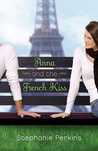
Currently Reading: Anna and the French Kiss

Anna and the French Kiss“That’s what I thought,” St. Clair says when I don’t respond. He shakes his head. His dark messy hair has a few curls in it today. It’s quite breathtaking, really. If there were an Olympics competition in hair, St. Clair would totally win, hands down. Ten-point-oh. Gold medal.

I shrug. “It’s only been a week. It’s not a big deal.”

“Let’s go over the facts one more time,” Josh says. “This is your first weekend away from home?”

“Yes.”

“Your first weekend without parental supervision?”

“Yes.”

“Your first weekend without parental supervision in Paris? And you want to spend it in your bedroom? Alone?” He and Rashmi exchange pitying glances. I look at St. Clair for help, but find him staring at me with his head tilted to the side.

“What?” I ask, irritated. “Soup on my chin? Green bean between my teeth?”

St. Clair smiles to himself. “I like your stripe,” he finally says. He reaches out and touches it lightly. “You have perfect hair.”

Author: Stephanie Perkins

From Goodreads: Anna is looking forward to her senior year in Atlanta, where she has a great job, a loyal best friend, and a crush on the verge of becoming more. Which is why she is less than thrilled about being shipped off to boarding school in Paris—until she meets Étienne St. Clair. Smart, charming, beautiful, Étienne has it all...including a serious girlfriend.

But in the City of Light, wishes have a way of coming true. Will a year of romantic near-misses end with their long-awaited French kiss?

Notes: As mentioned when I originally made plans to read this book, I tend to have ‘meh’ experiences with ‘cute, light romances’. As far as cheerful readability goes, however, Perkins bested the average by a couple of standard deviations. The narrative, while not literary, contains a lot of detail and is both visually and emotionally interesting. The setting—Paris—is irresistible, naturally, and the primary characters are all nuanced, so there’s quite a lot to like about Anna's tale.

The protagonist herself is a believable teenager. She’s also the kind of person who makes us shy, nervous types afraid to go out in public; she's got a sharp eye for detail, especially where quirks are involved, and her judgment is immediate and ruthless. Like most of us girls, she finds it easy to overlook the awkward side of a cute boy; she does not, however, grant passes to anyone else. That didn't kill her likability factor, but experiencing her thoughts frequently made me uncomfortable.

The latter was true not only because of her judgmentalism, but because her response to handsome boys went straight to lust. When she thought Étienne’s (clothed) backside was “better than Notre-Dame”, I nearly put the book down (where. does. one. even. start?! Get some artistry in your soul, child!) Much of her admiration of his body was relatively mild, but it fixated on heading to bed, and the book all but states that teenage sex—given a few standards and precautions—is normal and healthy and good.

That message is exceptionally common in young adult fiction. It is preached and defended with a passion that tends to inspire internet witch hunts against anyone who disagrees loudly enough. Granted, the preachers have some valid points. There is sex in a lot of teen books because there is sex in a lot of teen lives, and as is fairly noted whenever the topic comes up, it is naive to presume otherwise.

It is also naive—and irresponsible—to presume that teens are emotionally and physically prepared to handle the consequences of sexual activity. That any reasoning in favor of abstinence is necessarily prudish. That pregnancy is the worst that can happen. That because tolerably wealthy kids with tolerably supportive parents can often get away with sexual license, the same is true down the social scale. That the prevalence and nature of sexual discussion and sexual content in entertainment has no harmful effect on amount and type of sexual experimentation.

Excursus ended. But here's an addendum: making out in public, while it may be pleasurable for the couple, is distracting and awkward for everyone else in the vicinity, no matter how well disposed toward young lovers. Parents, for the love of human decency if not of God, please endow your offspring with some respect for the word inappropriate.

It more or less goes without saying that those of us with a religious basis for morality cannot help but disapprove some of Anna’s thoughts and actions. Anna is an interesting read for someone brewed and steeped in traditional monotheistic religion, however: she's completely disconnected, so far post-Christian that she's simply pagan. She interacts with Catholic art with no religious feeling whatsoever, wrestles with the need for forgiveness without conscious conviction of its being objectively right, and devotes herself to her bronze gods—lust, friendship, cinema—with nothing to direct or temper the mood of the moment.

I found it disorienting to be in her head. And yet, I liked her; she loved her young brother, offered real compassion to Étienne when he needed it, and showed concern for Meredith’s feelings. I loved that she would paint a chocolate mustache on herself to make a friend smile, that she had sensitivity enough to eventually want to forgive and be forgiven. I couldn't help taking some satisfaction in her punching Amanda for calling Meredith names. And I would have enjoyed more in-text development of her interest in cinema, which was fascinating.

Étienne, the hero, is adorable in his own way: short and appealing and charismatic. The constant references to his hotness didn't do much for me, but the hurt in him did; I wound up wanting to mother him. Like most charismatic boys, he wasn't great at treating female emotions respectfully, though he wanted to be. His waffling was unkind to both Anna and Ellie. To be fair, of course, he did have other serious concerns on his mind at the time.

Anna’s father merits mention as an obvious satire on author Nicholas Sparks, at least regarding his writing career. The (very) little I know of Sparks personally is all to the good; I have no reason to believe he’s anything like the lame jerk Anna considers her father to be. Regarding the James Ashley novels, however, I was amused and sometimes a little miffed by the disdain. While I’ve avoided Sparks’ oeuvre aside from A Walk to Remember for reasons not unlike Anna's (love stories that end tragically in cancer, really? sigh...), I’m forever grateful to the man for humanizing a backward church girl for the reading public. I will always love Jamie Sullivan.

Even James Ashley was allowed some humanity, though, and Perkins' ultimate success is in the depth and detail of her characters. She also made me want to go to Paris, if only to see Notre Dame.