4.01.2013

The Picture-Perfect Blogger... and Me

Easter nail polish!
It's a sunny Holy Saturday as I write, shaping up to be the warmest and prettiest Easter I've experienced in the Pacific Northwest, and I spent most of the day away from my computer. It felt like a good day to pot some of my little seedlings and a pair of avocado trees, paint my fingernails—which happens just twice a year for this gardener/guitarist: on Christmas and Easter—and pound out a Chopin prelude on the piano with intense expression and, unfortunately, coffee jitters.

Lou and I plan to spend the evening at his parents', eat the traditional oyster stew, and then head over to church for Easter Vigil—the most beautiful night of the liturgical year. By the time this post goes live, the Triduum will be over and Easter will have begun. I love the whole Easter season. But there's nothing else in all of life for me like Holy Saturday.

This week, Masha and Christie and I have a three-way blogalectic topic: whether we three artsy Catholic bloggers ought to try in any way to resemble the suddenly popular Mormon mommy bloggers, who were recently examined and praised by a self-described feminist atheist over at Salon.

And as I've sat down to write, I've realized that it's an almost irrelevant question for me. I have all kinds of respect and affection for the LDS church and its members, thanks to my being an Orson Scott Card/Shannon Hale/Stephenie Meyer fangirl and having had a few lovely Mormon friends and acquaintances. But I'm not a Mormon. I'm also not a mommy.

Holy Saturday sunshine and transplanting.
What I am, what I do have in common with these young women, is that I'm a personal blogger with an artistic bent—though I'm bookish and not at all craftsy—and that I belong to a faith tradition that affects every area of my life. The question for me, then, is simply: how open should I be about faith and/or life hardships on my blog? Since both can turn away readers?

The twenty-something LDS mommies are mostly pretty subtle about their religion; it shows up in a link to mormon.org in the sidebar, in references to Utah and the temple. If they talk about faith, it tends to be unspecific but generically Christian in mood and wording. Some of them—again, not all—keep the blogs pretty positive and clean-scrubbed as far as life goes, so that after paging down through a few of them, my own first reaction was sort of like what happens when you watch a commercial and half-believe that drinking Coke will make you sexy. If I were Mormon, says that little niggle, would I be be a pretty 26-year-old wife with a couple of cute toddlers instead of a 35-year-old who had to wait till 30 to get married and still hasn't managed to have a kid, but does have gray hairs coming in? Nope. But I envy those girls their youth, their fashion sense, and their children.

Masha talked about over-share on Catholic mom blogs (gory clinical details of childbirth, anyone?) and finding a balance between posting all happy thoughts and spending too much time working out deep dark issues in public. Christie spoke of feeling never good enough in the presence of the picture-perfect young moms, and of treating a blog as a way to encourage others.

I... could go a million directions, but it seems best to just answer the question.

When the subject of faith wants to come up on my blog—in a book review, in a Friday post's interaction with the liturgical calendar, etc.—I don't hide it, but I do try to keep my readers in mind to some extent. Most of you that I know by name are not Catholic, and some of you aren't Christian at all. The golden rule seems appropriate here; for myself, I'm not generally troubled by people talking about their beliefs as long as there's no apparent attack on my own, so I do my best to make the references organic and honest but non-confrontational.

If this weren't a personal blog—if I were out to meet some public niche interest—I'd just keep faith offscreen, as I nowadays do for politics. But it is a personal blog.


All dressed up for Easter Vigil.
And because it's personal, the matter of how open to be about my imperfect life is a personal decision. For myself, I've learned that on an ordinary day, I'm happier just not thinking about what I don't have or can't do. So I don't talk about childlessness or chronic depression or adrenal exhaustion much. I focus on what I do have and what I can do, and that's what comes out on the blog. And blogging optimistically, in its turn, helps me live a more cheerful daily life.

As for what I have to offer: I try and do for guests at my blog just what I do for guests at my home. If you come here, I hope you find friendly conversation and a place to rest surrounded by books and beauty.

Easter Monday postscript: I feel more like a mommy blogger than usual today, having spent most of the day with my two- and five-year-old nieces. It was a heck of a lot of fun, but I don't know when I'd blog if I had kids that age. Since they went home, I have got the furniture mostly put to rights and the egg off the kitchen floor—the five-year-old helped me make her favorite "doubled eggs" for lunch—but I haven't gotten around to scrubbing the apple juice off the table yet. I'm exhausted. :P

Happy Easter!

3.22.2013

Anxious Seedling-Mama and other stories

Next week being Holy Week, I'm going to take it as a break from blogging.

I need a little time to get caught up on reading, to get some gardening done, to prepare music for the Triduum, to write. And to pray. Much as I love blogging, there is a time for silence. When it comes to the internet, I talk a lot for such a quiet person. It will be good to be silent.

* * *

So, after last year's repeated mini-tragedies with seedlings, look!!

Sweet peas! Reaching for the sun, of course...

Black cherry tomatoes!

And behind the tomatoes... some kind of squash! I don't remember
what I planted in which part of that tray...
Mom gave me the pumpkins and Hubbard squash, so I didn't actually start these, but still:


The trick, I've discovered, is heat and careful watering... very careful watering. The shelves are hung above a baseboard heater, which I've kept on during daylight hours, and the warmth is apparently very good for germination. (Mom starts hers under her woodstove.) As for watering, I've gone all anxious mommy on the seedlings, making sure they never do more than just dry out, but never drown, either.

Anxious mama.
My only trouble is that I threw extra tomato seeds in, suspecting they wouldn't all sprout—I saved them from one of last year's tomatoes—which means pinching off one whenever two come up together. It hurts to kill baby plants. They're so beautiful.

Also, the daffodils are blooming!


* * *

There's nothing a cat loves more than a cushy small space... like the spare towel shelf.


* * *

Music of the week: Antonio Lotti's Miserere, which the mixed schola I'm part of is working on for Good Friday. The text is from Psalm 51, which, in the breviary version, reads—I'm not going to try and translate the Latin myself—"Have mercy on me, God, in your kindness. In your compassion blot out my offense."


* * *

Have a blessed Holy Week and happy Easter! This blog returns a week from Monday.

3.20.2013

Currently Re-reading: Out of the Silent Planet

Out of the Silent Planet (Space Trilogy, #1)He was quite unable to point Earth out to them in the night sky. They seemed surprised at his inability, and repeatedly pointed out to him a bright planet low on the western horizon—a little south of where the sun had gone down. He was surprised that they selected a planet instead of a mere star and stuck to their choice; could it be possible that they understood astronomy? Unfortunately he still knew too little of the language to explore their knowledge. He turned the conversation by asking them the name of the bright southern planet and was told that it was Thulcandra—the silent world or planet.

"Why do you call it Thulc?" he asked. "Why silent?" No one knew.

"The séroni know," said Hnohra. "That is the sort of thing they know."

Author: C.S. Lewis

Synopsis: While on a walking tour of the country, philologist Dr. Elwin Ransom is kidnapped by fellow professors, drugged, and taken into space with them as a human sacrifice to an alien race on Mars. Before he can be handed over to the sorns, he manages to escape, befriend a community of natives, and learn their language well enough that when he meets his fellows again—before the Malacandran judge and ruler, Oyarsa—he stands some chance of learning what the expedition was all about and finding a way safely home.

Notes: In the decade or so since I first read Lewis' Space Trilogy, I've re-read Perelandra once and That Hideous Strength many times, but never—till now—returned to the the first in the series.

It's a short read, and might be called light if not for the fact that as with most of Lewis' fiction, the more you understand of what Lewis knew and studied and believed, the more you'll get out of the tale. I'm not referring just to Christianity. This book made me wish I understood astronomy much more than I do. Lewis, as Michael Ward has pointed out, followed the night sky carefully and understood medieval star symbolism; his imagined landscape for Mars is fanciful, but his concept of the physical relation of the planets is almost certainly scientific (based on the science of 1938), and his astronomical imagery probably has imports that my rudimentary understanding can't make out.

For those of us accustomed to Star Wars and Star Trek, Ransom's space travel seems quaint and more native to fantasy than science fiction. The Mars Rovers have also made it clear that our neighboring planet looks more like Tatooine than Lewis' watered handramits (lowlands) and spiky harandra (mountain ranges). And the Rovers have given us no more sign of hrossa and pfifltriggi than of attractive humanoid races running around in gold lamé and pleather.

None of that mattered to me as I read; Lewis' vision of Malacandra, like that of Narnia, was too beautiful. Once I got past wondering what weird and possibly dangerous chemical would make water actually blue, rather than reflectively so, I lost all disbelief in the gorgeousness of the warm waters, the elongated trees, and the poetic and thoughtful and creative races that lived there.

Ransom's interaction with the various beings belonging to Mars was fascinating. A writer more interested in detailed culture-building might have played out the early work of the linguist dependent on an alien tribe, but Lewis showed more interest in philosophy. He skipped ahead to Ransom's having enough knowledge of the language to talk about the relationships between the creatures and the arts and sciences, as well as between the creatures and their god, Maleldil.

Maleldil, like Aslan, directly correlates to God. It's not so much allegory as, more or less, "that's what the people of this imaginary world call Jesus." Unlike the Pevensie children, Ransom never deals directly with Maleldil; he works instead with the eldila and Oyarses, who are an interesting study in angelology—another subject that Lewis surely knew much more about than I do. Maleldil stays offscreen, but Ransom talks of him and of human sin and weakness with Oyarsa.

That climactic conversation covers expansionism, the claims of science against morality, and the difference between loving humanity as a concept and actually loving humans. As such, it becomes—again, not allegory, but an in-narrative thought piece championing humility, respect, and religious-based morality against an old progressive ideal. It's fairly obvious about making its philosophical points, but then, so is Star Trek. Like the best of all science fiction and fantasy, anyway, the story takes the reader out of this world with the intent of looking back and learning more about himself and the planet he comes from.

It's a beautiful tale, and a fairly easy read despite the philosophy. And as far as the Space Trilogy goes, it's just the beginning; the other two, to my own feelings at least, only get better.

3.19.2013

Five Things: A Replay

This week's top ten topic,

Top Ten Books I HAD To Buy...But Are Still Sitting On My Shelf Unread

...is one I've already done.

By my count, I've got another five or six of these Top Ten Tuesdays that aren't more or less repetitive. After that, I'm going to have to find something else to do with Tuesdays around here. I have one idea I like very much, but to really do it up well probably means sketching, which I haven't done in years.

For today, Christie has tagged me in one of those say-five-interesting-things-about-yourself memes. I love those so much that, upon research, I discover I've already done some version of this at least four times on this blog. I suppose that makes me a narcissist. It would also seem that I have now told ALL THE SECRETS.*

But I still like to visit the warmer lands.
Like Christie, though, many of you are comparatively new friends and haven't seen those old posts. Since hardly any of you were around in January of 2007, when I posted the first, I'll replay and expand upon that one. Five things you may not have known about me, then:
1. I have been chased by a headless snapping turtle.
And stepped on a snake thinking it was a garden hose... and, with my family, been pursued by a water moccasin. And we won't even talk about alligators. There are reasons I don't live anywhere near the tropics now. The turtle, anyway, upon its decapitation at the hands of my uncle, took off like a beheaded chicken and came straight after my sister and me. Beth was a toddler and I wasn't much older, so you can imagine the screams and the panic as the dead reptile followed us—presumably unintentionally—in a circle around the yard.
2. I have never conquered my irrational childhood fear of swimming pool drains.
Hot tub jets and bathtub drains also give me the willies. In the last year or two, I read an article explaining how swimming pools work, hoping to get over the silliness. But the article claimed that the drains are left open all the time, which I hadn't known before, and I now have very little interest in ever going swimming again.
3. The author’s genes kicked in early for me. When I was about five or six, I used to do my own narration in third person, for instance: “She walked down the stairs and turned on the light.”
Nerd. The word is nerd. My friend Bradley once pointed that out. "All you ever say is she, she, she," he complained, which embarrassed me terribly, as he was eight years old and adorable. "No, it's not all I ever say," I said. Unfortunately for me, in inspiring his original comment, I had given him a ready example to quote back to me.
4. Instead of taking a teddy bear to bed with me as a little girl, I used to take my Breyer horses.
That might not be the main reason that they always had broken legs, but it probably contributed.
5. The first two songs I ever wrote were both written solely because someone else I knew had written a song, and I figured “What the heck—if they can do it, so can I.”
And I am way too much of a narcissist to ever sing those terrifically bad songs in public. Ever.

Now, I'd love it if you'd all tell me five interesting things about yourself in the comments. Or post on your own blog and link back so I can read it. :D

* No, I haven't. Not all. But it would require some serious and time-consuming excavations of the soul to come up with interesting factoids that you haven't heard and that I'm willing to share.

3.18.2013

Traditional Publishing vs. Self-Publishing: The Debate Continues

It's Monday, and Lou's brothers and sisters have all flown or driven back to their various homes around the country after a hilarious (pun intended, I suppose) and happy weekend celebrating Dad St. Hilaire's birthday. Lou and I have been off all usual radars since Thursday night—even Friday's blog had to be written early and scheduled—and I'm a bit disoriented upon this return to normal.

Of course, the word normal is kind of meaningless, especially when we're coming up on Holy Week. We have choir and/or quintet practice five out of the next seven days. Two of those are at my house. This is not going to be a quiet week.

Still, it's Monday, and Monday wants a post. Ergo, your writers' link of the week: Hugh Howey's advice to aspiring writers.

All right. For several years I've waffled inside between traditional and self-publishing. I've been working towards going indie with my fairy tale retelling, while reserving my NaNoWriMo novel and sequels for a serious attempt at the Big Five. I even wrote a brief manifesto titled "Traditional Publishing vs. Self-Publishing: Why I'm Trying Traditional" two years ago. And while I wouldn't say I haven't seriously considered self-publishing—I have—some part of me has always hung onto the plan.

Howey just shook that determination in serious ways. He's not focusing on worst case scenarios or calling people stupid for wanting to get in with a big publishing house (nor, thank goodness, is he denigrating people for making use of modern self-publishing tools, as some traditional-publishing loyalists are wont to do.) He's simply suggesting that, publishing contracts and the life of a shelved book being what they are*, a writer is better off starting on his own and building his career from the outside in. From the article:
This is going to sound strange, but you are MUCH better off with your 10th work exploding than your 1st work. You’ll never have quiet time to crank out quality material ever again. And when your backlist matches the growth of your first breakout, you’ll do very well for yourself. Be patient. It’s been said by many others, but I’ll repeat it here: self-publishing is a marathon.... Again, this doesn’t mean you shouldn’t team up with a publisher if you choose. But do it from a position of power. Give your work a chance (years and decades) to be discovered.
He's the first person I've ever heard state so plainly that careers are best launched gradually, on a carefully-built body of work, not on a single polished and marketable manuscript that may or may not fly in its brief window of opportunity. That sounds like truth to me.

I question a handful of the absolutes in his piece. For instance, the stigma against self-publishing is not gone, it's merely diminished. Yes, a certain recent Big Five mermaid romance I read contained more copy editing mistakes than my average first draft (not exaggerating), and yes, my friend Annie's self-published Christmas children's book that she wrote for her nieces and nephews equals or supersedes much of what can be found in B&N during the holiday season. (It is beautiful. I wholeheartedly recommend it.)

But I generally read a self-published novel only after it's been strongly suggested to me—if only by its own excerpt—that it's more thoughtfully and empathetically written than its compatriots. Of course, there are so many novels in the world that this is more or less true all around.

Self-publishing is too immediate and too short on gatekeepers to offer readers the kind of confidence a publishing house can. An indie writer has to be able, not just to tell a good story, but to sit on that story till she's got her world and characters and prose developed at least to the point where it would satisfy a professional reader (and then to find and utilize a smart editor). It takes a level of self-control and objectivity fairly rare among humankind to be able to wait for and finally spot that moment in your own work, and I find it hard to imagine that anyone publishing more than about a novel a year—traditionally or independently—possesses that.**

But none of these debate points suggests to me that Howey is wrong in his general approach. For a quiet, deliberate, cautious mover like myself, he could be quite right.

I'm not committing either way just yet. Feel free to argue with me or Howey or both. I'm just looking for the way to give my books the very best chance at life I can give them.

* Regarding publishing contracts and the life of a shelved novel: industry contracts tend to contain things like non-compete clauses. And books that actually make it into bookstores, and they don't all, reportedly have an average shelf life of six months. The former difficulty you may escape, at least in part, with the help of a good agent or lawyer. The latter is simply an inherent risk. Is that risk better than self-publishing and never making it onto B&N shelves at all? That's a lot of question for a footnote; suffice it to say that the answer isn't clearly yes or no.

** The converse to that, of course, is that the book-a-year schedule of traditional publishing undermines story development, too. That's a difficult pace for most people to reach, and a nearly impossible one to maintain.

3.15.2013

Sniffing Mayonnaise and other stories

Habemus papam. Such sweet words. I keep thinking them and smiling.

God bless Papa Francis.

Source: Getty images, via The Australian

* * *

Dear Google, I know it's a free service and all, but WHY WOULD YOU KILL GOOGLE READER?! I sincerely do not understand.

For fellow Google Reader dependents, LifeHacker has a good post on the best alternatives. (Thanks for the link, George.) Looks like I'll be trying out NetVibes and The Old Reader and possibly Feedly.

* * *

Maia: "PLEEEEEEZ can I haz canned cat food."

Me: "This is mayonnaise. You don't want it. Trust me."

Maia: "But look, I'm winding around your ankles. How can you resist your adorable kitty?"

Me: "I don't have canned cat food. Look. Sniff. You're not into people food."

Maia: "Huh. What an odd smell. IT IS ON MY CHIN. Why is it on my chin?! UGH." *licks* "Nasty! What is wrong with you?!"

Me: *laughing much too hard to talk*

Maia: "I'm coming for your FACE."

In my defense, I just held out a finger with a smear of mayonnaise on it (not the entire jar—you don't need to be afraid to try the mayo at my house) and she rubbed her chin into the smear herself. But I'm pretty sure that's not how she'd tell the story.

* * *

Music of the week: A beautiful, simply-sung medieval English hymn on Christ's passion: "De Milde Lomb Isprad O Rode" (O Gentle Lamb Spread on the Cross). Lenten soul food.


* * *

Happy weekend!

3.13.2013

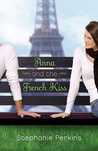
Currently Reading: Anna and the French Kiss

Anna and the French Kiss“That’s what I thought,” St. Clair says when I don’t respond. He shakes his head. His dark messy hair has a few curls in it today. It’s quite breathtaking, really. If there were an Olympics competition in hair, St. Clair would totally win, hands down. Ten-point-oh. Gold medal.

I shrug. “It’s only been a week. It’s not a big deal.”

“Let’s go over the facts one more time,” Josh says. “This is your first weekend away from home?”

“Yes.”

“Your first weekend without parental supervision?”

“Yes.”

“Your first weekend without parental supervision in Paris? And you want to spend it in your bedroom? Alone?” He and Rashmi exchange pitying glances. I look at St. Clair for help, but find him staring at me with his head tilted to the side.

“What?” I ask, irritated. “Soup on my chin? Green bean between my teeth?”

St. Clair smiles to himself. “I like your stripe,” he finally says. He reaches out and touches it lightly. “You have perfect hair.”

Author: Stephanie Perkins

From Goodreads: Anna is looking forward to her senior year in Atlanta, where she has a great job, a loyal best friend, and a crush on the verge of becoming more. Which is why she is less than thrilled about being shipped off to boarding school in Paris—until she meets Étienne St. Clair. Smart, charming, beautiful, Étienne has it all...including a serious girlfriend.

But in the City of Light, wishes have a way of coming true. Will a year of romantic near-misses end with their long-awaited French kiss?

Notes: As mentioned when I originally made plans to read this book, I tend to have ‘meh’ experiences with ‘cute, light romances’. As far as cheerful readability goes, however, Perkins bested the average by a couple of standard deviations. The narrative, while not literary, contains a lot of detail and is both visually and emotionally interesting. The setting—Paris—is irresistible, naturally, and the primary characters are all nuanced, so there’s quite a lot to like about Anna's tale.

The protagonist herself is a believable teenager. She’s also the kind of person who makes us shy, nervous types afraid to go out in public; she's got a sharp eye for detail, especially where quirks are involved, and her judgment is immediate and ruthless. Like most of us girls, she finds it easy to overlook the awkward side of a cute boy; she does not, however, grant passes to anyone else. That didn't kill her likability factor, but experiencing her thoughts frequently made me uncomfortable.

The latter was true not only because of her judgmentalism, but because her response to handsome boys went straight to lust. When she thought Étienne’s (clothed) backside was “better than Notre-Dame”, I nearly put the book down (where. does. one. even. start?! Get some artistry in your soul, child!) Much of her admiration of his body was relatively mild, but it fixated on heading to bed, and the book all but states that teenage sex—given a few standards and precautions—is normal and healthy and good.

That message is exceptionally common in young adult fiction. It is preached and defended with a passion that tends to inspire internet witch hunts against anyone who disagrees loudly enough. Granted, the preachers have some valid points. There is sex in a lot of teen books because there is sex in a lot of teen lives, and as is fairly noted whenever the topic comes up, it is naive to presume otherwise.

It is also naive—and irresponsible—to presume that teens are emotionally and physically prepared to handle the consequences of sexual activity. That any reasoning in favor of abstinence is necessarily prudish. That pregnancy is the worst that can happen. That because tolerably wealthy kids with tolerably supportive parents can often get away with sexual license, the same is true down the social scale. That the prevalence and nature of sexual discussion and sexual content in entertainment has no harmful effect on amount and type of sexual experimentation.

Excursus ended. But here's an addendum: making out in public, while it may be pleasurable for the couple, is distracting and awkward for everyone else in the vicinity, no matter how well disposed toward young lovers. Parents, for the love of human decency if not of God, please endow your offspring with some respect for the word inappropriate.

It more or less goes without saying that those of us with a religious basis for morality cannot help but disapprove some of Anna’s thoughts and actions. Anna is an interesting read for someone brewed and steeped in traditional monotheistic religion, however: she's completely disconnected, so far post-Christian that she's simply pagan. She interacts with Catholic art with no religious feeling whatsoever, wrestles with the need for forgiveness without conscious conviction of its being objectively right, and devotes herself to her bronze gods—lust, friendship, cinema—with nothing to direct or temper the mood of the moment.

I found it disorienting to be in her head. And yet, I liked her; she loved her young brother, offered real compassion to Étienne when he needed it, and showed concern for Meredith’s feelings. I loved that she would paint a chocolate mustache on herself to make a friend smile, that she had sensitivity enough to eventually want to forgive and be forgiven. I couldn't help taking some satisfaction in her punching Amanda for calling Meredith names. And I would have enjoyed more in-text development of her interest in cinema, which was fascinating.

Étienne, the hero, is adorable in his own way: short and appealing and charismatic. The constant references to his hotness didn't do much for me, but the hurt in him did; I wound up wanting to mother him. Like most charismatic boys, he wasn't great at treating female emotions respectfully, though he wanted to be. His waffling was unkind to both Anna and Ellie. To be fair, of course, he did have other serious concerns on his mind at the time.

Anna’s father merits mention as an obvious satire on author Nicholas Sparks, at least regarding his writing career. The (very) little I know of Sparks personally is all to the good; I have no reason to believe he’s anything like the lame jerk Anna considers her father to be. Regarding the James Ashley novels, however, I was amused and sometimes a little miffed by the disdain. While I’ve avoided Sparks’ oeuvre aside from A Walk to Remember for reasons not unlike Anna's (love stories that end tragically in cancer, really? sigh...), I’m forever grateful to the man for humanizing a backward church girl for the reading public. I will always love Jamie Sullivan.

Even James Ashley was allowed some humanity, though, and Perkins' ultimate success is in the depth and detail of her characters. She also made me want to go to Paris, if only to see Notre Dame.

3.12.2013

Tuesday and a Little Bit about Books

No, the daffodils aren't from my garden.
Lou got them for me for my birthday.
No need to wish me many happy returns—
that was weeks ago. I just like the picture. :)
This week's Top Ten Tuesday: Books on my spring TBR list. Between last week's series-I-need-to-start list and January's books-to-read-this-year list, I feel as if I've already more or less filled this out.

If you want to know the specifics of the moment, however, I've got Orson Scott Card's Shadow of the Giant and Shadow Puppets sitting within reach. I'm in the middle of re-reading C.S. Lewis' Out of the Silent Planet, I'm planning on tracking down Marissa Meyer's Cinder, and I played hooky from my to-do list this morning to finish Stephanie Perkins' Anna and the French Kiss, partly because I couldn't put it down and partly because I really needed something to review for tomorrow.

Apart from that, I have a document full of intriguing and/or recommended titles and am more likely to pick based on momentary mood than on plan, especially since I've got two books to hopefully finish revisions on by summer.

Maia couldn't care less what I read
as long as I leave room on my lap for a cat.
I'd forgotten that I intended to read War and Peace this year. That's going to charge me more time than I can likely pay until autumn... but we'll see.

What's on your to-read list for spring?

UPDATE: I've closed comments on this post for now. It's getting heavily spammed for reasons unbeknownst to me. My apologies to those of you with anything legitimate to say. :)

3.11.2013

The Cost of Writing

Quiet week this Monday—I've got elderberry trees and daisies to plant, and some new pumpkin and Hubbard squash starts waiting for the garden hoops to go up, and two pieces of polyphony to learn for Good Friday (squee!!!), and books to write. Especially that last. I am whelmed in deep gulfs of books to write.

These days when I'm focused with all my strength on navigating said gulfs, it's hard to read abstract thought about the work of writing. In the middle of the process, bald instruction is more likely to confuse the rhythm and mood of narrative than to actually direct it. But here, thanks to BrainPickings, is F. Scott Fitzgerald talking about the cost of writing at a professional level. It's not a point about talent or training, it's the simple question of being all in:
I’ve read the story carefully and, Frances, I’m afraid the price for doing professional work is a good deal higher than you are prepared to pay at present. You’ve got to sell your heart, your strongest reactions, not the little minor things that only touch you lightly, the little experiences that you might tell at dinner. This is especially true when you begin to write, when you have not yet developed the tricks of interesting people on paper, when you have none of the technique which it takes time to learn. When, in short, you have only your emotions to sell.
Fitzgerald isn't around to tell me whether I myself am succeeding, but according to his laws, my conscience is at least clear.

Readers and writers, if you have comments on Fitzgerald's points about the necessity of selling your deepest emotions, I'd love to hear them.

3.08.2013

Lost Majesties and other stories

This afternoon I stood up in the choir loft at church, with the sun shining warm and colorful through the St. Cecilia window, and listened to a family friend play the old pipe organ.

It felt so odd to me, standing in that immense space with all that sound gusting through the pipes and vibrating outward, that the organ has become such a lost art. All that tremendous majesty, all that colossal reverence, all the challenge of the console with its keyboard levels and stops and pedals and its variety of possible sounds... and we glue acoustic tiling onto the high ceilings of a Gothic church and bring in guitars and drum sets.* It's a strange world.**

Here's a recording of organist Sean Jackson playing one of the pieces our performer pulled out: Bach's Toccata and Fugue in D minor. Splendid. Just—splendid.


* * *

Spring is teasing us, what with the sun out and a hint of something vaguely like warmth in the air. It knows full well it's only going to poke its head around corners and wave for a couple of months yet. But I'll take every hour I can get of it. The earliest flowers are confident, at least:


* * *

And here are your gratuitous pictures of the sock-loving fiend:


* * *

It's late... happy weekend!

* I love me some guitar and drums—I do. I play the guitar, and I'm not outright opposed to it in principle even at Mass. And our parish has a very respectful drummer. But generally speaking, that kind of on-all-fronts battle against an artistically designed acoustic space is a monstrous aesthetic mistake. Why yes, I do have opinions on the subject.

** But sometimes things turn around... and there are good things afoot in our own choir, from the beginnings of including chant and polyphony and more four-part hymns to the hope of more frequent organ before long. All is not lost. I have all kinds of hope... :)

3.06.2013

Currently Reading: Sun and Moon, Ice and Snow

Sun and Moon, Ice and Snow“Thank you, Mother,” Askeladden said in a lofty tone. “I think I shall sleep here tonight, to rest up while this storm blows itself out, and then I shall be off after the bear.”

“An excellent plan, my son,” Frida said. “Here, have some more stew, and some bread and cheese. You need to keep up your strength. And before you leave tomorrow, I’ll pack you a bag with plenty of dried meat and cheese and bread, for the hunt.”

“You will regret this,” the lass said.

She was speaking to Askel, but she never knew if he heard her. Her gaze was fixed on the little window beside the door. The shutter had flapped loose when Askel had come in, and she had not yet closed it. The greased reindeer hide pane barely let the light filter in when the sun was shining, but now she thought she could see the snow swirling outside. It seemed to make shapes: an isbjørn and the shambling form of a troll.

“You will regret this,” she repeated, her voice no more than a whisper. “We all will.”

Author: Jessica Day George

From Goodreads: Blessed—or cursed—with an ability to understand animals, the Lass (as she’s known to her family) has always been an oddball. And when an isbjorn (polar bear) seeks her out, and promises that her family will become rich if only the Lass will accompany him to his castle, she doesn’t hesitate. But the bear is not what he seems, nor is his castle, which is made of ice and inhabited by a silent staff of servents. Only a grueling journey on the backs of the four winds will reveal the truth: the bear is really a prince who’s been enchanted by a troll queen, and the Lass must come up with a way to free him before he’s forced to marry a troll princess

Notes: This book appealed to me on several fronts: first, by being a retelling of one of my favorite fairy tales; second, by being another book by the author of sweet little Tuesdays at the Castle; and third—which I did not find out till I opened it—by giving its heroine the ability to talk to animals, which is one of my favorite magical tropes.

It made for pleasant reading. East of the Sun and West of the Moon is a difficult tale to re-tell well; it doesn’t typically work as a romance on account of the hero being a white bear for most of the story, and scenes like riding on the four winds and visiting a castle full of trolls do not make for easy depiction. Regarding the latter, however, George happens to be a particularly good worldbuilder, especially for a middle grade writer. Simple though the narrative is, the details are thoughtful and plentiful and sensory.

Regarding the former—the matter of a romance between a man enchanted into bear form and a young human girl—it’s all very straightforward and tasteful. I’d have liked to see the bear-man developed more thoroughly, as George showed herself perfectly capable of making a non-human character affectionate and interesting in Tuesdays (which, to be fair, is a more recent work), but the story focused primarily on ‘the lass’, who begins the story with no name, and her brother Hans Peter. Both of them are quite lovable, as is the lass’s pet wolf, Rollo.

The retelling is set in Norway amid a Narnia-esque extended winter, which gives the lass a little world-saving to do along with hunting down her lost bear-man. It allows for a very traditional reworking of the tale, with most or all of the usual elements included and with the new twists as developments of the basic story rather than outside concepts twisting the tale itself.

I like retellings just about any way I can get them, and enjoyed the vividness of the setting and the old-style fairy tale feel of this one. It’s not a hefty book or one that left me with a lot of clear discussion points—at least, not ones that don’t involve spoilers; I can think of one possibly interesting debatable that would spoil one of the nicest little additions to the story—but it was a worthwhile read and a genuinely good addition to the realm of re-told classic tales.

3.05.2013

Top Ten Tuesday: Series I'd Like to Try Out

Series tend to be hard on the reader, thanks to the necessary but painful delay between releases, which is often exacerbated by an authorial penchant for mean cliffhangers. Because the extended page count allows for development of a world and characters that standalone novels rarely match, however, I do love a good series when I can find it.

Top Ten Tuesday is hosted by The Broke and the Bookish! Do come join the fun...
I'm always, therefore, questing after something to shelve in the high honors section with Narnia and The Wheel of Time and Harry Potter. Here are some of the next few I've considered trying.

1. The Anna-Lola-Isla series by Stephanie Perkins. I've had thoughts of picking up Anna and the French Kiss for well over a year now, and have been stuck between the appeal—Paris! Quirky heroine! Probable good writing!—and a hesitation based on having had very mixed experiences with what reviewers and marketers label as 'cute, light romances' (frequent translation: "meh") and 'sexy heroes' (usual translation: "described with a bald and uncompelling fixation on pectoral muscles.") The book looks like fun, though. I'll read it. If I like it, maybe I'll try Lola and the Boy Next Door.

2. The Lunar Chronicles by Marissa Meyer. Arabella has been trying to convince me to read these for months, and I've delayed because cyborgs and dystopians generally don't interest me. Good worldbuilding and characters do, however, as do fairy tale retellings—so on the hope of all that, I mean to give Cinder a read.

3. The Shannara books by Terry Brooks. There's nothing I love more than a good epic fantasy, and this is one all fantasy fans are supposed to have read, so it's long past time I give Brooks his due.

4. The Mistborn trilogy by Brandon Sanderson. I appreciated his finish of The Wheel of Time; now I'd like to see what he does with his own stories.

5. The Dragonriders of Pern series by Anne McCaffrey. People keep telling me it's great.

6. The Fair Godmother books by Janette Rallison. I never seem to tire of Cinderella retellings.

7. The Princess Diaries books by Meg Cabot. I loved the (first) movie so much that I've been afraid to read the books it was adapted from. Yes, I know that's heresy. At any rate, I ought to track down the original Mia Thermopolis and read her tale.

8. The Books of Pellinor by Allison Croggon. This one's been on my definitely-to-read list for a couple of years. I need to reference my to-read list more often when hunting out books, that's all.

9. The series beginning with Under the Never Sky by Veronica Rossi. I hear it has a gentle protagonist, which is one of my favorite things to find.

10. The Dark is Rising sequence by Susan Cooper. A series with a Potteresque storyline, but published about thirty years before Harry. It's one I've been meaning to read since forever, but see Pellinor.

What have I missed? And what series are you interested in picking up?

3.04.2013

Slogans, Book Nerd Awesomeness, and the Study of Insects

Funniest thing I've seen all day: in a review of a book titled "100 Words Almost Everyone Confuses and Misuses",
"It is essentially just a small dictionary and beyond definitions doesn't go into detail on entomology." 
Apparently there needs to be a sequel. :)

Thanks to Arabella for the following link: Buzzfeed's "The 30 best places to be if you love books." Number 27... is matchless. This is supposedly someone's living room:

Books, a laptop, and a grand piano.
The latter is sort of overkill when you'd be using it to play
themes from The Man from Snowy River, but STILL.
The glory! I love it so much that I can't make coherent sentences to express said love, though the room could admittedly use a couch and a few houseplants. If it were mine, I'd also add some lamps and religious statuary and straighten the carpet on stage right, and Lou would want his laptop along, and Maia would make sure several socks got into the final version. The superlative greatness stands, however.

The other photos are lovely, too, and number 24 reminds me of the character in Fullmetal Alchemist—Sheska, if I recall rightly—who said "It's lonely when you can't find the book you want to read."

Also fantastic: Literary cakes. I love the "highly literary wedding cake", the one for The Night Circus, and the mini library. And the Harry Potter one, and the Jane Austen ones, and the Poe one... oh, all right, they're pretty much all wonderful.

Writers' link of the week: The Real Fauxtographer's post on the Nike slogan. From the piece:
I didn't want to take his advice. I was scared. I didn't want to start taking anything without a plan in mind and just be continually disappointed in the results. But like he said, I just did it. My original batch of photos were awful, and I almost stopped right then and there but then, like the boyfriend predicted, the ideas started flowing and finally got a shot I was excited to edit.
I'm not sure how I feel about "Just Do It", honestly. My 2010 NaNoWriMo was an attempt at just doing a specific "it"—namely, writing the sequel to my 2009 NaNo—and it was disastrous. But I do think that stopping outright is usually a dangerous response to creative block. Just do—something. Step back and go over your original vision. Brainstorm directions for the project that are totally different from what you had planned. Work on a different project. Study works that inspire you. Take a day off to go for a walk and let your thoughts wander. Whatever it takes to loosen up the mind.

Of course, as slogans go, "Just Do Something" is inexpressibly ridiculous. But whatever.

Those of you who read young adult fiction, I highly recommend checking out all of The Real Fauxtographer's ongoing YA novel photo series. Her image of Across the Universe is creepily perfect, and I think the donut-shop scene from Anna and the French Kiss—which I've not read, but I'm about to remedy that—is flat-out adorable.

3.01.2013

Wasting My Intelligence and other stories

NB: I've enabled comment moderation on posts over a week old as a blockade against recent, fairly heavy spamming attacks.

This is an attempt to avoid unchaining the monster Captcha, which deters most spammers but occasionally scares off friendly commenters, too. I hate the Captcha myself; it's not quite as bad as having dementors guarding Hogwarts, but it's nonetheless viciously annoying when you've gone through three or four images and you still can't get the characters right. I can't blame other bloggers for using it, but for my own blog, for now, comment moderation seems like a lesser evil.

All that to say: if you comment on a post after its seventh day live, it'll take a little time to go through. Never fear, though. I have no trouble distinguishing between real commenters and this sort of thing:
Write more, thats all I haѵe to sаy.
Lіterally, it seems as though yοu rеliеd on the viԁeo to
mаke your point. You obviouѕly knoω what yοure tаlking about, whу waste
youг intelligence on juѕt posting vidеos to your
ѕite whеn you coulԁ be givіng us something informative tο read?
O stranger, you may freely lecture me about the waste of my intelligence when you prove you can tell the difference between English characters and Greek, and when you demonstrate proper use of apostrophes. Not to mention commas. Oh, and grammar. And when you don't link back to some obviously impersonal site-which-shall-not-be-named. Until then, a fig for your opinion of my blogging.

* * *

The pope emeritus retired to Castel Gandolfo yesterday, and we went down to church and prayed a rosary with others from the parish. I miss him, and I miss having a pope. It's the first time I've ever been aware of or interested in the sede vacante period, and it feels odd.

Fun fact that I didn't know till the last couple of weeks: by virtue of being eighteen months older than Lou, I've lived through four popes instead of two. I was born just a few months before Paul VI died, and then his successor, John Paul I, lived only 33 days after election. Lou was born after John Paul II's election. I think that makes me feel old.

* * *

Most cats love to sleep on pillows and cushions. Maia prefers hers to be standing on end.


* * *

Music of the week: Someday I want to get an ensemble from church choir to learn Palestrina's staggeringly gorgeous adaptation of the Veni Creator Spiritus.


* * *

No, I'm not the least ashamed of using that video to make my point. There's no immediately accessible better way to prove that polyphony is beautiful (but go hear it sung in a Gothic or Byzantine [or baroque, etc.] church sometime, if you get the chance.) Anyhow, if a picture's worth a thousand words, then a song is priceless—it deals in another currency. Which makes my own primary art the least of these, I suppose. I only dabble in the greatest.

Happy weekend!

2.27.2013

Currently Reading: Spindle's End

Spindle's EndCats were often familiars to workers of magic because to anyone used to wrestling with self-willed, wayward, devious magic—which was what all magic was—it was rather soothing to have all the same qualities wrapped up in a small, furry, generally attractive bundle that looked more or less the same from day to day and might, if it were in a good mood, sit on your knee and purr. Magic never sat on anybody’s knee and purred. Cats were the easiest of the beasts for humans to talk to, if you could call it talking, and most fairies could carry on some kind of colloquy with a cat. But conversations with cats were always more or less riddle games, and if you were getting the answer too quickly, the cat merely changed the ground on you. Katriona’s theory was that cats were one of the few members of the animal kingdom who had a strong artistic sense, and that aggravated chaos was the chief feline art form, but she had never coaxed a straight answer out of a cat to be sure. It was the sort of thing a cat would like a human to think, particularly if it weren’t true.

(I could have picked ever so many quotes from this book, but could not resist this one. I laughed over it for at least a minute straight.)

Author: Robin McKinley

Synopsis: In this spin on the Sleeping Beauty tale, princess Rosie receives a curse on her name-day: by her twenty-first birthday, she will prick her finger on a spindle and fall into a sleep from which no one can rouse her. In hopes of saving her, a small-town fairy kidnaps her and raises her to a commoner's life and everyday magic. But as Rosie grows up rough and outdoorsy and not at all fond of handcrafts like spinning, the fairy who cursed her keeps searching for a way to kill her sooner rather than later, and the clock keeps ticking.

Notes: Already impressive for her ability to achieve a variety of moods and styles—her opus ranges from the mythic, ethereal Beauty to the serious, detailed The Hero and The Crown—McKinley further proved her authorial flexibility with Spindle’s End, which is flat-out hilarious. This novel struck me as a four-hundred-page cousin to Gail Carson Levine’s Ella Enchanted, what with fairy godmothers giving awkward gifts and magic being a quirky, ever-present part of daily life. I was also pleasantly put in mind of Diana Wynne Jones, though if anything, McKinley’s world and characters felt more vivid and emotional to me than that of Howl’s Moving Castle or The Dark Lord of Derkholm.

Told in five parts with third-person omniscient narrative voice and two protagonists, Spindle’s End reworks the short, not-very-action-packed Sleeping Beauty fairy tale into a lively triple romance with heroism and coming of age and girl power on every front. And fairies, of course. It took a wildly different tack from the last Sleeping Beauty retelling I read—Jane Yolen’s Briar Rose—but here I’ll leave off making comparisons to other books, except to say that every time McKinley used the phrase ‘briar rose’, it made me think of the Holocaust, thanks to Yolen, which was disconcerting.

The book threatened to trespass on dangerous territory in a variety of places but never quite committed the offense. Priests and religion were made fun of a couple of times, but then, so was academia, to my thorough amusement. I don’t care for pointed subversions of feminine love for beauty, but Rosie won me over—much more on that later—and Peony was such a good character that the balance was struck. As for matters of plain taste, the story would have risked boring me in the long run had it been just a comedy, but it contained drama and human feeling enough to save it from that dark fate.

Most of the comedy was centered in the worldbuilding, generally told through extensive asides to the reader, often in parenthetical phrases and sentences long enough to rival St. Paul's—a tactic which would not have been advisable in a novel less devoted to being funny. It worked splendidly in this case, according to my own sense of humor, at least, which was roused to numerous snorts and smirks and giggles and the occasional burst of laughter. It succeeded, however, not just as humor but as worldbuilding; the Gig and the dja vines, Woodwold and the smithy and their surroundings all popped up as tangible, dimensional settings. If asked again which fictional worlds I’d like to visit, the Gig would make the top five with Hogwarts and Narnia and Silverydew.

It takes a good character to sell me on a novel, however, and Spindle’s End had several: Katriona and her aunt, Barder and Narl, Throstle and Fast and the merrel, the queen, Peony, and of course Rosie. Brave Katriona—protagonist number one—got my devotion from the outset; headstrong Rosie earned mine as she grew up.

Rosie probably merits extensive discussion as a type of anti-heroine, not because she’s not good, but because she’s not especially feminine in the usual dramatic style. McKinley enjoys playing this trope in various forms, with dragon-fighting Aerin-sol being another obvious example, but Rosie, with her trousers and her grunts, her short hair and her height, her hatred for embroidery and her love for horse-doctoring, is furiously set against all things girly-girl.

What I appreciate about McKinley’s characterizations, however—a fact of empathy that too many writers fail to include—is that even the tough, boyish heroines are allowed human vulnerability, and therefore they come off as womanly in their own ways. As a fellow tall girl with a fondness for jeans and horses and an unfortunate distaste for handicrafts, I sympathized with Rosie on numerous counts. And her deep love for her adoptive family and friends ultimately brought out a softness in her that suited her strength and kept her from destroying her own femininity.

Much of the book worked on similar empathetic principles. Rosie’s romance was odd and comical but emotional and satisfying. The twists on the ending were fascinating and touching despite making me want to roll my eyes once or twice. There was one aspect of the wrap-up that came off bittersweet, but a firm hope accompanied it, so it didn’t put me off the full-fledged glow at the ending.

The only thing I didn’t care much for was the castle showdown against Pernicia, which was packed with hard-to-visualize weirdnesses reminiscent of Aerin’s mage-battle in The Hero and the Crown. It felt like a scene from a different book and by a different writer, and its primary importance seemed to be that it allowed all the animals to take part. It took up so little of a very long, very satisfying story, however, that it didn’t trouble me much.

In the end, I was grateful for all four hundred of this book’s pages. The length gave me a lot of time to live in the Gig, to get to know Aunt and Katriona, and to become the solid, energetic, animal-loving country girl who contained strong hints of my own teenage self. I miss that girl. I have a feeling I’ll return for more time with her.

2.26.2013

Top Ten Tuesday: Authors I'd Put on My Auto-Buy List

There being a great number of authors in the world, and there being an unfortunate number of limits on reading time in any single life, the idea of an auto-buy list strikes me as a bit overwhelming. There probably aren't ten living authors I'd dare promise to read everything they write, especially if they're prolific. Which raises the question: Can we include authors who have died?

I'm going to say yes, just to make my life easier.

Top Ten Tuesday is hosted by The Broke and the Bookish! Do come join the fun...

Unfortunately, my three favorite authors—G.K. Chesterton, C.S. Lewis, and Orson Scott Card—have all got loads of books I've yet to read. It seems disingenuous to pledge to buy everything they write when I've not made it through half their respective oeuvres. (But I do have two of Card's Bean books on deck, waiting only till I've re-read Lewis' Out of the Silent Planet. So, there's that.)

And then there's J.K. Rowling. Crazy as I am about Harry Potter, I've not read The Casual Vacancy. Nor do I think I'm likely to.

Here, however, are a few authors whose work I've read all (or nearly all) of and liked well enough to at least seriously consider anything they wrote in future.

1. Jane Austen. Absolutely. I'd just go wild for another of her sweet romances set amid intimate social comedies.

2. Shannon Hale. I've not read her Midnight in Austenland or the graphic novels. Yet. But I think I've read everything else, and I'm ever hoping for more of her bright, humorous storytelling and textured worlds.

3. Stephenie Meyer. Though I'm afraid of sequels to the fantastic The Host, which ended in a very good place. Her outstanding concepts and emotionally resonant characters really get at me; I'm never through with a Meyer book till I've read it five times.

4. Ally Condie, though she has some earlier works I've not read. Anyone who can make me love a dystopian series has got something worth searching out. The quiet mood of her prose and her Cassia's artistic, contemplative nature sold me on the Matched series and interested me in anything else she has to say.

5. L.M. Montgomery. I've still got a couple of her lesser-known novels to track down, but who wouldn't take more of the creator who wrote Anne, Emily, Pat, and Valancy? Not to mention Gilbert, Teddy, Jingle, and Barney? I'd love to hear more from her Prince Edward Island world.

6. Laura Ingalls Wilder. I adored all her prairie tales as a kid. More Ingalls family stories would just make my year.

...and now I'm running out of ideas. There are so few people of whom I can truthfully say I've read anywhere near all their work. It's not true of Tolstoy or Dostoevsky; it's not true of Cornelia Funke or Elizabeth Goudge. It's not true of George MacDonald or Rick Riordan or Evelyn Waugh or Frances Hodgson Burnett. Until it is, I think I'm stuck with a short list.

Who would you put on your own auto-buy list?

2.25.2013

Pronunciation, Stamps, and Litanies

Another from Problems of a Book Nerd:


Word. Or rather, so many words. Like 'thoroughly' and 'characteristics' from my childhood years (I had, as Mike Myers' character said in View from the Top, the emphasis on the wrong syllable.). I had to look up 'timbre' (tam-bur, apparently) just the other day, which is odd, considering that I took voice lessons for years. And 'hubris' has baffled me for years, so I just looked it up now. Hyoo-briss. Weird.

Also, Jane Austen stamps from the Royal Mail. American mail, you should be so awesome.

This week's writers' link comes from Terpsichore over at Egotist's Club: a litany for writers. Here are a few lines which spoke to me most powerfully, and which I ought to pray regularly:

From tepidity of convictions and weakness of thought, reason, and diction,
Good Lord, deliver us.
From vacuity of substance and fatuous compositions,
Good Lord, deliver us.
From misuse of our time and distractions in our research; from antipathy for labor and the soul-weight of sloth,
Good Lord, deliver us.
From needless verbiage which obscures truth and sense,
Good Lord, deliver us.
From incorrect data, false testimony, skewed perspectives, incomplete citations, and misleading rhetoric,
Good Lord, deliver us.
From disorganized ideas; from overused tropes and clichéd plots; from plot holes and inconsistencies,
Good Lord, deliver us.

I think I need to print this out and stick it in the back of my breviary. Or hang it on the wall here in my writing corner.

2.22.2013

Last Year's Pumpkins and other stories


* * *

This past week, we finally cut up the big pumpkin from last year's garden.


As expected, it made loads of cubes and puree—far more than I had freezer space for, so I made a double batch of this pumpkin soup recipe. Which turned out to be awesome, especially with whole wheat bread straight from the bread maker. Masha and Christie, it's relatively easy to adapt for Lenten purposes. :)

* * *

Music of the week: piano music to write to. I listen to a fair amount of this kind of thing nowadays; it kills competitive mental monologues for the most part, yet manages not to distract me on its own.


* * *

I'm off to rescue a princess. And to warm up dinner; there's still some pumpkin soup left.

Happy weekend!

2.20.2013

Currently Reading: Once was Lost (recently retitled 'What We Lost')

Once Was Lost“I’ve been a little busy, sweetheart.”

I want to say: I know, but it’s Mom. She’s your wife. You’ve got time to sit around the church office joking with Erin.

But how can I complain? Jody’s parents don’t even know if their daughter is alive. At least we know where Mom is. I get up for water. When I press my glass against the ice maker in the fridge door, a grinding sound comes from inside the freezer, followed by a loud clunk, before the whole thing kind of shudders and goes dead. Half a cube of ice drops into my glass. I stare at it, feeling the tears building.

Why does everything have to be broken right now? I think of Job, in the Old Testament, who lost everything. He didn’t just lose everything, God took everything away from him—his wife, his kids, everything he owned. Despite it all, Job kept on believing that God knew what he was doing. Well, I don’t. I hit the fridge door with my open hand, hard, and it’s all I can do not to smash my glass onto the floor.

“Sam, easy,” Dad says.

I turn around. I want him to give me answers, but I can’t even ask the questions. And he just looks at me like I’m the one with issues.

Author: Sara Zarr

Notes: Of late, I find myself hungry for fiction that deals with religion in human, intimate, sympathetic ways. Not Christian bookstore fodder with flat characters and proper conversions; not l'esprit-du-temps mockery that portrays religion as a device for control and the religious as backward, ignorant, arrogant bigots; but the real thing as experienced by honest-to-goodness religious people. A great yearning, a desperate search, at times an otherworldly comfort and inexplicable love. A collection of people fighting for and against each other, doubting, trusting, giving, taking, cursing, blessing, despairing, and hoping beyond hope, calling on a God who alternately seems less real than fairies and more real than walls and floors and science experiments.

The ability to portray this is why I loved Brideshead Revisited; it’s much of why I love Orson Scott Card. George MacDonald does it well. It’s something I’ve felt traces of in Shannon Hale’s work, and even in The Wheel of Time on occasion. The hope of that is what made me pick up Sara Zarr’s Once was Lost—now retitled What We Lost, though I rather prefer the former with its reference to the hymn "Amazing Grace".

Inspired by the Elizabeth Smart kidnapping case, Once was Lost tells the story of a teenage pastor’s daughter whose faith and family have already begun coming apart when a thirteen-year-old girl from the youth group disappears. Samara “Sam” Taylor has it rougher than the average pastor's kid; her mom just went into rehab for alcoholism, and her dad is spending a little too much time chatting up the pretty youth leader instead of making sure his daughter is surviving her mom’s absence. Then Jody Shaw disappears, and Pastor Charlie throws himself into being there for the Shaw family—easier for him, in the moment, than taking care of his own. Crises of faith are a relatively normal part of growing up religious; when Sam’s hits, neither of her parents are around to talk her through it.

The story is well written, ambient and intimate, stylistically and thematically reminiscent of Sarah Dessen or (a mild PG-rated version of) John Green. Sam narrates in first person and present tense, offering her doubts and frustrations and ideas as she experiences them. Though she is forced to confront issues like child abduction and serious family dysfunction, her voice—due to her innocence—keeps things comparatively light. Not cheerful, but bearable. The relationships carry the story arc, and together they move at a quiet, late-summer pace toward resolution.

There’s a light romance, some working through the challenges of friendship, small town dynamics, a little mystery and suspense, forgiveness, anger at God and yearning toward him. Taking all of that in, it’s one of the more easygoing, gentle reads I’ve come across lately, something I could pick up and enjoy, put down and think over.

Possibly it’s an overreaction, but my general experience of reading about a crisis of faith is to fear the end of the story—fear it will turn into an atheist’s conversion tale or even the aforementioned mockery. To my relief, the end of Sam’s story is touched with grace. It’s a tempered thing; not proselytic, but believable and hopeful. Zarr displays a tender, optimistic empathy throughout the last chapters, something I appreciated and felt very much in tune with. It left me confident that Sam and her friends, whom I’d learned to love, would be okay—and that I might rather enjoy tracking down another Sara Zarr novel.

2.19.2013

Top Ten Tuesday: Favorite Characters in MG/YA High Fantasy

...because I love it, and because there should be much more of it in the world.

By middle grade and young adult, I'm ruling out The Lord of the Rings, even though it's sometimes shelved in with the kidlit. I love Frodo, Sam, Aragorn, Galadriel, Eowyn, and the Legolas/Gimli friendship, if you're wondering.

By high fantasy, I'm ruling out anything in which a modern-day London or New York (etc.) is referenced, which includes Harry Potter and Percy Jackson. If you've ever spent ten minutes on this blog, you may know I adore pretty much everyone in HP but the villains—heck, I even have a soft spot for the Malfoys by the end. As for Percy, I love him and Annabeth and Tyson and Clarice and... pretty much everyone but Kronos and the monsters. I even loved Luke. So, yeah.

Top Ten Tuesday is hosted by The Broke and the Bookish! Do come join the fun...

My own arbitrary additional rules: limit one entry per book and two per author, which should keep Shannon Hale's characters from dominating the list. Peder, Enna, Finn, Rin, Razo, Britta, Dashti and Tegus, don't go feeling unloved.

1. Miri Larendaughter (Princess Academy and Palace of Stone, Shannon Hale). Perky, quick-witted, generous, brave, and tenderhearted, Miri is an honest-to-goodness heroine. Hard not to love.

2. Anidori-Kiladra Talianna Isilee (The Goose Girl, Shannon Hale). Shy and self-deprecating but gracious and persevering, Ani-called-Isi has an inner strength that is everything I want to be. Also, it's a lot of fun to write out her full name.

3. Rosie (Spindle's End, Robin McKinley). I'll spare you her full name. Her boyish, trouser-wearing, animal-loving, handicraft-hating personality brought my own teenage self back to me with a vengeance. Props to McKinley for allowing her to be feminine and vulnerable despite her toughness and masculine mannerisms. Review of the book coming soon.

4. Eilonwy or Fflewddur Fflam (The Chronicles of Prydain, Lloyd Alexander). I couldn't pick. Eilonwy is bossy and loyal and interesting; Fflewddur is hilarious. Honorable mention to Fflewddur's harp.

5. Prince Char (Ella Enchanted, Gail Carson Levine). I thoroughly enjoyed Ella, but I loved Char. He's good-natured and tenderhearted and not too confident, and has a very responsive sense of humor and play. Rather a darling young man.

6. Castle Glower (Tuesdays at the Castle, Jessica Day George). I'm also rather fond of Celie. The castle, however, had so much personality in its own right that it deserves the mention here. There's a lot of forceful love and humor packed into that magical work of architecture.

7. Sophie Hatter (Howl's Moving Castle, Diana Wynne Jones). I'm bending my rules with this mention, since Sophie does get a brief excursion to England, but since her world exists on its own without reference to ours, I'll give it a pass. As a fellow eldest child, I sympathized with Sophie, and I very much admired her ability to grit through being cursed and having to put up with Howl.

8. Adele and Eleda (The Truth Teller's Tale, Sharon Shinn). They're not so easily separated. I had more natural sympathy for quiet Adele, but I loved Eleda's honesty.

9. Jena and her frog (Wildwood Dancing, Juliet Marillier). This is set in Romania, so it's another rulebender, but it doesn't really touch the modern Western world. I'm not sure which I liked more—Jena's devoted bravery, or the frog's devoted loyalty. Their friendship was best of all.

10. Loveday Minette (The Little White Horse, Elizabeth Goudge). This one touches London of yesteryear, so it's also borderline. Also, I might love Maria best and Robin after, and Old Parson is wonderful, as is Wrolf—but I've chosen Loveday because, besides her having a sweet name, she's motherly and womanly and repentant of her past wrongs. She's a lot of the reason that Maria and Robin have the goodness and resources to right the wrongs of Maria's ancestor.

Which are your favorites from middle grade and young adult high fantasy?