Rather high on the list of things I ought not do: stay up past midnight to finish a dystopian novel. If you've done this, you probably know that it's hard to sleep afterward. Your eyes don't want to stay closed.
Still... wow. I have a lot to say about Veronica Roth's Divergent. A lot. So much that a review might wind up at The Hog's Head, too. It was fantastic—and painful—and romantic—and terrifying—and I'll stop there, but there's much more, oh yes.
* * *
Memorial Day Weekend plans: Spend as much time as possible with visiting family. Drive to Seattle to have dinner with my best friend, who is driving out from Montana with friends (can NOT wait to see you, MissPhotographerB!!!) Play in the Great Annual Memorial Day Street Hockey Game. Celebrate our oldest nephew's graduation from high school. Oh, and I have to get up in front of people and sing. Also, I have to write a post for the blogalectic.
These two introverts may be catatonic for the week following, but it should be fun.
* * *
Maia's new trick of the week: hiding up inside the armchair when she knows we're about to leave the house. She doesn't like being locked in the back rooms, away from all her favorite ways of being naughty. We actually have to turn the chair over to get her out.
* * *
Writers' link of the week: Natalie Whipple on knowing When to Rewrite. My favorite part, because I know exactly what she means: "But more than that, you also have to love the story. I'm not talking regular love, either. I'm talking, passionate, devoted, undying obsession. I'm talking love that would make Edward and Bella's look normal. You have to love this story enough to suffer."
* * *
Music of the week: When you grow up Southern Baptist, you can't help but love this sort of thing all your life. Even if you turn into a (mostly) Yankee Catholic nerd who usually listens to Gregorian chant and indie techno and popera and wizard rock. Roots are roots, and I'll always love mine.
* * *
Funny of the week: I missed participating, but loved this #lessinterestingbooks hashtag that went around on Twitter. Some of the best from my tweeps:
@jamesscottbell
Everything You Always Wanted to Know About Sects, But Were Afraid to Ask
The Divine Sitcom
Love in the Time of Psoriasis
@akimoku
Pride and Pinochle
@jana_kaye
The Board Games Trilogy
@jaysongbird
Mere Scientology
Diary of Barney Frank
The Shaq
The Gatsby
...and my favorite random one, by @shaggydogmedia: Harry Potter and the Chamber of Commerce.
Hmm. The Cat, the Magician, and the Closet? Speaker for the Catatonic? Sleeping Pretty? Anne's House of Wishful Thinking? Misdemeanor and Punishment? War and More War? Blathering Heights? Okay, I'd better stop...
* * *
It's not often I use the word 'catatonic' twice in one post. I'll call that a good thing.
Happy weekend!


5.25.2011
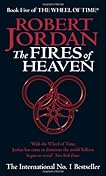
Currently Reading: A Crown of Swords (The Wheel of Time, Book 7)
 She did seem to be peering down her nose at Rand, though tall as she was, he stood head and shoulders taller. “You must let yourself be guided by us. One wrong move, one wrong word, and you may deliver to Cairhien the same disaster you gave Tarabon and Arad Doman. Worse, you can do incalculable damage to matters about which you know almost nothing.”
Perrin winced. The whole speech could not have been better designed to inflame Rand. But Rand simply listened till she was done, then turned to Sorilea. “Take the Aes Sedai to the tents. All of them, for now. Make sure everyone knows they’re Aes Sedai. Let it be seen that they hop when you say toad. Since you hop when the Car’a’carn says it, that should convince everybody I’m not wearing an Aes Sedai leash.”
Author: Robert Jordan
Synopsis: Rand, having escaped the imprisonment and torture from Elaida’s Aes Sedai, returns to Cairhien to remove Colavaere from the Sun Throne and then heads to Illian to take down Sammael. While trying to establish her independence as the rebels’ Amyrlin Seat, Egwene sends an apparently dying Lan to protect Nynaeve. In Ebou Dar, Nynaeve and Elayne and Aviendha seek the Bowl of the Winds to turn the weather, and Mat is unwillingly seduced by Queen Tylin as he tries to keep track of his friends.
Notes: Do forgive me for posting Wheel of Time books two weeks in a row. I'll try and vary it up for the next couple of weeks.
My sincere amusement to Tor. They’re a great SFF publisher, and I dream like a fangirl of writing a book for them someday. But I have to laugh at the cover for this book, which I am almost embarrassed to be seen with. I guess I’m lucky that the ugly but super-buff image of Rand isn’t cradling a swooning, big-busted Min.
At this point, after reading sometimes until my sight blurs over, I’m starting to get a touch frustrated with the story. For starters, I don’t like being made to want characters to wind up in unchaste relationships. But I’m so tired of the suspense between Rand and Min and Elayne and Aviendha that I want to put the four of them in a house together, make all their feelings known, get the Wise Women to set them all up in Aiel polygamy, and be done with it. And polygamy is chaste compared to the general direction things seem to be going. At least Jordan fades to black.
For seconds, this book left me in suspense on too many other points as well. Nynaeve and Lan? The Seanchan and Mat (will the Daughter of the Nine Moons come around in book eight?) Perrin, leading the explosive Faile and Berelain and a handful of Aes Sedai into who knows what? Why did Professor Fel die? And would somebody please take down both Alviarin and Elaida, because I can’t stand either of them any longer?
For thirds, Rand actually was arrogant in this book. And that simply must change. I’ve loved him—he’s the first and foremost of what keeps me reading. I can live without knowing the answers to cliffhangers, but not with an unlikeable protagonist. And while I might put up with Rand having three wives, or even three concubines, he simply cannot go on being arrogant. Can. Not. Happen.
All right, I’ve blown off my steam. On to the good stuff.
The Atha’an Miere, whose name—to my amused annoyance—is given two different pronunciations in the glossary, showed up with more frequency in this book. (For now, I think I’ll stick with ah-thah-AHN mee-EHR.) I enjoyed getting a further sense for their culture, although I wince at the very thought of wearing a chain between an earring and a nose ring. That has to hurt at first, and it’s just asking to get caught on things. But their strict egalitarianism and equally strict rank, their bright colors and big ships and Windfinders all fascinated me.
Egwene is handling her role as rebel Amyrlin with admirable strength and grace. I generally enjoy a turn in her head.
Cadsuane fascinated me. I’m not sure yet that I trust her, but Rand needed her to do what she’s done. He also needed Min to counteract that, of course, although Min got Rand into some of his mental distress in the first place. As for Min, I like her a lot now—most of the time.
Tylin and Mat drove me nuts. Just nuts. They’re both horrible to the opposite sex, and what Tylin did was unthinkable.
Nynaeve and Lan have my heart and sympathy. And I’m curious about that Atha’an Miere wedding—cautious and amused, but curious. Post-wedding, what is Lan feeling, really? And what about Nynaeve? I can guess, but that’s not nearly as much fun as reading about it.
I wonder if Jordan intentionally chose Asha’man for the channeling men because it reads a shaman. That’s an odd little mystery that distracts me every time I see the word.
Recommendation: If you’ve read the last book, you won’t be able to escape this one. And yeah, I’m going to read on.
5.24.2011
Top Ten Tuesday... or not
Today's inspiring Top Ten Tuesday topic is a confessional: Books We've Lied About.
The problem is... I'm honestly not much of a liar. :) If you ask, you'll hear the truth that I've never read Moby Dick or even the cliffnotes. I'll also admit my inability to bear Steinbeck and that I'm afraid to read Wuthering Heights. No shame here.
So I'm sitting out this week. But if you want to read others' confessions, you can do so over at The Broke and the Bookish. It sounds like fun reading.
5.23.2011
The Effects of Taste upon Objective Criticism
In the comments to last Monday's post, Good Story, Bad Writing, I wound up crossing foils with longtime sparring partner Mr. Pond and new-come blademaster Masha. And as we danced the forms, moving fluidly through Cat Crosses the Courtyard to Dragon Swings its Tail to Snow Mingles with a Waterfall... okay, I have definitely been reading too much Wheel of Time. And I'm going to kill that awful mix of warsport metaphors right there. Suffice it to say that the three of us found enough to talk about that we've decided to hold another blogalectic.
A blogalectic, for those who don't remember, is a debate hosted on two or more blogs. Mr. Pond coined the term when he and I went back and forth for several weeks over the rules of good writing.
As Mr. Pond pointed out in preparatory talks, matters of artistic criticism and what should be considered art are material for PhD theses. Unfortunately, I am not a PhD. Nor am I an MA, or a BA, or even an AA. I am a GED. A homeschooled one, who reads a lot and gave up college plans mainly for love of a job, but a GED nonetheless. I may ask more questions than I can answer.
Our discussion in last Monday's combox began and ended with the potential for confusion between taste and critical judgment, and that's where the three of us plan to start. From Masha:
From Mr. Pond:
On the outside, this looks like a simple issue. Taste says "I like the Backstreet Boys better than N'Sync" and critical judgment says "But neither of them come anywhere near Mozart." Discussion ended.
Well, maybe that discussion. But there are reviewers for pop music magazines, and reviewers who talk of symphony in important newspapers. Likewise, there are reviewers for the latest young adult fiction and reviewers for the stuff that might win the Man Booker Prize. The objective standards for paranormal romance differ from those for potential Nobel laureates, but they exist. At least, they're supposed to. Hmm. The latter two might be bad examples.
Regardless of level, critics face the problem of trying to separate their subjective taste from their objective knowledge, and whether—and how—to mingle the two in the final review. This is, for the most part, possible. I liked Matched better than The Hunger Games, but that doesn't stop me from appreciating the latter's (greater) merit.
At last, we get to the point. I think it's possible to distinguish taste and critical objectivity for the most part, but not entirely.
The first reason is that trends in education and philosophy may reflect elite blinders and even instill prejudices against what doesn't fit with l'esprit du temps. (Yes, the girl with the GED is talking about trends in education. I'll admit I'm getting over my head.) Practically, it seems trends work out to an overall distaste for—in the spirit of our times, at least—traditional ideas of morality (all morality, not just sexual), religious narratives, existential hope, and quite possibly genre. I wonder how much positive-themed literary work even gets written nowadays, let alone makes it to publication, review, and consideration for literary honors. I don't follow the right publications enough to know.
But perhaps a better argument for the subjectivity practiced by even intelligent and educated critics is simply this list of the 50 Best Author vs. Author Takedowns of All Time (here's Part 2), compiled by Michelle Kerns. As it turns out, Hemingway hated Faulkner, who didn't think much of Twain, who wanted to dig Jane Austen out of her grave and brain her with her own shinbone. Austen was thought unworthy not only by Twain but was disliked by Charlotte Brontë and thought "without genius, wit or knowledge of the world" by Emerson. Then there's George Bernard Shaw, who "measured his mind against Shakespeare's" and despised the latter.
Which begs me to respond to one of Masha's points. If "Bad writing is writing that fails to convey the intentions of the author in a clear and beautiful (in the objective sense) manner," we must at least qualify that no matter how clear and beautiful the conveyance, some intelligent people will still not "get it." And no matter how objectively beautiful it appears to us, someone else may think it lackluster and uninspiring.
Some of the above authors seem to understand the influence of taste in their opinion; others, less so. Still others seem playful in their hyperbole. None of the comments, of course, are given any context in the above article, so there may be more to each story. But after all, we humans—especially some of us writers—enjoy the sound of our own thoughts, particularly if we can express them cleverly.
Also, our taste can affect the very way we read, opening or closing our thoughts to various weaknesses and strengths in the text. Further, we're infinitely complex, and our ability to "know our own minds" comes only with much study and effort. Even then, that knowledge is open to change and areas of confusion or uncertainty.
Fortunately for us, the lone critic is known to be at risk of subjective influences, and therefore the canon of literature is defined by time and general (but not universal) consensus. It also stays vague around the edges.
I believe that objective criticism is loosely possible—but loosely, and on the plainest levels. If Austen can be called out for lack of wit, we can suspect our taste of affecting even the simplest and most obvious critique. I'd say it's important to understand that for humility if nothing else. No matter how educated, no matter how well-read, any of us can put forward wrong criticism.
Of course, the very idea that we can be wrong implies that there is right and wrong in the art of critique. But that's another blog post.
A blogalectic, for those who don't remember, is a debate hosted on two or more blogs. Mr. Pond coined the term when he and I went back and forth for several weeks over the rules of good writing.
As Mr. Pond pointed out in preparatory talks, matters of artistic criticism and what should be considered art are material for PhD theses. Unfortunately, I am not a PhD. Nor am I an MA, or a BA, or even an AA. I am a GED. A homeschooled one, who reads a lot and gave up college plans mainly for love of a job, but a GED nonetheless. I may ask more questions than I can answer.
Our discussion in last Monday's combox began and ended with the potential for confusion between taste and critical judgment, and that's where the three of us plan to start. From Masha:
The definitions of bad writing and bad story are not as subjective as we sometimes are led to believe, though you're right in that our tastes and prejudices do color our responses to stories. Bad writing is writing that fails to convey the intentions of the author in a clear and beautiful (in the objective sense) manner.
From Mr. Pond:
We flatter ourselves that because we can speak, therefore we're competent judges of story and narrative. Actually, as John McIntyre argues, written English is a distinct dialect that has its own rules and conventions; it takes years to master it. These rules and the mastery thereof is—have to say it—objective.
On the outside, this looks like a simple issue. Taste says "I like the Backstreet Boys better than N'Sync" and critical judgment says "But neither of them come anywhere near Mozart." Discussion ended.
Well, maybe that discussion. But there are reviewers for pop music magazines, and reviewers who talk of symphony in important newspapers. Likewise, there are reviewers for the latest young adult fiction and reviewers for the stuff that might win the Man Booker Prize. The objective standards for paranormal romance differ from those for potential Nobel laureates, but they exist. At least, they're supposed to. Hmm. The latter two might be bad examples.
Regardless of level, critics face the problem of trying to separate their subjective taste from their objective knowledge, and whether—and how—to mingle the two in the final review. This is, for the most part, possible. I liked Matched better than The Hunger Games, but that doesn't stop me from appreciating the latter's (greater) merit.
At last, we get to the point. I think it's possible to distinguish taste and critical objectivity for the most part, but not entirely.
The first reason is that trends in education and philosophy may reflect elite blinders and even instill prejudices against what doesn't fit with l'esprit du temps. (Yes, the girl with the GED is talking about trends in education. I'll admit I'm getting over my head.) Practically, it seems trends work out to an overall distaste for—in the spirit of our times, at least—traditional ideas of morality (all morality, not just sexual), religious narratives, existential hope, and quite possibly genre. I wonder how much positive-themed literary work even gets written nowadays, let alone makes it to publication, review, and consideration for literary honors. I don't follow the right publications enough to know.
But perhaps a better argument for the subjectivity practiced by even intelligent and educated critics is simply this list of the 50 Best Author vs. Author Takedowns of All Time (here's Part 2), compiled by Michelle Kerns. As it turns out, Hemingway hated Faulkner, who didn't think much of Twain, who wanted to dig Jane Austen out of her grave and brain her with her own shinbone. Austen was thought unworthy not only by Twain but was disliked by Charlotte Brontë and thought "without genius, wit or knowledge of the world" by Emerson. Then there's George Bernard Shaw, who "measured his mind against Shakespeare's" and despised the latter.
Which begs me to respond to one of Masha's points. If "Bad writing is writing that fails to convey the intentions of the author in a clear and beautiful (in the objective sense) manner," we must at least qualify that no matter how clear and beautiful the conveyance, some intelligent people will still not "get it." And no matter how objectively beautiful it appears to us, someone else may think it lackluster and uninspiring.
Some of the above authors seem to understand the influence of taste in their opinion; others, less so. Still others seem playful in their hyperbole. None of the comments, of course, are given any context in the above article, so there may be more to each story. But after all, we humans—especially some of us writers—enjoy the sound of our own thoughts, particularly if we can express them cleverly.
Also, our taste can affect the very way we read, opening or closing our thoughts to various weaknesses and strengths in the text. Further, we're infinitely complex, and our ability to "know our own minds" comes only with much study and effort. Even then, that knowledge is open to change and areas of confusion or uncertainty.
Fortunately for us, the lone critic is known to be at risk of subjective influences, and therefore the canon of literature is defined by time and general (but not universal) consensus. It also stays vague around the edges.
I believe that objective criticism is loosely possible—but loosely, and on the plainest levels. If Austen can be called out for lack of wit, we can suspect our taste of affecting even the simplest and most obvious critique. I'd say it's important to understand that for humility if nothing else. No matter how educated, no matter how well-read, any of us can put forward wrong criticism.
Of course, the very idea that we can be wrong implies that there is right and wrong in the art of critique. But that's another blog post.
5.20.2011
The Power of Sunshine and other stories
My to-do list yesterday actually frightened me, so I blew it all off and went to see my friend Elizabeth.
The sun was shining, and I hadn't seen her in a year, so we drank lemonade and mulched blueberry bushes and planted sunflowers and talked for hours. She gave me a lot of plants. You know how I feel about plants, of course.

Today, my to-do list still frightens me. But at least part of it involves transplanting some tomatoes and parsley out in the sun.
* * *
Maia, having been left alone all day, decided to be naughty all evening—attacking plants, knocking things over in other rooms, and staring balefully at me when I scolded her. She got up at six-thirty this morning to continue her rampage. At least I now have a longer day to accomplish that dread to-do list.
* * *
Happy thought: new books.
Of course, I also had two books come in at the library this week, one of which was Wheel of Time #8, so my spare moments for the next six weeks have been officially commandeered. At least I've already read The Goose Girl once.
* * *
Writers' link of the week: Agent Jennifer Laughran on word counts in juvenile fiction.
* * *
Music of the week: I love this sort of thing.
* * *
Funny of the week: This week you get two, because I can't resist either.
1) Cracked on adorable-yet-evil cat behaviors, thanks to George. As with all Cracked articles, the usual advisory about language and adult concepts applies.
2) Stuff Christians Like: Proofreading your way through the church service. After growing up with bulletins and projectors and PowerPoint lyrics, there is nothing more funny to me than a little typo in the wrong place at the wrong time.
* * *
For the first time in 2011: yesterday, the air outside got warm. And it's still warm today. I'm going to go transplant those tomatoes and parsley. I'm pretty sure the world isn't going to come to an end tomorrow, but it is supposed to start raining. Close enough.
Happy weekend!
The sun was shining, and I hadn't seen her in a year, so we drank lemonade and mulched blueberry bushes and planted sunflowers and talked for hours. She gave me a lot of plants. You know how I feel about plants, of course.

Today, my to-do list still frightens me. But at least part of it involves transplanting some tomatoes and parsley out in the sun.
* * *
Maia, having been left alone all day, decided to be naughty all evening—attacking plants, knocking things over in other rooms, and staring balefully at me when I scolded her. She got up at six-thirty this morning to continue her rampage. At least I now have a longer day to accomplish that dread to-do list.
* * *
Happy thought: new books.
 |
| Divergent by Veronica Roth, Beauty by Robin McKinley, Howl's Moving Castle by Diana Wynne Jones, and The Goose Girl by Shannon Hale. |
Of course, I also had two books come in at the library this week, one of which was Wheel of Time #8, so my spare moments for the next six weeks have been officially commandeered. At least I've already read The Goose Girl once.
* * *
Writers' link of the week: Agent Jennifer Laughran on word counts in juvenile fiction.
* * *
Music of the week: I love this sort of thing.
* * *
Funny of the week: This week you get two, because I can't resist either.
1) Cracked on adorable-yet-evil cat behaviors, thanks to George. As with all Cracked articles, the usual advisory about language and adult concepts applies.
2) Stuff Christians Like: Proofreading your way through the church service. After growing up with bulletins and projectors and PowerPoint lyrics, there is nothing more funny to me than a little typo in the wrong place at the wrong time.
* * *
For the first time in 2011: yesterday, the air outside got warm. And it's still warm today. I'm going to go transplant those tomatoes and parsley. I'm pretty sure the world isn't going to come to an end tomorrow, but it is supposed to start raining. Close enough.
Happy weekend!
5.18.2011
Currently Reading: Lord of Chaos (The Wheel of Time, Book 6)
 [Mat] felt Aviendha’s eyes on the back of his neck, heard a rasping sound. Sitting cross-legged against the tent wall, she was drawing her belt knife along a honing stone and watching him.
When Nalesean entered with Daerid and Talmanes, he greeted them with, “We are going to tickle some Aes Sedai under the chin, rescue a mule, and put a snip-nosed girl on the Lion Throne. Oh, yes. That’s Aviendha. Don’t look at her crosswise, or she’ll try to cut your throat and probably slit her own by mistake.” The woman laughed as if he had made the funniest joke in the world. She did not stop sharpening her knife, though.
Author: Robert Jordan
Synopsis: The Aes Sedai are divided, Rand has Mazrim Taim teaching men to channel, and the Forsaken are plotting against both Rand and each other. Nynaeve and Elayne go looking for a ter’angreal to change the endless drought weather, Egwene learns to love Gawyn Trakand and finds a surprise waiting for her in Salidar, Mat leads an army to divert Sammael’s attention, and Perrin and Faile rejoin Rand. With both Tower and rebel Aes Sedai courting his attention, Rand tries to keep a firm hand on his cities, his sanity, and his heart.
Notes: Over two million words in, this story has given me the feeling of friendship that most tales only offer after several re-reads: a warm familiarity for the world and characters that extends somewhat to the author. Nowadays, when one of the three ta'veren thinks for the nine hundredth time that the other two understand women better than he does, I roll my eyes. When thirteen Aes Sedai have Rand, and some of them are of the Black Ajah, there's no distracting me from what Robert Jordan will say next. When Gawyn is thunderstruck by Egwene’s admission, or when Mat foolishly confronts the new Amyrlin Seat, I grin and think “Nice scene. Well done.” There were some fun scenes in this book.
Intelligent interplay of male and female is something I'll almost always enjoy, and I've loved learning the difference between the handling of the halves of the One Power. Saidin, the male half, must be fought, wrestled, challenged at every moment; saidar, the female, must be surrendered to in order to gain control. It’s a fascinating depiction of the way male and female relate in general. I suspect, too, from a few hints about the way things used to be, that this concept is headed toward an alchemical resolution.
As for the boys and girls themselves, I love watching Perrin with Faile and Egwene with Gawyn. Rand’s dealings with Min and Elayne and Aviendha, on the other hand, make for an odd emotional ride. All three of the girls have won my sympathy to some extent, though none of them fully. Rand, who is in love with each of them and horrified at himself, has never yet lost that sympathy. All this leaves me reading in a very weird tangle of feelings. The Dragon Reborn and his three girlfriends aren’t going anywhere I’m likely to think well of, but we’ll see what happens.
The different cultures continue to interest me, and I find myself loving the Aiel despite their bloodthirsty tendencies. Ji’e’toh is an incredibly well-drawn study of honor and obligation. I thought about the concept all day one day—what it means, what it doesn’t mean, how it compares and contrasts to Christian and Western ideas.
Of course, there needs to be a whole glossary just for the Aiel words. Jordan surprised me with algai’d’siswai in this book. If he’s mentioned that before, I missed it, so I could only guess at its meaning. I complained to my husband about the word, and he just said “Be grateful he transliterated it,” which made me laugh. But what am I supposed to do with all those apostrophes? Pause? Glottal stop? Speak as if no interval exists, as with don’t and aren’t? I don’t know.
On the topic of words, let me just say that the names of the Forsaken were brilliantly chosen. Ishamael, Demandred, Lanfear, and Graendal strike me as particularly clever, and I’m curious about references that may be in the names of the rest.
Egwene’s new role provided some character interest; I also found it intriguing that her persuasion to be allowed to serve included stripping part way and washing the feet of the Sitters. I do love seeing a modern story hint at an older one, something Biblical or mythological or classical.
I stayed up past midnight finishing this book, and was rewarded with a startling amount of gore and way too many cliffhangers. That worries me about the rest of the books. But I intend to read on.
Recommendation: It’s fascinating, but expect to be cliffhung.
P.S. I've created a Wheel of Time label, so anyone who wishes can see all the reviews for this series at once. Hopefully that helps.
5.17.2011
Top Ten Tuesday: Favorite Minor Characters
This might be my favorite topic yet. Too bad I didn't start thinking about it earlier in the week; at this point, I'll never remember every beloved character from the supporting casts in fiction.
For the sake of defining terms, I'll exclude protagonists and their primary love interests, sidekicks, antagonists, mentors, etc. Everyone else is fair game.
Unfortunately, this rules out Jane Bennet, who counts as a best friend. Shoot. I really wanted to include her.
1. Dobby the house-elf (The Harry Potter books, J.K. Rowling). How can anyone help loving Dobby? If someone set up a gravestone in an English seaside garden, marking it "Here lies Dobby, a free elf", there'd be flowers and mismatched socks all over it. And I'd want to go add my own.
2. Philippa Gordon (Anne of the Island, L.M. Montgomery). Frivolous outside and golden-hearted in, Philippa's cheery friendship with Anne and her sweet romance with the Reverend Jonas make for some of the most delightful little moments in the Anne octet.
3. Puddleglum the Marsh-Wiggle (The Silver Chair, C.S. Lewis). I'm an optimist, but Puddleglum—and Bill Mueller's class on Narnia—taught me the value of a good pessimist. Besides, I love the homely old creature's fiery statement of faith in the face of hypnotic lies.
4. Loveday Minette (The Little White Horse, Elizabeth Goudge). She creeps into Maria's room every day and lays out the clothes for Maria's next adventure. Also, she raised a delightful son. She's delicate, sweet, pretty, and fairylike, and apart from a flaming temper over her love of the color pink, I wish I were more like her.
5. Old Parson (The Little White Horse, Elizabeth Goudge). He brings the children into the church and welcomes animals like St. Francis; he plays the violin and prays with his whole heart; he speaks praise and reproof with equal freedom. Also, his name is Louis. :)
6. Mary and Diana Rivers (Jane Eyre, Charlotte Bronte). Lovely, intelligent, and affectionate, they were sisters to Jane Eyre when she needed them. I like St. John, too, though he's sometimes awful.
7. Moiraine Sedai (The Wheel of Time books, Robert Jordan [I figured I couldn't count Nynaeve or Egwene]). She's one heck of a brave woman, and fairer to Rand than any other Aes Sedai has been.
8. Mrs. Gardiner (Pride and Prejudice, Jane Austen). More than anyone else in the family, she understands Elizabeth and Jane and does what she can to help them. Also, she has a good sense of humor. She could be my role model for good auntie-hood.
9. Elinor Loredan (The Inkheart books, Cornelia Funke). Besides being an amusing, stubborn old woman, she collects books. That's a habit I can admire.
10. The Luggage (The Discworld books, Terry Pratchett). All right, I'm starting to reach here. The Luggage is something of a monster. It's also hilarious.
This list is what happens when you try not to take too many from one book. I probably could have gotten ten just from Harry Potter. Let's see: Dobby, Lupin, Sirius, Lily, Neville, Molly Weasley, Arthur Weasley, Fred and George (they seem to go together), Hagrid, McGonagall. Yep. Too easy.
Who are some of your favorite supporting characters?
 |
| Top Ten Tuesday is hosted by The Broke and the Bookish! Do come join the fun... |
For the sake of defining terms, I'll exclude protagonists and their primary love interests, sidekicks, antagonists, mentors, etc. Everyone else is fair game.
Unfortunately, this rules out Jane Bennet, who counts as a best friend. Shoot. I really wanted to include her.
1. Dobby the house-elf (The Harry Potter books, J.K. Rowling). How can anyone help loving Dobby? If someone set up a gravestone in an English seaside garden, marking it "Here lies Dobby, a free elf", there'd be flowers and mismatched socks all over it. And I'd want to go add my own.
2. Philippa Gordon (Anne of the Island, L.M. Montgomery). Frivolous outside and golden-hearted in, Philippa's cheery friendship with Anne and her sweet romance with the Reverend Jonas make for some of the most delightful little moments in the Anne octet.
3. Puddleglum the Marsh-Wiggle (The Silver Chair, C.S. Lewis). I'm an optimist, but Puddleglum—and Bill Mueller's class on Narnia—taught me the value of a good pessimist. Besides, I love the homely old creature's fiery statement of faith in the face of hypnotic lies.
4. Loveday Minette (The Little White Horse, Elizabeth Goudge). She creeps into Maria's room every day and lays out the clothes for Maria's next adventure. Also, she raised a delightful son. She's delicate, sweet, pretty, and fairylike, and apart from a flaming temper over her love of the color pink, I wish I were more like her.
5. Old Parson (The Little White Horse, Elizabeth Goudge). He brings the children into the church and welcomes animals like St. Francis; he plays the violin and prays with his whole heart; he speaks praise and reproof with equal freedom. Also, his name is Louis. :)
6. Mary and Diana Rivers (Jane Eyre, Charlotte Bronte). Lovely, intelligent, and affectionate, they were sisters to Jane Eyre when she needed them. I like St. John, too, though he's sometimes awful.
7. Moiraine Sedai (The Wheel of Time books, Robert Jordan [I figured I couldn't count Nynaeve or Egwene]). She's one heck of a brave woman, and fairer to Rand than any other Aes Sedai has been.
8. Mrs. Gardiner (Pride and Prejudice, Jane Austen). More than anyone else in the family, she understands Elizabeth and Jane and does what she can to help them. Also, she has a good sense of humor. She could be my role model for good auntie-hood.
9. Elinor Loredan (The Inkheart books, Cornelia Funke). Besides being an amusing, stubborn old woman, she collects books. That's a habit I can admire.
10. The Luggage (The Discworld books, Terry Pratchett). All right, I'm starting to reach here. The Luggage is something of a monster. It's also hilarious.
This list is what happens when you try not to take too many from one book. I probably could have gotten ten just from Harry Potter. Let's see: Dobby, Lupin, Sirius, Lily, Neville, Molly Weasley, Arthur Weasley, Fred and George (they seem to go together), Hagrid, McGonagall. Yep. Too easy.
Who are some of your favorite supporting characters?
5.16.2011
Good Story, Bad Writing
For any girl who grew up close to her mother and/or sisters, the novel Little Women is almost indispensable. A portrait of the lives and loves of four girls raised primarily under a mother's care, it's a tale told with little plot and much feeling. It's a literary idea without the literary prose, and while it draws criticism for various weaknesses—and possibly for not having much appeal to the male half of society—it captures the beauty of mother/daughter and sister relationships like no other book I've ever read.
It's not the only beloved story that gets criticized as poorly written. Stephenie Meyer's husband reputedly attempted to talk her out of getting published because of the potential for criticism, and few popular books have been more universally called out than her Twilight. Mike Duran recently gave a strongly critical (and fair, in my opinion) review of Francine Rivers' Redeeming Love, and got firestormed in his comments from fans of the book. Literary elites turned on Harry Potter en masse when it began its rise to wild fame.
No work of art is absolutely beyond criticism. Of course, 'bad writing' can mean anything from sloppy prose to awkward pacing to believability failures and more. Little Women sort of rambles through the lives of its characters, including many scenes that possessed neither conflict nor much bearing on the story arc. Twilight is the product of an outstanding concept and an immature writer. Redeeming Love falls into a lot of common CBA problems, such as attempting to be gritty and not at the same time, pasting modern thought into a historical setting, and uneven craft. The Harry Potter books have too many adverbs, a handful of inconsistencies, and some pacing issues, but overall are written in an uncluttered comic style that perfectly suits the need of the story—it just isn't Nabokov or Rushdie.
'Good story' can prove almost as difficult to define as 'bad writing', with personal preference often playing more of a role than most of us critics like to admit. All reviews are subjective, and may be affected by the reviewer's dislike of happy-go-lucky Cinderella endings, or insanely tragic Madama Butterfly ones; of literary aimlessness, or genre tropes; of a strongly masculine approach to storytelling, or a feminine.
However we define it, bad writing involves failure of art, which should pursue beauty. But should we ignore a powerful concept that's readable and reasonably executed if it's no more than that? Little Women may ramble and lack narrative tension in places, yet I'm richer for having read it. The same is true for Twilight, Redeeming Love, and especially Harry Potter.
Whatever the answer to that question, of course, aspiring writers have no excuse for trying to push novels they haven't worked up to the best of their ability. It's important to strive for beauty regardless of what we can find on the shelves at the local bookshop. That said, tales with glaring flaws will continue to get published, because someone saw past the weaknesses to something they loved.
What story do you love in spite of its failures? Can you envision a better version? Do you wish the publishing industry had forced it through more revisions, or that a different author had gotten the idea? What are your thoughts on this subject?
5.13.2011
Watching the Sky and other stories
For those who don't know: Blogger went down hard yesterday, losing posts and comments and remaining out of service for most of the day. It deleted several comments on my blog, including Masha's latest in the Twilight conversation. But the comments did come to my inbox, and I will respond when I get a chance. So if you want to know why I love Twilight, keep an eye on that thread.
Also, I'm definitely going to back up my blog.
* * *
As an amateur stargazer, I'd be remiss if I didn't link this beautiful interactive sky map. It covers the night sky for both northern and southern hemispheres, has both constellations and bright stars marked by name at the click of the info button, and lets you zoom way in.
Speaking of which... all this cloud cover has got to go away. I haven't been able to use my telescope in weeks.
* * *
According to both the title and description of this list, it is guaranteed to make the reader feel old. After reading it, however, I do not feel old. Only one of the Backstreet Boys is younger than me. Take that, world.
* * *
Writers' link of the week: John E McIntyre on "The craft so long to lerne." This contains some of the best straightforward advice for young writers anyone could give.
* * *
Music of the week: The Oh Wells. They're relatively local. And apparently playing Bellingham tonight. Hmm.
* * *
Funny of the week: I'm not quite this cynical, but this did make me laugh. Hey, I'm a writer: I'm totally unashamed of having imaginary friends.
* * *
Lou is gone for the weekend. The whole weekend. I mostly feel like pushing out my lower lip and burying myself in novels, but I've got a house to clean and an accompaniment to work up for a friend's song and a manuscript to critique and two books to write and tomato plants to re-pot and I should really take a walk... and tomorrow night I might just rent Tangled and get ice cream because I think I'll need such things.
Happy weekend, everyone.
5.11.2011
Currently Reading: Hitchhiker's Guide to the Galaxy
 It is an important and popular fact that things are not always what they seem. For instance, on the planet Earth, man had always assumed that he was more intelligent than dolphins because he had achieved so much—the wheel, New York, wars and so on—while all the dolphins had ever done was muck about in the water and have a good time. But conversely, the dolphins had always believed that they were far more intelligent than man—for precisely the same reasons.
Author: Douglas Adams
Synopsis: When the Vogons come to destroy Earth, galactic hitchhiker Ford Prefect rescues his friend Arthur Dent and takes him on a wild tour of outer space.
Notes: I've read this to fill a big hole in my speculative-fiction education. And in the process, I have improved my understanding of a critique partner who would note R17 all over my manuscript, and who told me that referencing the star Betelgeuse might raise unwanted associations to Ford Prefect. I had to Google Ford Prefect then, but now the alien gentleman and I are officially acquainted. So we’ll raise Pan-Galactic Gargle Blasters and toast Mr. Pond, who made me read this book.
It is downright hilarious, of course. Humor novels tend to exhaust me—the constant attempt to be funny gets wearing, whether or not it’s successful—but this story did make me laugh a lot. The introductory pages, especially.
Weirdly enough, I expected a lot more resolution than the book actually provided. I don’t know if this means I need to go read the sequels, or if I can just expect that the mice gave up and never finished fixing the very large problem they’d caused. Either way, it's rather uncomfortable to imagine that Earth does not exist. But it's apparently still possible to have a lot of fun and adventure among the stars.
The characters are fun and memorable: the Abbott-and-Costello-like Arthur and Ford, goofy Zaphod Beeblebrox, uncool nerdy Trillian, and Marvin the depressed robot. The events tumble one after another, all of them so unexpected as to leave the reader in a constant state of dropjaw. And in case anyone needs another reason to read it, it’s short.
Recommendation: Read if you want a laugh. I’ll be very surprised if you don’t get one.
5.10.2011
Top Ten Tuesday: Literary Jerks, Cads, and Other Male Fiends
A few weeks ago, we listed the Top Ten Mean Girls. This week, it's the guys' turn. As with the girls, I'm going to divide the list into groups, according to whether or not the bad boys had any good at heart.
As the majority of literary villains seem to be male, I'm afraid the competition will be tough. And I'll probably forget a lot of very important ones.
Evil psychopaths:
1. The Adderhead (The Inkworld trilogy, Cornelia Funke). I'm not sure I've ever come across a fantasy villain depicted in nastier terms. Orpheus and Capricorn deserve mention, too, of course.
2. Achilles (Ender's Shadow and sequels, Orson Scott Card). One of the more chilling young men to wield a syringe full of poison amid the pages of fiction.
3. Voldemort (The Harry Potter books, J.K. Rowling). Horcruxes. Also, he kills babies and unicorns. The red snake-eyes and high, cold laugh are just the outward manifestations of the monster.
4. Aro, Caius, and Marcus (The Twilight Saga, Stephenie Meyer). These guys make me very angry, which isn't the best response to have to three extremely powerful vampires.
Managed to find their good side, or at least something resembling one:
5. Severus Snape (The Harry Potter books, J.K. Rowling). Snape put the 'hero' in 'Byronic hero', and none of us can help loving him a little, even if we can never quite get past how mean he was to Neville.
6. Monsieur Cocq de Noir (The Little White Horse, Elizabeth Goudge). A poacher and all-around uncouth local thief, he strikes a hard bargain with Maria Merryweather and keeps his word when she wins.
7. Peter Wiggin (The Ender books, Orson Scott Card). I've never quite figured out how much of a good side Peter really had, but the last I saw of him, he seemed less of the cruel, blackhearted squirrel-torturer he was in Ender's Game.
At least were forced to respect their comeuppance:
8. Brian de Bois-Guilbert (Ivanhoe, Sir Walter Scott). After hounding Rebecca till his boss accuses her of bewitching him and she threatens to jump from a tower window, Brian dies of internal conflict. And while such a death certainly preserves the old Gothic sense of melodrama, it also suggests he had some desire to be heroic.
9. Rabadash the Ridiculous (The Horse and His Boy, C.S. Lewis). Behaved like such a fool that Aslan turned him into a donkey. Upon restoration—in the sight of several thousand people—to his normal princely form, he had enough sense to obey Aslan so as to avoid becoming a donkey again.
In a class by himself:
10. Holden Caulfield (The Catcher in the Rye, J.D. Salinger). There's just not much to like about this guy. He walks around cursing and demeaning the entire human race in his head, and as far as I know, he never gets over it. While no psychopath, he's also no Snape. Three words, young man: Get over yourself.
|
| Top Ten Tuesday is hosted by The Broke and the Bookish! Do come join the fun... |
As the majority of literary villains seem to be male, I'm afraid the competition will be tough. And I'll probably forget a lot of very important ones.
Evil psychopaths:
1. The Adderhead (The Inkworld trilogy, Cornelia Funke). I'm not sure I've ever come across a fantasy villain depicted in nastier terms. Orpheus and Capricorn deserve mention, too, of course.
2. Achilles (Ender's Shadow and sequels, Orson Scott Card). One of the more chilling young men to wield a syringe full of poison amid the pages of fiction.
3. Voldemort (The Harry Potter books, J.K. Rowling). Horcruxes. Also, he kills babies and unicorns. The red snake-eyes and high, cold laugh are just the outward manifestations of the monster.
4. Aro, Caius, and Marcus (The Twilight Saga, Stephenie Meyer). These guys make me very angry, which isn't the best response to have to three extremely powerful vampires.
Managed to find their good side, or at least something resembling one:
5. Severus Snape (The Harry Potter books, J.K. Rowling). Snape put the 'hero' in 'Byronic hero', and none of us can help loving him a little, even if we can never quite get past how mean he was to Neville.
6. Monsieur Cocq de Noir (The Little White Horse, Elizabeth Goudge). A poacher and all-around uncouth local thief, he strikes a hard bargain with Maria Merryweather and keeps his word when she wins.
7. Peter Wiggin (The Ender books, Orson Scott Card). I've never quite figured out how much of a good side Peter really had, but the last I saw of him, he seemed less of the cruel, blackhearted squirrel-torturer he was in Ender's Game.
At least were forced to respect their comeuppance:
8. Brian de Bois-Guilbert (Ivanhoe, Sir Walter Scott). After hounding Rebecca till his boss accuses her of bewitching him and she threatens to jump from a tower window, Brian dies of internal conflict. And while such a death certainly preserves the old Gothic sense of melodrama, it also suggests he had some desire to be heroic.
9. Rabadash the Ridiculous (The Horse and His Boy, C.S. Lewis). Behaved like such a fool that Aslan turned him into a donkey. Upon restoration—in the sight of several thousand people—to his normal princely form, he had enough sense to obey Aslan so as to avoid becoming a donkey again.
In a class by himself:
10. Holden Caulfield (The Catcher in the Rye, J.D. Salinger). There's just not much to like about this guy. He walks around cursing and demeaning the entire human race in his head, and as far as I know, he never gets over it. While no psychopath, he's also no Snape. Three words, young man: Get over yourself.
5.09.2011
Weird Creative Rituals
It took me two hours of this afternoon to get a single three-hundred-word section written on one of my novels. Granted, that is desperately slow even for me, and the three hundred words contained an interaction that was quite challenging to portray believably. But an article by Mark McGuinness suggested to me today that in order to boost productivity, I just need to be more eccentric.
Apparently it's not enough to be a gangly, slightly awkward semi-recluse who enjoys Gregorian chant and techno songs about Harry Potter. I'm supposed to have something that directly affects my process while writing. But music distracts me, I refuse to smoke on principle as a vocalist, and I definitely will not be employing Victor Hugo's technique. I write beside the living room windows.
My only preparation for a day's writing work is to get up at my husband's alarm, shower, and do makeup and hair just as I did when I worked downtown. Whether that's eccentric, I can't say, but the morning rite keeps me from entirely losing my ability to differentiate between work and procrastination. And maybe from losing my sense of day and night as well.
Do you have a helpful creative ritual, eccentric or otherwise?
5.06.2011
Mud-Wrestling Pigs and other stories
Reminder: If you read or write novels, and you want to help tornado and flood victims, check out the Help Write Now auction! If it wasn't for charity, I'd be very disappointed that Veronica Roth's Divergent package just went waaay out of my price range. :)
* * *
Hail, Twilight fans and foes! If you enjoy discussing the merit of Meyer's bestselling vampire series from either perspective, check out this extensive conversation between Maria (who critiqued my book) and I. Maria has made some good points that I've conceded, and I think I've made a few that she's done likewise for, and we're still talking. Feel free to join in. I'm going to try to answer her most recent comments this afternoon, if I can get a chance.
* * *
Congratulations to my good friend and critique partner Mr. Pond for getting himself published in a book of essays! Anti-Tales: The Uses of Disenchantment, a scholarly work on the world of unsettling fairy tales, is available in bookstores. Well done, sir!
* * *
Maia has discovered how to get on top of the refrigerator. I guess the highest bookshelves are her final frontier.
* * *
Ever since this past year's NaNoWriMo disaster, I've been awfully worried about my ability to complete the book and make it any good. On a burst of inspiration yesterday, I took out a packet of colored index cards and started cutting them up, labeling them with character names, roles, structural units, and potential scenes. I laid them out all over the coffee table. And I wish I'd shot a picture of the mayhem that ensued when Maia discovered I was playing with little scraps of paper....but now I have some outline, several pages written, and a lot more confidence.
* * *
Writers' link of the week: Jason Pinter on The 10 Commandments of Social Networking for Writers. The piece contains some of the best wisdom I've heard about social networking. Among the great thoughts, "Thou Shalt Not Engage in Flame Wars" includes the aphorism "Never wrestle in mud with a pig—you’ll just get dirty and the pig will enjoy it."
* * *
Music of the week: My friend Jana linked this band on her blog recently, and I enjoyed their music so much that I had to share. This cover of the Beatles' Eleanor Rigby is beautiful. You can also go over to Jana's site and watch their Paper Hats, which I like even better.
* * *
Funny of the week: As someone very fond of decent spelling, I laughed till I cried over these Facebook corrections. There's some strong language—where ignorance and Facebook are gathered together, profanity is in their midst—but oh, the responses are funny. Enjoy. H/T Kelly Sonnack.
* * *
I'm off! To write, to clean house, to make dinner for my husband and get ready for a busy evening. Happy weekend, everyone!
* * *
Hail, Twilight fans and foes! If you enjoy discussing the merit of Meyer's bestselling vampire series from either perspective, check out this extensive conversation between Maria (who critiqued my book) and I. Maria has made some good points that I've conceded, and I think I've made a few that she's done likewise for, and we're still talking. Feel free to join in. I'm going to try to answer her most recent comments this afternoon, if I can get a chance.
* * *
Congratulations to my good friend and critique partner Mr. Pond for getting himself published in a book of essays! Anti-Tales: The Uses of Disenchantment, a scholarly work on the world of unsettling fairy tales, is available in bookstores. Well done, sir!
* * *
Maia has discovered how to get on top of the refrigerator. I guess the highest bookshelves are her final frontier.
* * *
Ever since this past year's NaNoWriMo disaster, I've been awfully worried about my ability to complete the book and make it any good. On a burst of inspiration yesterday, I took out a packet of colored index cards and started cutting them up, labeling them with character names, roles, structural units, and potential scenes. I laid them out all over the coffee table. And I wish I'd shot a picture of the mayhem that ensued when Maia discovered I was playing with little scraps of paper....but now I have some outline, several pages written, and a lot more confidence.
 |
| I love these paper clips. And the pretty colors. I'm such a girl. |
* * *
Writers' link of the week: Jason Pinter on The 10 Commandments of Social Networking for Writers. The piece contains some of the best wisdom I've heard about social networking. Among the great thoughts, "Thou Shalt Not Engage in Flame Wars" includes the aphorism "Never wrestle in mud with a pig—you’ll just get dirty and the pig will enjoy it."
* * *
Music of the week: My friend Jana linked this band on her blog recently, and I enjoyed their music so much that I had to share. This cover of the Beatles' Eleanor Rigby is beautiful. You can also go over to Jana's site and watch their Paper Hats, which I like even better.
* * *
Funny of the week: As someone very fond of decent spelling, I laughed till I cried over these Facebook corrections. There's some strong language—where ignorance and Facebook are gathered together, profanity is in their midst—but oh, the responses are funny. Enjoy. H/T Kelly Sonnack.
* * *
I'm off! To write, to clean house, to make dinner for my husband and get ready for a busy evening. Happy weekend, everyone!
5.04.2011
Currently Reading: Matched
 Grandfather gave me poetry.
Of course. My great-grandmother. The Hundred Poems. I know without having to check on the school ports that this poem is not one of them. She took a great risk hiding this paper, and my grandfather and grandmother took a great risk in keeping it. What poems could be worth losing everything for?
The very first line stops me in my tracks and brings tears to my eyes and I don’t know why except that this one line speaks to me as nothing else ever has.
Do not go gentle into that good night.
Author: Ally Condie
Synopsis: Cassia’s Society regulates everything from daily meals to date of death. Still, she’s always looked forward to the Matching banquet, where future spouses—matches generated from compatibility data—are revealed. To everyone’s surprise, she is Matched to her best friend, Xander. He’s good-natured, gently protective, and handsome, and she can’t believe her luck—until she discovers another face on her Match microcard. All at once, she’s faced with a choice. But choice, in the perfectly controlled Society, can mean the destruction of everything she knows and loves.
Notes: I’m going to give this book an generally positive review, so pardon me while I indulge in two small complaints: dystopia tends to be too horrific for my taste, and I detest love triangles.
But Ally Condie fills the corners of her chilling tale with beauty—and not just beauty itself, but the search for it, the yearning for its hope and meaning. I’m getting ahead of myself, though.
The first chapter or two of Matched almost seem peaceful, lulling the reader into the security all Society members supposedly experience. Only after the Matching banquet, around the time that Cassia visits her grandfather, does the horror really begin to set in. Throughout the book, the reader wrestles with the good and evil sides of the seemingly perfect life, just as Cassia does.
Beauty comes in surprising places. The use of the Dylan Thomas poem “Do not go gentle into that good night...” gave me goosebumps and added a lot of depth to the story. Cassia’s grandfather deserves mention for the things he teaches her. And dislike for love triangles aside, this book had one of the loveliest, most unique developments of a romance that I’ve ever seen in a young adult novel.
Other relationships were also interesting. I honestly appreciate the existence of kindly-portrayed, non-naive family, especially parents, in a YA novel. Cassia's mother and father had an interesting dynamic going with their differing attitudes toward the Society's rules, and the grandfather is particularly compelling.
Cassia won my concern quickly, in part because I sympathized with her desire to please, to follow rules and fit in. Some may find her a little bland at the beginning, but it's hard to imagine a reader not caring about her by the end. She makes a slow but strong progression toward accepting risk for the sake of what is right and what she loves.
The setting could have been a little more vividly imagined, but it worked well nonetheless. I was especially fascinated by its nature. Too often the Big Bad Society in dystopia is based on some aberrant parody of religion. Matched sets up cold irreligious utilitarianism in all its understandable motives, and quietly champions human dignity—including the dignity of the aged and imperfect—and the value of beauty and creativity. I can do nothing less than cheer.
Recommendation: Read it when you wish your life were perfect. It’ll change your mind.
5.03.2011
Top Ten Tuesday: Books that Came Recommended
...as opposed to books I picked up and flipped through by myself before buying or checking out.
This topic came with some difficulties, such as remembering who recommended what book to me, or whether anyone recommended the classics at all. I loved To Kill a Mockingbird, but did I read it thanks to one person's suggestion or the consensus of history? Who knows?
Here are a few that someone specifically recommended to me.
1. Harry Potter (J.K. Rowling). Thanks, Chris Knight and Michael Spencer. Thank you forever.
2. The Wheel of Time books (Robert Jordan). Thanks to MissPhotographerB for recommending them to me, and to Nate for recommending them to MissPhotographerB.
3. Ender’s Game and sequels (Orson Scott Card). Brandon was the first to say "You must read Ender's Game!" and I'm not sure how I got hold of Speaker for the Dead. Beth and Todd got me into the Bean series. I'm not finished with all of the sequels, but I do plan to read them.
4. The Twilight books (Stephenie Meyer). I just about guarantee that I would not have read this series had it not been for Leigh convincing me to listen to the first one with her and MissPhotographerB actually mailing her books to me.
5. Little White Horse (Elizabeth Goudge). Thanks, J.K. Rowling. (Her "I absolutely adored the Little White Horse" blurb definitely got my attention, though it's hard to imagine myself passing up a book with a unicorn on the cover.)
6. A Walk to Remember (Nicholas Sparks). Beth gave me this one. "You remind me so much of Jamie Sullivan!" is still one of my favorite compliments I've ever received (thanks, Jade!)
7. The Chronicles of Narnia (C.S. Lewis). Thanks, Mom and Dad—or possibly Grandma or Uncle Ray—for giving these to me to read on the long drive from Dunedin, FL to Missoula, MT.
8. Matched (Ally Condie). Just read this on Arabella's recommendation, and loved it. Review coming Wednesday.
9. Alec Forbes of Howglen (George MacDonald). My parents read this to my sisters and I when we were very young, and I recently re-read it after hearing good things about it from Mr. Pond. I adore this story.
10. On the Edge of the Dark Sea of Darkness (Andrew Peterson). Thanks to Travis Prinzi, founder of The Hog's Head.
What great books have you read because someone recommended them to you?
|
| Top Ten Tuesday is hosted by The Broke and the Bookish! Do come join the fun... |
Here are a few that someone specifically recommended to me.
1. Harry Potter (J.K. Rowling). Thanks, Chris Knight and Michael Spencer. Thank you forever.
2. The Wheel of Time books (Robert Jordan). Thanks to MissPhotographerB for recommending them to me, and to Nate for recommending them to MissPhotographerB.
3. Ender’s Game and sequels (Orson Scott Card). Brandon was the first to say "You must read Ender's Game!" and I'm not sure how I got hold of Speaker for the Dead. Beth and Todd got me into the Bean series. I'm not finished with all of the sequels, but I do plan to read them.
4. The Twilight books (Stephenie Meyer). I just about guarantee that I would not have read this series had it not been for Leigh convincing me to listen to the first one with her and MissPhotographerB actually mailing her books to me.
5. Little White Horse (Elizabeth Goudge). Thanks, J.K. Rowling. (Her "I absolutely adored the Little White Horse" blurb definitely got my attention, though it's hard to imagine myself passing up a book with a unicorn on the cover.)
6. A Walk to Remember (Nicholas Sparks). Beth gave me this one. "You remind me so much of Jamie Sullivan!" is still one of my favorite compliments I've ever received (thanks, Jade!)
7. The Chronicles of Narnia (C.S. Lewis). Thanks, Mom and Dad—or possibly Grandma or Uncle Ray—for giving these to me to read on the long drive from Dunedin, FL to Missoula, MT.
8. Matched (Ally Condie). Just read this on Arabella's recommendation, and loved it. Review coming Wednesday.
9. Alec Forbes of Howglen (George MacDonald). My parents read this to my sisters and I when we were very young, and I recently re-read it after hearing good things about it from Mr. Pond. I adore this story.
10. On the Edge of the Dark Sea of Darkness (Andrew Peterson). Thanks to Travis Prinzi, founder of The Hog's Head.
What great books have you read because someone recommended them to you?
5.02.2011
Why Bother Writing Novels?
Before I begin today's topic, a quick note:
If you'd like to aid those affected by last week's tornadoes and floods, let me recommend Help Write Now, an auction put on by several members of the writing community. Some of those writers live in damaged or devastated areas. Proceeds benefit the Red Cross.
I'm donating a manuscript critique, and just may bid on some of the other items—some of which should appeal to writers, and others to readers. Want to help? Go on over and fill out their short-and-sweet donation form, and/or subscribe to the blog for auction news and items for bid.
* * *
Being of the artistic personality and therefore clinically insecure, I spent some of this past week vacillating between the idea that I Suck and this question: Why bother writing novels, when there are so many in the world? The question could apply to keeping a blog, too. Not to mention creating poetry, art, musical composition, quilts, culinary presentation, dance, or anything else done more for beauty or expression or love of the work than for practical, measurable benefit.
Creation of beauty for its own sake is a deeply human and worthwhile process. Unfortunately, my response to that fact is sometimes along the lines of "Yes, but is my work beautiful enough to matter?!" Sometimes we need the silly personal reasons that keep us going when we think we're no good. Here are mine.
I write because:
...There are no brakes on the drive of an inborn writing tendency. I can't stop.
...The hunger for another good story grows with every one I read.
...Writing helps me process ideas and experiences better than almost anything else. And no big idea or experience is ever thoroughly processed until I've written my way through it.
...Words are just so beautiful when properly strung together.
...Other people's writings have built up my sanity and hope, and I want to pay that forward.
...My characters deserve to be known and loved, in my opinion (which is biased by motherly pride, of course).
...The pent-up nervous energy and emotion of the clinically insecure artist can really come in handy around an open Word document. Hey, don't knock it till you've tried it. :)
...and probably more reasons than I can think of now. My brain kept me awake till five AM and is now propped up on nothing but coffee.
Why do you write—or draw, or make music, or plant elaborate flower gardens, or otherwise create impractical beauty?
4.29.2011
A Familiar Melody and other stories
When I get tired of the chill and rain, I can be grateful for the flowers. And that Bellingham has not had tornadoes or floods or tsunamis or earthquakes, or even the blizzard MissPhotographerB said Bozeman got last night.
Still... I'm ready for shorts and sandals and a blanket out on the lawn and gin-and-tonics and barbecue. Warm, peaceful, summery things.
May peace and good weather come to us all, especially to those affected by the recent disasters.
* * *
Maia, having gotten herself made into the bed:


* * *
A few days ago, Lou put Rimsky-Korsakov's Scheherazade into the CD player. The familiar melody sent me deep into my Documents folder—it's always been on the playlist for my half-finished old novel. This week, I'm back in a world of mist-blanketed waters and animals with strange abilities and a mysterious woman with long black hair.
I'm loving it.
* * *
While I'm not much into celebrity—I don't even watch the world for J.K. Rowling news—I will admit to hunting up pictures of the royal wedding this morning. Her Royal Highness the Duchess of Cambridge is just so pretty.
* * *
Writers' link of the week: Kiersten White gives us an artistic representation of the writing life. I love every last frame.
But since I'm getting backed up on awesome writing links again, here's a second: Colson Whitehead on why you can't blame the internet for your procrastination. He's right. And a couple of times, he's actually inspired me to hold off on websurfing.
* * *
Music and funny together again: For some reason, I never saw the Muppets perform Bohemian Rhapsody until today. If you're like me, here's your way out of the cave. You're welcome.
* * *
Theoretically, we should have a quiet weekend. According to various weather sites, the sun is also supposed to come out. Oh, how I hope it does. I want to see the sun. And the stars.
Wait—I see a tiny patch of blue...
Happy weekend, everybody!
4.27.2011
Currently Reading: The Fires of Heaven (The Wheel of Time, Book 5)
 Mat, Egwene, even Moiraine sometimes looked at him with eyes that saw the Dragon Reborn, or at least the danger of a man who could channel. The clan chiefs and the Wise Ones saw He Who Comes With the Dawn, the man prophesied to break the Aiel like dried twigs; if they did not fear him, they still sometimes treated him like a red adder they had to live with. Whatever Aviendha saw, it never stopped her being scathing whenever she chose, which was most of the time.
An odd sort of comfort, but compared to the rest, it was a comfort nonetheless.
Author: Robert Jordan
Synopsis: Rand leads the Aiel against Couladin and his followers, who have murdered and destroyed their way from the Aiel Waste to Cairhien. His work is complicated by Darkhounds and Draghkar, plotting from Lanfear and Sammael, Asmodean—from whom Rand is trying to learn safe use of the One Power—and Rand's own touchy relationships with Moiraine’s guidance and the honor of the Maidens of the Spear.
As he works, one of the Forsaken tries to take over the throne of Andor. Mat tries, once again, to escape destiny. And Nynaeve and Elayne join a traveling circus to escape Elayne’s half-brother Galad, the Whitecloaks, and another member of the Forsaken, who wants vengeance against Nynaeve.
Notes: When you’ve spent 3500 five-hundred-word pages with an author, repetitive phrases get more than a little noticeable. I’ll confess to getting a bit bored with Nynaeve’s braid-pulling, the Rand/Perrin/Mat unspoken assumption that each of the others relates better to women, and the number of cultures that dress more risqué than the Women’s Circle in the Two Rivers would ever stand for.
On the other hand, I’m constantly amazed at Jordan’s worldbuilding. He doesn’t miss a note—the characters think in terms of their world and culture, whether it be Rand’s farm and forest idioms or Thom's Game of Houses experience or Aviendha’s ji’e’toh (honor and obligation). I’ve never seen anyone do a better job of this.
The perspective shifts were more comfortable in this book than in the last, but I must say that I hate being in bad characters’ minds. Hate it. Padan Fain, in particular, makes my skin crawl. There are arguments for the value of showing that perspective, but I have a strong visceral reaction to sharing the mind of anyone who celebrates evil.
As for the good characters, I’m chalking up Egwene’s concern over Rand’s arrogance to unreliable narration. I just didn’t see him as arrogant. Maybe I’m biased because I get to share his mind, but he seems to me to be doing the best he can given his circumstances.
Nynaeve was a lot of fun in this book. I got a kick out of her circus experiences, and found her troubles with Birgitte sympathetic and fascinating.
I’m also interested to see where Gareth Bryne and Siuan Sanche go from here.
I haven’t made my mind up whether I like Aviendha yet. She’s shocking, stubborn, and the show-your-love-by-bluster thing has never really been my way. She also refused to let Rand make the amends his conscience demanded for what happened between them. But she feels she must return him safely to Elayne, so we'll see where all that goes.
Without getting into spoilers—near the end, a character I've really liked meets her death. It’s something I’ve suspected was coming for awhile, but it hit me pretty hard anyway. The nobility of the sacrifice and Rand’s grief over it made for one of the most touching scenes in the book.
The tale closed, as usual, with battle and victory and a couple of unresolved threads to make the reader want book six. Which, of course, I immediately had to reserve at the library.
Recommendation: If you’ve made it this far, there’s no turning back. At least, not here.
4.26.2011
Top Ten Tuesday: Mean Girls
Today's Top Ten topic calls for a list of the girls you'd most like to... well, I try to keep profanity off my blog most days, but the phrase is "b*tch slap."
It's a tough topic for me; it really is. I like most people. But men and women have distinctive ways of making themselves unlikable (maybe we should do a top ten list for cads?), and here are a few fictional girls that have made an effort to fill this category.
Out of a great admiration for decency, I tried to include a mix of girls who have some and girls who don't.
Mean through and through:
1. Caroline Bingley (Pride and Prejudice, Jane Austen). I’d say she’s one of the most annoying characters in fiction, except that she shares a book with Mr. Collins.
2. Mierin/Lanfear (The Wheel of Time books, Robert Jordan). Ripping Kadere’s skin off and then nearly killing both Egwene and Aviendha was just the tip of the evil iceberg.
3. Dolores Umbridge (The Harry Potter books, J.K. Rowling). Can you help hating a woman who wears pink bows and cardigans, has a soft little bubble-gum voice, and takes delight in forcible injustice? She gives me the shivers.
4. President Coin (Mockingjay, Suzanne Collins). Here, let me help you defeat this murderous regime. Oh, and then let's be just as horrible to them as they've been to us.
5. Miss Minchin (The Little Princess, Frances Hodgson Burnett). Of all the evil spinsters in all the tales of orphan children, I'm not sure there's a worse. She starved Sara and Becky and worked them cruelly, and shamed Ermengarde. Horrible woman.
Likable in the long run:
6. Emma Woodhouse (Emma, Jane Austen). She manipulates Harriet Smith and company, carries on some shameful gossip with Frank Churchill about Jane Fairfax, cuts down Miss Bates in public, and winds up so repentant at the end that I love her as much as any other Austen heroine.
7. Edith Carr (A Girl of the Limberlost, Gene Stratton Porter). The scene where she confronts Elnora Comstock always makes me happy, simply because Elnora holds her own so gracefully. Edith is mostly a spoiled drama queen, but she finds a redeemable side of herself in the end. Annoying as she is, I can't help liking her.
8. Grushenka and Katarina (The Brothers Karamazov, Fyodor Dostoyevsky). It would help if I remembered more about this book, but with the assistance of a Wikipedia summary: both of them were strong-willed, proud, and cruel at times, yet both showed signs of having better natures underneath and some hope of improvement.
9. Katar Jinsdaughter (Princess Academy, Shannon Hale). She spends a fair portion of Princess Academy hissing and spitting at everyone, especially Miri. But she, like Edith Carr, gets a moment of redemption, and I love what Miri does for her at the end. Which in turn makes me love Katar.
10. Iras the Egyptian (Ben-Hur, Lew Wallace). I love Esther, and Iras walks all over her. Plus, Iras plays Ben-Hur in order to spy on him for Messala. Twerp. I wouldn't call her story redemptive, exactly, but she does make something of an apology at the end.
Runners-up:
Bellatrix LeStrange (Harry Potter, Rowling. I'm not sure I'd slap her--Mrs. Weasley had the right idea there)
Narcissa Malfoy (Harry Potter, Rowling)
Mary Crawford (Mansfield Park, Austen)
Mrs. Norris (Mansfield Park, Austen)
Mrs. Clay (Persuasion, Austen)
Elizabeth Elliot (Persuasion, Austen)
Fraulein Rottenmeier (Heidi, Spyri)
Nellie Olson (Little House on the Prairie, Wilder)
Mrs. Brewster (The Long Winter, Wilder)
Josie Pye (Anne of Green Gables, Montgomery)
Aunt Reed (Jane Eyre, Brontë)
Berelain sur Paendrag (The Wheel of Time, Jordan)
Katerina (The Taming of the Shrew, Shakespeare)
Credit where credit is due: Kathy at Books Kids Like reminded me of a few of these. I totally wish I'd have thought of Katerina myself. :)
Who am I forgetting?
|
| Top Ten Tuesday is hosted by The Broke and the Bookish! Do come join the fun... |
Out of a great admiration for decency, I tried to include a mix of girls who have some and girls who don't.
Mean through and through:
1. Caroline Bingley (Pride and Prejudice, Jane Austen). I’d say she’s one of the most annoying characters in fiction, except that she shares a book with Mr. Collins.
2. Mierin/Lanfear (The Wheel of Time books, Robert Jordan). Ripping Kadere’s skin off and then nearly killing both Egwene and Aviendha was just the tip of the evil iceberg.
3. Dolores Umbridge (The Harry Potter books, J.K. Rowling). Can you help hating a woman who wears pink bows and cardigans, has a soft little bubble-gum voice, and takes delight in forcible injustice? She gives me the shivers.
4. President Coin (Mockingjay, Suzanne Collins). Here, let me help you defeat this murderous regime. Oh, and then let's be just as horrible to them as they've been to us.
5. Miss Minchin (The Little Princess, Frances Hodgson Burnett). Of all the evil spinsters in all the tales of orphan children, I'm not sure there's a worse. She starved Sara and Becky and worked them cruelly, and shamed Ermengarde. Horrible woman.
Likable in the long run:
6. Emma Woodhouse (Emma, Jane Austen). She manipulates Harriet Smith and company, carries on some shameful gossip with Frank Churchill about Jane Fairfax, cuts down Miss Bates in public, and winds up so repentant at the end that I love her as much as any other Austen heroine.
7. Edith Carr (A Girl of the Limberlost, Gene Stratton Porter). The scene where she confronts Elnora Comstock always makes me happy, simply because Elnora holds her own so gracefully. Edith is mostly a spoiled drama queen, but she finds a redeemable side of herself in the end. Annoying as she is, I can't help liking her.
8. Grushenka and Katarina (The Brothers Karamazov, Fyodor Dostoyevsky). It would help if I remembered more about this book, but with the assistance of a Wikipedia summary: both of them were strong-willed, proud, and cruel at times, yet both showed signs of having better natures underneath and some hope of improvement.
9. Katar Jinsdaughter (Princess Academy, Shannon Hale). She spends a fair portion of Princess Academy hissing and spitting at everyone, especially Miri. But she, like Edith Carr, gets a moment of redemption, and I love what Miri does for her at the end. Which in turn makes me love Katar.
10. Iras the Egyptian (Ben-Hur, Lew Wallace). I love Esther, and Iras walks all over her. Plus, Iras plays Ben-Hur in order to spy on him for Messala. Twerp. I wouldn't call her story redemptive, exactly, but she does make something of an apology at the end.
Runners-up:
Bellatrix LeStrange (Harry Potter, Rowling. I'm not sure I'd slap her--Mrs. Weasley had the right idea there)
Narcissa Malfoy (Harry Potter, Rowling)
Mary Crawford (Mansfield Park, Austen)
Mrs. Norris (Mansfield Park, Austen)
Mrs. Clay (Persuasion, Austen)
Elizabeth Elliot (Persuasion, Austen)
Fraulein Rottenmeier (Heidi, Spyri)
Nellie Olson (Little House on the Prairie, Wilder)
Mrs. Brewster (The Long Winter, Wilder)
Josie Pye (Anne of Green Gables, Montgomery)
Aunt Reed (Jane Eyre, Brontë)
Berelain sur Paendrag (The Wheel of Time, Jordan)
Katerina (The Taming of the Shrew, Shakespeare)
Credit where credit is due: Kathy at Books Kids Like reminded me of a few of these. I totally wish I'd have thought of Katerina myself. :)
Who am I forgetting?
4.25.2011
Art, Beauty, and Easter
Apologies for the long paragraphs in this post and its sort of journal-entry feel. It's getting late on Monday, I'm sleepy, and Easter is so powerful for me that I have a hard time describing it in short sentences. To you brave souls who choose to read on, I hope at least this is evocative and enjoyable.
The Easter Vigil Mass is the high point of my year, and I always go through it with emotions burning every which way. For one thing, weeks of Lenten discipline, minor-keyed music and thoughts of penance and death can really psych you up for the bells and trumpets, the Glorias and Alleluias of the Resurrection. For another, I had my confirmation at Easter Vigil. Anyone who has made the shift from Protestant to Catholic knows the joy of union and the pain of separation involved in that moment. I remember standing at the altar with chrism oil wet and strong-scented on my forehead, staring at the white lilies, wondering how such opposite feelings could originate from the same event. The memories return every year.
I had distractions as well as memories this Saturday night, some due to my being part of the music (which I was more than thrilled about, don't get me wrong) and some due to my own weaknesses. Amid fiddling with flashlights in the darkened church so I could keep tabs on the order of service, swallowing stage fright, watching for the next cue, and concentrating on ringing a bell and hitting a high A without blasting out the hot studio microphone four feet from my face, I found myself battling my personal Apollyon, the Questioner. This is beautiful, but is it true? Does it matter? Does it actually mean everything it's supposed to, or are we deluding ourselves?
That latter struggle actually made me angry. With all the times agnosticism comes a-haunting—and it does so often—surely it could spare me during the sweetest, most wonderfully symbolic point of the Church's experience? I thought of Lewis and Harry Potter, set my will against the doubts, and went on with the service.
And while the distraction of doubt pestered me during the Mass itself, it’s the vivid beauty of the night that I remember clearly now. Men in suits and women in white and gold and bright colors—one lady in the sort of tremendous white hat I'd expect from a Pentecostal in the South. The stars in the darkening sky as we stood around the bonfire, Saturn bright in Virgo. The almost-warm spring air. Lou smiling beside me in the crowd—Easter Vigil is the high point of his year, too. Our new deacon singing the Exsultet as hand-held candles lit the faces of choir and congregation. Eight of us chanting Psalm 16 in the darkness. The euphoria of Tom Conry's Roll Away the Stone—my fellow sopranos winging through the high descant, drums and brass and piano and organ thundering together, the director’s face intense with concentration as his right hand kept a crisp four-count and his left cued our starts and rests, the basses ascending on the last line of the chorus. Kneeling at consecration. The rush of affection for everyone around me. Our pastor lowering the red candle-holder, flame burning bright, into the sanctuary lamp. The fortissimo joy of Jesus Christ is Risen Today.
If the Resurrection is true, humans have nothing in all of history more worth celebrating—more worthy of commemoration in the best art we can create. And the rituals and loveliness surrounding its celebration are part of the substance of things hoped for, the promise of things unseen.
Liturgy itself is art, and there are good reasons the Church has always put so much of its resources into architecture and sculpture, painting and stained glass, music and processions and word choices and the like. Beauty, wonder, and mystery comfort the soul against the troubles of life, and are therefore the natural companions of faith.
This might not seem to have much to do with writing, which is what I usually post about on Mondays. To me, though, the writing of novels is not unlike helping with the art of liturgy. It searches for the same beauty, and—in its own smaller way—it celebrates the same mysteries.
For thoughts on beauty and order, check out this great little piece by my friend and fellow writer Annie O'Connor. "Order is the alchemist," she says. I think that's wondrously true.
4.22.2011
The Songs of Holy Week and other stories
As it's Good Friday, I'll keep this short. But unrelated to the date and its commemoration, I've been asked to post more pictures of our cat, Maia:


Isn't she cute? Now, if only I'd managed to get pictures of her leaping out from under the bed to attack my ankle and then dash back under... or flinging herself in the air after a thrown sock... or stealing the basket out of the bathroom sink drain... or burrowing into the laundry... or trying to get herself made into the bed with the sheets.... Maybe someday.
* * *
The news this week: I keep messing with my story, I've sung myself hoarse and only barely gotten my voice back in time for the Triduum liturgies, my computer has taken to crashing on startup every third day or so, and for the entire week I have not touched Twitter or Google Reader (despite checking a few of my friends' blogs) and have been on Facebook only once. It's amazing how much stress lifts off without the constant pressure to stay caught up on social media. I feel guilty saying it, but it's true.
I'll return to it all refreshed and cheerful on Monday, of course. :)
Also, I've put my final post up on Silhouette for this season: a write-up on our visit to Assisi from our Italy trip. Assisi was my favorite town, and the place I'd most like to go back and stay, so I loved writing this piece.
* * *
The best thing I can think of to offer you for Holy Week is some good music. I simply couldn't find a decent recording of the Gregorian Crux Fidelis/Pange Lingua, traditionally sung on Good Friday, but here's a lovely choral arrangement of part of the text:
And for Sunday, you can listen to the beautiful Easter sequence, with translation below.
May you have a blessed rest of Holy Week, and a Happy Easter!
4.20.2011
Currently Reading: Ella Minnow Pea
 No longer may we speak of the topaz sea which laps our breeze-kissed shores. Nor ever again describe azure-tinted horizons sheered by the violent blazes of our brilliant island sunrises.
Hundreds of words await ostracism from our functional vocabularies: waltz and fizz and squeeze and booze and frozen pizza pie, frizzy and fuzzy and dizzy and duzzy, the visualization of emphyzeema-zapped Tarzans, wheezing and sneezing, holding glazed and anodized bazookas, seized by all the bizarrities of this zany zone we call home. Dazed or zombified citizens who recognize hazardous organizations of zealots in their hazy midst, too late--too late to size down. Immobilized we iz. Minimalized. Paralyzed. Zip. Zap. ZZZZZZZZZ.
Author: Mark Dunn
Synopsis: On the independent island of Nollop, named for the (fictionalized) writer of the sentence “The quick brown fox jumps over the lazy dog”, the people discover letters falling from the famed sentence’s display under writer Nevin Nollop’s statue. Believing that the great Nollop has decided those letters should not be used, the island’s council removes them from the inhabitants’ vocabulary, with serious penalties for those who slip up. Brave resident Ella Minnow Pea and friends campaign to free Nollopians to use all the letters of the alphabet, by attempting to write a shorter pangram* than Nollop’s.
[*Pangram, as described in the front of the book: “n. a phrase, sentence or verse composed of all the letters of the alphabet: A quirky novel with pages of zany, jumbled lexicon.”]
Notes: Looking at the front cover, I’d guess this was a kid’s book. But I wonder at what age most children would choose to read it. The first pages are written with such over-the-top formality as to be excessively challenging to get into.
It isn't written that way without reason, however. This novel is told in epistolary form—all in letters exchanged between the characters—and Nollopians take everything to the wildest extreme. From the formal forms of address to the flights of vocabularic fancy, to the Council’s setting up Nevin Nollop as a demanding god, the islanders don’t bother much with practicality or simplicity. It’s humorous, once you get past the buzzing in your head from all the crazy word choices.
What I loved most about this book was the concept itself and the structure. I got fascinated watching the characters attempt to write without first Z, then Q, then J, then more commonly used letters. And as a writer myself, I kept thinking of the various challenges of creating such a book, including running searches on each section for the forbidden letters. It must have been a lot of fun—and perhaps a very large headache at times—to write.
It’s a bit of a headache to read a few of pages near the end, as so much of the alphabet has gone that sound-alikes “hear-twins” are used. Ella’s brief manifesto of determination reads like this: “...I no tat Nollop isn’t trewlee going awae. Tee reason: I am not going awae. I will learn to tawg in noomerals. I will learn sign langwage—anee-ting to stae in Nollop.” It’s impressive, kind of hilarious, and fortunately under a page and a half in length. At that point, of course, there’s no stopping for any reason. The reader must read to the end, to find out what happens.
Almost anything linguistics-related interests me, so of course I delighted in the various attempts to write a shorter pangram. The challenge made for a fun plot twist, too.
The use of the worn-out treatment of religion as totalitarian wore on me a little, but the concept wouldn’t have worked without it, and at least it’s original and obviously cultic. It’s portrayed as something impossibly silly, but then, in a kids’ book, silly has every permission to exist.
Which brings me back to the sort of age-defiance of the story itself. Is it for children, or adults? Considering the things I was reading between eight and twelve, I don’t think I’d have hesitated to pick it up. But as Myla Goldberg comments on the back cover, the book seems written more as “a love letter to alphabetarians and logomaniacs everywhere.”
Recommendation: Read it for brain food and humor, especially if you’re a kid who needs higher-level reading material, or if you’re a word geek.
4.19.2011
Top Ten Tuesday: Books that Made Me Cry
...or, Why I Don't Read More Tragedies.
For today's Top Ten Tuesday, we all got to go back and pick a Top Ten list we hadn't gotten to participate in before. And while there were quite a number that I'd have loved to do, most of them would have given answers I use a lot. This might mix things up a little.
Now, granted, I've never been the crying sort. (Weird fact: The first movie I ever cried over was Gladiator, although I did tear up at the end of the admittedly absurd and tasteless Baby's Day Out.) But things get to me more than they used to, sometimes because they're so beautiful and happy, sometimes because they're so tragic and awful, sometimes because they're sad even while they're good. This list contains examples of all three. Also, spoilers. You may want to skip a title if you don't want to know the ending.
Bambi, Felix Salten. It's a beautiful story, but mercy—it is not a cheerful book. No, I'm not talking about the cutesy little Disney version. Try the real Salten work for some beautiful prose and an interesting story of love, trust, and humanity.
A Walk to Remember, Nicholas Sparks. The only novel of his I've read, but I love it from cover to cover, probably because I sympathize so strongly with Jamie Sullivan. The last line gets me every time.
Animal Farm, George Orwell. I loved the old horse, and it hurt me all over when he got betrayed to his death. Though the final line of the book was brilliance incarnate, I cried angry tears for awhile after putting it down.
Kristin Lavransdatter, Sigrid Undset. Lavrans reminded me so much of my own father, and though Kristin often made me angry, the father-daughter relationship both melted and broke my heart at times. This book (really a trilogy, bound into one) goes through Kristin's entire life, so there are lots of opportunities for both.
Little White Horse, Elizabeth Goudge. The hauntingly beautiful ending rarely fails to move me to tears.
Mockingjay, Suzanne Collins. I read Catching Fire and Mockingjay all in one day, trying to get a review of the latter up at The Hog's Head. At the end of the day, I went into the bathroom, put my face into a towel so I wouldn't worry Lou, and sobbed my heart out. Though the ending of Mockingjay is beautiful, I'm afraid to read the book again.
Harry Potter and the Deathly Hallows, J.K. Rowling. Between Dobby's brave death and Lily's line in the forest, did anyone not cry reading that book?
Star of Light, Patricia M. St. John. There's a scene between the missionary nurse and the little street-boy Hamid, who has risked everything to save his little sister's life. The nurse says something to Hamid about loving Jesus. Hamid's response, followed by St. John's quote from the end of the Song of Solomon, has me tearing up just thinking about it.
Little Women, Louisa May Alcott. Another book everyone cries over. The simple portrayal of Beth's death is one of the most poignant, hopeful, painful, lovely little moments in literature as far as I'm concerned. It's not my favorite scene in the book, but it may be the most meaningful.
Wait, why did I pick this topic again? I didn't need to start myself crying in the middle of a busy day, but Star of Light and Little Women got me going. Okay. Sniff. Time to post this, and go work on other things.
If you're willing to share, what books make you cry?
For today's Top Ten Tuesday, we all got to go back and pick a Top Ten list we hadn't gotten to participate in before. And while there were quite a number that I'd have loved to do, most of them would have given answers I use a lot. This might mix things up a little.
|
| Top Ten Tuesday is hosted by The Broke and the Bookish! Do come join the fun... |
Now, granted, I've never been the crying sort. (Weird fact: The first movie I ever cried over was Gladiator, although I did tear up at the end of the admittedly absurd and tasteless Baby's Day Out.) But things get to me more than they used to, sometimes because they're so beautiful and happy, sometimes because they're so tragic and awful, sometimes because they're sad even while they're good. This list contains examples of all three. Also, spoilers. You may want to skip a title if you don't want to know the ending.
Bambi, Felix Salten. It's a beautiful story, but mercy—it is not a cheerful book. No, I'm not talking about the cutesy little Disney version. Try the real Salten work for some beautiful prose and an interesting story of love, trust, and humanity.
A Walk to Remember, Nicholas Sparks. The only novel of his I've read, but I love it from cover to cover, probably because I sympathize so strongly with Jamie Sullivan. The last line gets me every time.
Animal Farm, George Orwell. I loved the old horse, and it hurt me all over when he got betrayed to his death. Though the final line of the book was brilliance incarnate, I cried angry tears for awhile after putting it down.
Kristin Lavransdatter, Sigrid Undset. Lavrans reminded me so much of my own father, and though Kristin often made me angry, the father-daughter relationship both melted and broke my heart at times. This book (really a trilogy, bound into one) goes through Kristin's entire life, so there are lots of opportunities for both.
Little White Horse, Elizabeth Goudge. The hauntingly beautiful ending rarely fails to move me to tears.
Mockingjay, Suzanne Collins. I read Catching Fire and Mockingjay all in one day, trying to get a review of the latter up at The Hog's Head. At the end of the day, I went into the bathroom, put my face into a towel so I wouldn't worry Lou, and sobbed my heart out. Though the ending of Mockingjay is beautiful, I'm afraid to read the book again.
Harry Potter and the Deathly Hallows, J.K. Rowling. Between Dobby's brave death and Lily's line in the forest, did anyone not cry reading that book?
Star of Light, Patricia M. St. John. There's a scene between the missionary nurse and the little street-boy Hamid, who has risked everything to save his little sister's life. The nurse says something to Hamid about loving Jesus. Hamid's response, followed by St. John's quote from the end of the Song of Solomon, has me tearing up just thinking about it.
Little Women, Louisa May Alcott. Another book everyone cries over. The simple portrayal of Beth's death is one of the most poignant, hopeful, painful, lovely little moments in literature as far as I'm concerned. It's not my favorite scene in the book, but it may be the most meaningful.
Wait, why did I pick this topic again? I didn't need to start myself crying in the middle of a busy day, but Star of Light and Little Women got me going. Okay. Sniff. Time to post this, and go work on other things.
If you're willing to share, what books make you cry?
4.18.2011
Prayer, Religion and the Writer
Church yesterday included palm fronds waving everywhere, and with Palm Sunday came Holy Week. I'm going to keep this post simple, because one of my goals for Holy Week is to take at least a small step back from most of my social media to leave myself more time for prayer and quiet.
Most writers I've read who hold to any religious belief seem to value prayer time and the practice of faith as having a good influence on the writing process. Though I agree, perhaps I should note that I don't think prayer and religion necessarily make a better writer, nor do they guarantee divine inspiration over the work. I feel quite strongly about both of those things. Almost anyone can develop the skill of writing, and my work is subject to every failure and fallibility my mind can produce.
But prayer calms me—when I've not burdened my thoughts to the point where I can't concentrate; the mysteries of the faith take me into the wonder that inspires art; ritual comforts me and builds up what the effort of study and creation tends to break down. When all is said and done, I don't go to church for art or the ability to create. I go for my soul. But what helps the soul helps the art that comes from it—especially if I've got my Plato right, and the soul is what creates.
But talking about the intimate beliefs and practices of the faith makes me shy. I could never do it quickly. So I'll leave you with Tolkien, who put something of the Eucharistic joy into words:
''Out of the darkness of my life, so much frustrated, I put before you the one great thing to love on earth: the Blessed Sacrament.....There you will find romance, glory, honour, fidelity, and the true way of all your loves upon earth, and more than that: Death: by the divine paradox, that which ends life, and demands the surrender of all, and yet by the taste (or foretaste) of which alone can what you seek in your earthly relationships (love, faithfulness, joy) be maintained, or take on that complexion of reality, of eternal endurance, which every man's heart desires.'' (The Letters of J.R.R Tolkien, no. 43*)*quoting from the Internet, so hopefully that reference is correct; it seems to be corroborated, at least, by various sources.
4.15.2011
Giving and Receiving and other stories
Tonight, it's raining.
This week, I've stared out the window at snow on the ground, sung myself hoarse in pre-Easter practices, sent my first query, read my novel initsentiretyinhardcopyandoutloud, read Hitchhiker's Guide to the Galaxy, and received my first-ever blog award.
The nomination came from new friend Kiernan, whom you may have met in the comment box. It comes with two simple rules: 1) post seven interesting things about myself, and 2) pass the award on to fifteen other blogs. So. Here goes.
The challenge: finding seven interesting things about myself that I haven't already told you here, here, or here.
1. After years of writing songs about God, boys, unrequited love, Lou, and Harry Potter, a couple of weeks ago I found myself writing a song about Nynaeve al'Meara and al'Lan Mandragoran. I finished it, too—just haven't recorded it yet.
2. Fantasy fiction is the only thing keeping me from cutting my hair to shoulder-length.
3. I would certainly have a pet bird if the sight of one in a cage didn't make me a little bit sad. And if I didn't have a cat.
4. From age twelve onward, I've wished I were graceful in a pair of skates on ice. And that I could jump a single axel, even on dry ground. I've tried, a lot of times, but it's harder than it looks.
5. It's possible that if I'd read Sarah Dessen before J.K. Rowling, I would have taken to writing contemporary fiction instead of SFF. It probably would have been the wrong choice for me. And Shannon Hale probably would have made me change my mind.
6. When I feel like reading randomly in the Bible (as opposed to going straight through a book), I almost always land in the Psalms.
7. I live in fear of the day when I'll look in the mirror and know that sparkly eye shadow and Old Navy T-shirts with butterflies on them are no longer a decent option.
Time to pass on the Versatile Blogger Award! So: What makes a versatile blogger? Courtesy of Dictionary.com:
Versatile: adj. 1. capable of or adapted for turning easily from one to another of various tasks, fields of endeavor, etc.: a versatile writer.
We'll stick with definition one, not being zoologists or botanists or likely to award someone merely for having changeable moods. Pretty much all this means is that I've ruled out subject-blogs that never break from their theme. I've also ruled out group blogs and anyone with hundreds of followers, because I doubt they care. And I've ruled out anyone who never posts. So there.
Family and personal bloggers, special note for you: I've kept you off the list because your blogs seemed to me to be meant for the eyes of people who know you. But I'm sometimes wrong. Lindsey, Sarah, Lizzie Marie, if you want nomination, you have it.
This should take care of your links of the week. And yes, I am going to nominate a whole list of my friends. I like my friends.
A note to recipients: No pressure. Fulfill the rules on your own blog if you care to, or just bask in the glow.
I can't really nominate Kiernan, since she already has the award, but anyone who likes reading should check out her blog, Fire In Mine Ears. She also talks about music, Orthodoxy (as in, the Eastern Orthodox church), and whatever else comes to mind. Hey, Kiernan, thanks again for the award!
Leaf by Jana. Art, writing, life, and faith. Beauty in every corner.
Annie K. O'Connor. Mostly various philosophical questions, and every time I read one of her posts, I have to think much harder than the Internet usually requires.
The Paradoxes of Mr. Pond, mostly about fairy tales and writing, but also discussing George MacDonald and the occasional Over the Hedge piece. He's got a giveaway going on this weekend.
The Knight Shift, run by one of my first Internet-based friends, Chris Knight. He discusses life with bipolar disorder, politics and religion, and what I most like to read him for—Star Wars and other nerd stuff.
Cyganeria, by Masha. I don't know what the name means, but she writes beautiful poetic prose, mostly about daily life, sometimes about reading and belief.
City Wife, Country Life, although the Farmer's City Wife has gotten this award before. Her blog contains chickens, cooking, house-buying, and a suspenseful love story that she really needs to finish (HINT).
Books Kids Like. This is a stretch, because Kathy almost never posts anything not about books—but there's just so much to say about books. She also keeps up with various memes that give insight into bookish thought.
Eric Pazdziora. Music, various humor, evangelical thought, etc. Did I mention music? As in, sets George MacDonald poems to?
Carrie Pazdziora. Life, thoughts, and oh yes—music. This is not my first recommendation of hers, but check out this video of photography set to her song about living on the streets.
Chris Russo, who sometimes comments here. He gets this for two reasons: 1) this poem about cooking and reading, and 2) his classic defense of what happened to Susan Pevensie at the end of Narnia.
Zeitete Sophia. A true versatile, who posts about anything that comes to mind—from Greek text to wine facts.
Shoot... that's not fifteen. I tried, honestly, but I'm out of energy. Hope I didn't forget anyone... Happy weekend, everybody!
This week, I've stared out the window at snow on the ground, sung myself hoarse in pre-Easter practices, sent my first query, read my novel initsentiretyinhardcopyandoutloud, read Hitchhiker's Guide to the Galaxy, and received my first-ever blog award.
 |
| First-ever Blog Award! I got totally excited. |
* * *
The challenge: finding seven interesting things about myself that I haven't already told you here, here, or here.
1. After years of writing songs about God, boys, unrequited love, Lou, and Harry Potter, a couple of weeks ago I found myself writing a song about Nynaeve al'Meara and al'Lan Mandragoran. I finished it, too—just haven't recorded it yet.
2. Fantasy fiction is the only thing keeping me from cutting my hair to shoulder-length.
3. I would certainly have a pet bird if the sight of one in a cage didn't make me a little bit sad. And if I didn't have a cat.
4. From age twelve onward, I've wished I were graceful in a pair of skates on ice. And that I could jump a single axel, even on dry ground. I've tried, a lot of times, but it's harder than it looks.
5. It's possible that if I'd read Sarah Dessen before J.K. Rowling, I would have taken to writing contemporary fiction instead of SFF. It probably would have been the wrong choice for me. And Shannon Hale probably would have made me change my mind.
6. When I feel like reading randomly in the Bible (as opposed to going straight through a book), I almost always land in the Psalms.
7. I live in fear of the day when I'll look in the mirror and know that sparkly eye shadow and Old Navy T-shirts with butterflies on them are no longer a decent option.
* * *
Time to pass on the Versatile Blogger Award! So: What makes a versatile blogger? Courtesy of Dictionary.com:
Versatile: adj. 1. capable of or adapted for turning easily from one to another of various tasks, fields of endeavor, etc.: a versatile writer.
We'll stick with definition one, not being zoologists or botanists or likely to award someone merely for having changeable moods. Pretty much all this means is that I've ruled out subject-blogs that never break from their theme. I've also ruled out group blogs and anyone with hundreds of followers, because I doubt they care. And I've ruled out anyone who never posts. So there.
Family and personal bloggers, special note for you: I've kept you off the list because your blogs seemed to me to be meant for the eyes of people who know you. But I'm sometimes wrong. Lindsey, Sarah, Lizzie Marie, if you want nomination, you have it.
This should take care of your links of the week. And yes, I am going to nominate a whole list of my friends. I like my friends.
A note to recipients: No pressure. Fulfill the rules on your own blog if you care to, or just bask in the glow.
I can't really nominate Kiernan, since she already has the award, but anyone who likes reading should check out her blog, Fire In Mine Ears. She also talks about music, Orthodoxy (as in, the Eastern Orthodox church), and whatever else comes to mind. Hey, Kiernan, thanks again for the award!
Leaf by Jana. Art, writing, life, and faith. Beauty in every corner.
Annie K. O'Connor. Mostly various philosophical questions, and every time I read one of her posts, I have to think much harder than the Internet usually requires.
The Paradoxes of Mr. Pond, mostly about fairy tales and writing, but also discussing George MacDonald and the occasional Over the Hedge piece. He's got a giveaway going on this weekend.
The Knight Shift, run by one of my first Internet-based friends, Chris Knight. He discusses life with bipolar disorder, politics and religion, and what I most like to read him for—Star Wars and other nerd stuff.
Cyganeria, by Masha. I don't know what the name means, but she writes beautiful poetic prose, mostly about daily life, sometimes about reading and belief.
City Wife, Country Life, although the Farmer's City Wife has gotten this award before. Her blog contains chickens, cooking, house-buying, and a suspenseful love story that she really needs to finish (HINT).
Books Kids Like. This is a stretch, because Kathy almost never posts anything not about books—but there's just so much to say about books. She also keeps up with various memes that give insight into bookish thought.
Eric Pazdziora. Music, various humor, evangelical thought, etc. Did I mention music? As in, sets George MacDonald poems to?
Carrie Pazdziora. Life, thoughts, and oh yes—music. This is not my first recommendation of hers, but check out this video of photography set to her song about living on the streets.
Chris Russo, who sometimes comments here. He gets this for two reasons: 1) this poem about cooking and reading, and 2) his classic defense of what happened to Susan Pevensie at the end of Narnia.
Zeitete Sophia. A true versatile, who posts about anything that comes to mind—from Greek text to wine facts.
* * *
Shoot... that's not fifteen. I tried, honestly, but I'm out of energy. Hope I didn't forget anyone... Happy weekend, everybody!
Subscribe to:
Posts (Atom)